Languages
Wednesday, November 25, 2026



News and Views from the Global South
Asia-Pacific
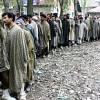
POLITICS-INDIA: Separatists Battle Moderates in Kashmir Polls
India’s Jammu and Kashmir state votes Sunday for the second round of staggered, seven-phase, provincial elections that have pitted separatists against mainstream political parties.RIGHTS-PAKISTAN: Helpless Against Honour Killings
By appointing as cabinet ministers two politicians known for their anti-women views, Pakistan President Asif Ali Zardari has stirred up a storm of protests from rights activists and prominent personalities who believed that an elected government would help their country emerge from feudalism.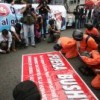
LABOUR-PERU: Protest Against Bush and Alan Garcia
A demonstration in the Peruvian capital by left-wing political movements against U.S. President George W. Bush’s visit to the country turned into a protest Friday by hundreds of laid-off workers and trade unions in conflict with local and foreign companies.FINANCE: China Takes Lead on Green Investing
China's efforts to green its financial sector have earned a thumbs-up from U.S. environmentalists, who say regulators here could learn from Beijing's recent success in stimulating investments that don't despoil the planet.RIGHTS-KYRGYZSTAN: Alarm After ‘Lifers’ Attempt Breakout
The Kyrgyzstan parliament has ordered that the most dangerous of the country’s life-term prisoners should be moved from their jails and put in isolation cells dispersed around the country following an attempted prison breakout which led to four deaths.CHINA/US: Balking at Changing Dollar-Centric Economic Order
The spectre of a prolonged global recession has dampened China’s wish for a world financial order less dominated by the United States and its dollar, giving way to more urgent dealings with recession worries at home.ENVIRONMENT-INDIA: Sanitation Concerns Shift Into Space
India may be grappling with problems of basic sanitation but, at another level, its top scientists are turning their attention to human pollution in space.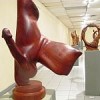
CULTURE-INDONESIA: Anti-Porn Law Reveals Growing Islamist Power
An exhibition of sculpture that opened here this month offers a stark reminder of the importance of the human form in Indonesian art.DEVELOPMENT-VIETNAM: Rare Criticism of Dams Surface
While arguments against the development of hydropower dams on the Mekong River and its tributaries have from time to time emerged in Vietnam’s state-controlled press, rarely have government officials been as open with their criticism as they have in recent months.POLITICS-MALAYSIA: Alarm at Move to Regulate Media
A government proposal to set up a media council to ‘regulate’ news reporting has alarmed journalists who see it as an attempt to add yet another layer of control over their profession.
RIGHTS-CAMBODIA: Khmer Rouge Through Blinkered Eyes
When Gunnar Bergstrom stepped off the plane into the sweltering heat of the Cambodian capital in August 1978, he did not even begin to suspect the fate that had befallen the country whose struggle he had supported from afar.MEDIA-SRI LANKA: Under Fire Journos Learn Survival Skills
For journalists on the job in Sri Lanka - considered by international media rights bodies to be the third most dangerous place to work in, after Iraq and Somalia - staying safe is a prime concern.CUBA-CHINA: Strengthening Friendly Ties
Cuba and China strengthened their political and economic alliance this week, at a time when the EU and Cuba have formally restored relations and the government of Raúl Castro is forging closer ties with the rest of Latin America and with Moscow.POLITICS-CHINA: Tibetan Movement May Dump ‘Middle Way’
Eight months after Tibet’s capital of Lhasa was rocked by violent anti-Chinese protests positions have hardened, casting gloom on prospects for progress on the Tibetan stalemate.
SRI LANKA: Gov't Celebrates Battle Gains in Tamil Areas
Sri Lankan national flags hoisted at important locations and posters depicting army offensives against the Tamil rebels are part of week-long celebrations ordered by the government of President Mahinda Rajapakse to mark its latest battlefield victories in the north of the island.POLITICS-BANGLADESH: Uncertainty Grips Scheduled Elections
Parliamentary elections in Bangladesh, scheduled for Dec.18, are now slipping into uncertainty with former prime minister Begum Khaleda Zia demanding that a state of emergency imposed by the military-backed, interim government be completely lifted first.EDUCATION-NEPAL: Increasing Budget Not Enough to Meet Goals
While the new Maoist government has dramatically increased the outlay for education in the annual budget to meet the goal of Education for All (EFA) by 2015, a visit to remote, mountainous Limi village in mid-western Nepal shows that the goal will be hard to reach.
CULTURE: Int'l Performing Arts Fest Spotlights Liberal Pakistan
Some 370 foreign actors, musicians, dancers and puppeteers have defied the warnings of their friends, families and governments to participate in an international performing arts festival in Lahore, cultural capital of the world’s ‘most dangerous country’.US-PAKISTAN: Obama-Tied Think Tank Calls for “Dramatic” Shift
A think tank closely tied to U.S. President-Elect Barack Obama is calling for a "dramatic strategic shift" in Washington's policy towards Pakistan, one designed to both strengthen civilian institutions and promote an effective counter-insurgency against al Qaeda and indigenous Islamist extremists in the tribal areas along the Afghan border who increasingly threaten the country's stability.MEDIA-PHILIPPINES: ‘Jeepney’ Street Paper Delivers Jobs Too
"We share with people our stories, rich stories that can be found in the streets," Cheran Banaria says of her work selling ‘The Jeepney Magazine’, the Philippines’ first street paper. "Before, I was really shy in facing and talking to rich people. I felt like an ant before them. But now, I can say I am a bit confident facing them."ENVIRONMENT-BURMA: Conflict Threatens Karen Biodiversity
On top of 60 years of military occupation, the Karen people of Burma are now facing severe impairment of their environmental and cultural foundations, say activists.« Previous Page — Next Page »


The Week with IPS

NEXT STOP - SDGs
Tracking global progress towards a sustainable world
