Languages
Thursday, November 26, 2026



News and Views from the Global South
Asia-Pacific
ENVIRONMENT-CHINA: Coal Far Costlier Than Thought – Study
Often criticised for its massive coal-based industries that jeopardise international efforts to combat global warming, China is undoubtedly the biggest victim of its voracious coal consumption.AUSTRALIA: Indigenous People – Approach Still Paternalistic
The paternalistic, top-down implementation of the Australian government’s intervention in indigenous communities in the Northern Territory is undermining its chance of success.LABOUR: Women Migrants Need Protection, Empowerment
Filipino domestic worker Joy Romualdo treasures her Sundays not only because it offers her a respite from a week of hard work, but because she can still remember the time when having a day off was a luxury.HEALTH-NEPAL: Meeting MDG on HIV/AIDS – A Dream?
Shibu Giri, programme officer at the National Association of People Living with HIV/AIDS in Nepal, who tested positive in 2000, believed he was fit and fine as his CD-4 count stayed normal.LABOUR-MALAYSIA: Recession to Hit Migrant Workers Hard
As recession looms large on the horizon, migrant workers like 27-year-old Kumar Palanisamy from Chennai in India are the first on the chopping block.POLITICS: Thai Tensions Form Apt Backdrop for ASEAN Meet
The decision by Thai government to shift the venue of a regional summit from Bangkok to the northern city of Chiang Mai points to an administration unsure of its place in the country’s capital.RIGHTS-SRI LANKA: Court Steps in as Governance Falters
Finding themselves up against corrupt politicians and indifferent governance, Sri Lankans are increasingly turning to the country's Supreme Court for relief, even for solutions to everyday issues.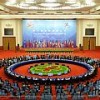
ECONOMY: Asia, EU Leaders Moot Deep Global Reforms
A two-day meeting of European and Asian leaders in Beijing has produced a joint statement pledging a coordinated response to the global financial crisis, but concrete action is seen dependant on the entry of Asia’s emerging economies into global policy-setting institutions.
CAMBODIA: Maoist Bastion Gets Lessons in Market Economics
For ex-Maoist guerrillas in the former Khmer Rouge stronghold of Pailin, close to the Thai border, the last decade has been a crash course in market economics.RIGHTS-BURMA: No Mercy For Women Political Activists
When it comes to throwing pro-democracy activists in jail, Burma’s military regime does not discriminate between the sexes. The junta treats women and men with equal measure of abuse.RIGHTS-PAKISTAN: Condemned Pin Hopes on Amnesty
Zulfiqar Ali, 38, has been snatched from the gallows once again after Pakistan's president agreed to give his relatives more time to negotiate clemency from the families of two persons shot dead during a violent dispute.POLITICS-US: Online Poll Shows Obama a Hit in China
Beijing has a tradition of sound relations with Republican presidents of the United States, but the latest China poll shows popular opinion bucking the trend with Democratic presidential candidate Barack Obama becoming an "overwhelming hit" with ordinary Chinese.PHILIPPINES: 'Women Take the Brunt of Climate Change'
Filipina farmer Trinidad Domingo views the coming rice harvest season with trepidation. A typhoon destroyed much of her crop and Domingo estimates that her two-hectare plot will produce less than the usual 200 sacks of rice.
INDIA/PAKISTAN: Trade Through Kashmir Can Heal Rift
After decades of confrontation and rigidity over Kashmir, India and Pakistan seem to be looking at trade through the disputed territory as a path to peace.
INDIA: Water Privatisation – 'No Need For Costly Consultants'
The Indian corporate conglomerate, Tata, says it is ready to provide water services in this vast country and also prove that privatisation does not have to involve expensive foreign consultants and providers.BURMA: Cyclone Relief – Distrust of Junta Deters Donors
Burma’s military regime is struggling to attract international aid nearly six months after the powerful Cyclone Nargis tore through the country’s Irrawaddy Delta. The financial shortfall has more to do with distrust of the junta than donor fatigue.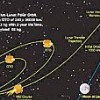
INDIA: Reaching for the Moon on a Shoestring Budget
With the successful launch of its maiden, unmanned mission to the moon, India has signalled growing confidence as an emerging Asian space power, ready to rub shoulders with Japan and China.CULTURE-NEPAL: Religious Tradition vs Maoist Secularism
Nepalis, religious and tradition-bound as they are, have in recent months worried over the fate of their centuries-old rituals and customs in the newly minted Maoist republic.
INDIA: Tata Motors Move to Gujarat Less Than Secular
Tata Motors' decision to shift the production site of its ultra-cheap, iconic Nano car from communist-ruled West Bengal state to Gujarat - scene of the 2002 anti-Muslim pogrom - has caused consternation and dismay among liberals and secular-minded people all over India.
Q&A: “Musharraf Should Be Tried for High Treason”
Sahibzada Anwar Hamid is the former vice president of the Supreme Court Bar Association of Pakistan. One of three imprisoned leaders of the Pakistan Lawyers' Movement, the group whose advocacy for an independent judiciary against the interference of former Gen. Pervez Musharraf helped to oust the former military dictator from power.JAPAN/NORTH KOREA: Abductees Issue Traded Over Nuclear Deal
With Washington removing North Korea from its list of state sponsors of terrorism, Japan finds itself isolated over the issue of its nationals abducted by the reclusive communist state, during the cold war, to be trained as spies.« Previous Page — Next Page »


The Week with IPS

NEXT STOP - SDGs
Tracking global progress towards a sustainable world
