Languages
Thursday, November 26, 2026



News and Views from the Global South
Asia-Pacific
DEATH PENALTY-PAKISTAN: Reprieve Call Could Save Thousands
Some 7,000 death row inmates - a quarter of the estimated condemned prisoners worldwide - are expected to be spared and eventually freed following a call by Pakistan’s prime minister to honour the memory of the assassinated political leader Benazir Bhutto.PAKISTAN: Consumer Rights Only Sporadically Enforced
Since the first serious attempt at enacting consumer rights laws in Pakistan was made back in 1995, only one province - Punjab - has succeeded in setting up consumer courts.ENERGY: Don't Write Off Biofuels Yet, Advocates Say
Japan wants countries to reconsider biofuels as an alternative technology to fight climate change by using fuel cell cars at the Group of Eight (G8) Summit on Jul. 7-9. The vehicles will transport the leaders of the world's major industrialised nations when they gather on the northern Japanese Island of Hokkaido./UPDATE*/POLITICS-US: Afghanistan Moves Back into the Limelight
Six and a half years after the ouster of the Taliban, U.S. media attention is returning to Afghanistan where more U.S. and NATO troops were killed in June than in any previous month.AUSTRALIA: Food At Risk From Bee Pest
Australia’s food security is under threat from a tiny parasite with the potential to devastate the nation’s bee and pollination industries.GLOBALISATION: West’s Loss of Gulf Funds East’s Gain
As politically motivated restrictions on investments by oil-rich countries intensify in the West, the sovereign wealth funds (SWFs) of the Gulf countries could opt to invest in Asia and other emerging markets despite attractive valuations in the slowing U.S and European markets.
G8: Japan Showcases its Environmental Policy
Japan has one of the world’s most aggressive environmental policies, set both to meet 2012 emission reduction targets and to make the country - which has no natural resources of its own - less dependent on imports, according to experts meeting here. At a meeting of influential parliamentarians of GLOBE (global legislators for a balanced environment) ahead of the upcoming G8 summit in Hokkaido, Jul. 7-9, several high-profile Japanese politicians spoke of Prime Minister Fukuda’s low-carbon initiatives.INDIA/US: Singh Pushes For Nuclear Deal
India’s Prime Minister Manmohan Singh has plunged his Congress party and the country’s ruling United Progressive Alliance (UPA) government into a grave crisis by staking his personal reputation on pushing through a U.S.-India civilian nuclear cooperation deal.CHINA: ‘Within a Generation Beijing Will Cease to Exist’
Few in the Chinese capital are aware of the price their city would pay for staging the world’s first ‘green Olympics’ in August. The fabulous capital of Chinese emperors and the epitome of modern China’s ambitions is being driven to extinction by its chronic lack of water. And the Olympic games are expediting the city’s slow demise, according to experts.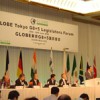
G8: Trying to Move Beyond Debate on Emission Targets
Approximately 133 parliamentarians from 23 countries along with prominent politicians under a caucus called GLOBE (global legislators for a balanced environment) have gathered here ahead of the Jul. 7-9 G8 meetings in Hokkaido. They hope to influence the G8 - the world’s most industrialised countries - to adopt a policy for tacking climate change post-2012 when the current Kyoto Protocol ends.VIETNAM: Mekong Delta Farmers on Bird Flu Alert
The bustling city of Can Tho is the capital of southern Vietnam’s fertile Mekong Delta and one of the country’s two main rice baskets. Good food in abundance makes it an ideal place to raise ducks and chickens, but this also means it is also one of the most high-risk areas in the country for bird flu.MALAYSIA: Sodomy Charge May Sideline Reform Agenda
Politics in Malaysia, which have been choppy since the Mar. 8 general election saw the opposition come within reach of state power, have now plunged into further turmoil after new charges of sodomy were brought against prime minister-in-waiting Anwar Ibrahim.POLITICS-US: Even the Rare Bush Success Leaves a Sour Taste
While, in his dreams, U.S. President George W. Bush might have seen a "Mission Accomplished" banner unfurled as the cooling tower at North Korea's plutonium-producing plant was blown up, Friday's internationally televised fireworks at Yongbyon offered merely a glimmer of possible success in a foreign policy legacy that seems to be getting darker by the day.G8: Climate Change High On Summit Agenda
The leaders of the world's most industrialised nations are now arriving in Japan for the Group of Eight (G8) Summit, Jul. 7-9. In the northern mountain resort of Lake Toyako they will confront challenges of climate change, the food shortage, and development, especially in Africa. Other agenda items are likely to include Japan’s recent bilateral summit with Hu Jinatao of China, as well as measures to control rising global fuel prices and nuclear proliferation.
INDIA: Sansar Chand Acquitted Again
Notorious wildlife trader Sansar Chand - who according to official investigations was responsible for the death of at least 10 tigers in the Sariska Tiger Reserve in 2005 - has been acquitted by a court of law in two cases related to wildlife crime for want of evidence by the prosecution. "It seems that there are no charges from the wildlife department, who was the prosecution in charge of the case," said Alok Kumar Aggarwal, additional chief metropolitan magistrate (ACMM) in New Delhi, "I am of the opinion to discharge him in this specific case, but the trial would go on in other wildlife cases, as per law."
CHINA: Quake Highlights Urban Privilege
1970 - The height of the Cultural Revolution. A severe quake ripples through rural China’s Yunnan province in the south. The response from the communist leadership in far away Beijing arrives swiftly - tens of thousands of little Red Books with quotations from chairman Mao Zedong and as many badges with his image. The rescue efforts are complete with thousands of letters of sympathy from the capital.POLITICS: U.S. and China Go Bump in the Middle East
For China these days it seems that nothing - not rising energy prices; not sanctions aimed at its more unsavoury business partners, Burma and Sudan; not even the prospect of a nuclear Iran - can curb its thirst for oil.POLITICS-BANGLADESH: Govt Plans Local Polls Amid Strong Opposition
Bangladesh is lurching into crisis again as its military-backed interim government insists on holding local government polls amid the strong opposition of all major political parties.DISARMAMENT: 2020 Vision Aimed at Dismantling Nukes
Jun 26 (IPS) - When leaders of the world's eight most industrialised nations - the United States, Britain, Canada, France, Germany, Italy, Japan and Russia, known as the G8 - hold their annual summit meeting in Hokkaido next month, they are likely to reject a seemingly backhanded invitation: a visit to the Peace Memorial Museum in the city of Hiroshima.MALAYSIA: Opposition Pledges Yet Unfulfilled
Even as the Anwar Ibrahim-led opposition Peoples Alliance coalition celebrates 100 days in office this week with huge rallies across the country, the public euphoria that brought them into power is beginning to cool off as people tighten their belts in the face of a slowing economy and escalating cost of living. Demands are rising for the opposition to implement their pledges.
DEVELOPMENT-CHINA: Temblor Throws Shadow on Big Dam Ambitions
China’s deadly earthquake last month appears to have shifted more than just tectonic plates in the country’s picturesque Sichuan province. The May 12 temblor has given a boost to China’s green lobby that has been calling for a review of Beijing’s zealous dam-building programme and may tilt the balance of public opinion in favour of such appeals.« Previous Page — Next Page »


The Week with IPS

NEXT STOP - SDGs
Tracking global progress towards a sustainable world
