Languages
Thursday, October 1, 2026



News and Views from the Global South
Climate Change Justice

Pacific Leaders Call for Bold Climate Action in Ocean Conference
“There is no climate action without ocean action,” President Hilda Heine of the Marshall Islands told reporters, as she and other representatives of Pacific island states reiterated that countries must honor their climate action agreements.
Pacific States, Territories Gift the World its ‘Largest Conservation Project’
While the island states in the Pacific may be modest, the ocean that surrounds them represents a huge oceanic state—an area equivalent to the entire European Continent.
Waves of Change: From the Glittering Shores of Nice to Struggling Seaweed Farmers in Zanzibar
The late afternoon sun sparkles on the waters of the French Riviera as yachts dock at the Port of Nice with mechanical grace. A tram glides past palm-lined boulevards, where joggers, drenched in sweat, huff past leisurely strollers and sunbathers. Just beside the promenade, a crowd gathers around a young girl. With braided hair bouncing in rhythm, she belts out Beyoncé’s Halo with stunning precision. Her bare feet dance on the cobblestones, her voice echoing against the pastel façades.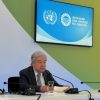
‘Ocean Health Is Inseparable From Human Health, Climate Stability’—UN Chief Urges Swift Action, Partnership for Ocean Conference
“When we poison the ocean, we poison ourselves,” UN Secretary-General António Guterres told reporters on the second day of the UN Ocean Conference (UNOC3).
South-West Pacific Communities Threatened by Ocean Heat, Sea-Level Rise
The South-West Pacific experienced unprecedented warming in 2024, according to a World Meteorological Organization (WMO) report released today (June 5)—threatening islands in a region where half the population lives close to the coast.
Climate Justice Starts with a Bus Ride: A Lifeline for Delhi’s Waste Pickers
Every day, Delhi’s waste pickers walk three to four kilometers under the blazing sun, collecting and sorting the garbage that keeps India’s capital functioning. Their work is essential—yet largely invisible.
Climate Justice Movement in Nigeria to Tackle Oil Polluters Launched
Greenpeace Africa earlier in May brought together over 40 Nigerian civil society groups in Abuja to launch the Climate Justice Movement, the first of its kind in the country. The goal is to unite various climate efforts nationwide and address the severe impacts of climate change on Nigeria and the African continent.
Can These Prehistoric Sea Creatures Survive Climate Change?
In November, tens of thousands of male olive ridley sea turtles (Lepidochelys olivacea) start congregating on just five kilometers of nearshore in Odisha in eastern India. They wait for the females of the species to arrive. The survival of these prehistoric sea species has largely depended on suitable pairing and mating. However, research findings from around the world indicate that, in the long term, there may be a limited number of males at these mating sites compared to an overwhelming number of females.
Global Push to Protect Oceans Gains Momentum Ahead of UN Conference in Nice
As delegates prepare for the third United Nations Ocean Conference (UNOC) in Nice, France, momentum is building around ocean governance, finance for marine conservation, and an urgent shift toward a regenerative blue economy. Ocean advocates say the world is at a critical juncture—and the next few weeks could shape the future of marine protection for decades.
Explainer: What Rural Communities in Tanzania Need to Know about Carbon Trading and Land Rights
As global demand for carbon credits rises, Tanzania has become a magnet for carbon offset projects. From Loliondo in Arusha to Kiteto in Manyara, foreign firms and conservation groups are looking for land to capture carbon and sell credits to polluting industries in the Global North. The growing interest in carbon trading has sparked hope, confusion, and concern— putting millions of hectares of village land and the livelihoods of people who depend on it at risk.
A Shift in the Sands: The Reshaping of Global Influence in the Gulf
The Gulf's most powerful weapon isn't a military, a United Nations (UN) Security Council seat, or a legacy of global diplomacy. Choosing multilateralism and mega-projects over militaries and old-world diplomacy, they are tipping the scale without firing a single shot. Their approach is more modern, where money, alliances, and an active vision for the future are the weapon of choice.
How Mangroves Save Lives, Livelihoods of Bangladesh Coastal Communities
Golenur Begum has faced 12 cyclones in her life. As a child, she witnessed her father’s house destroyed, and as an adult, she watched her home smashed. Saltwater brought by the tidal surges that accompanied the cyclones wrecked their farms and livelihoods. And with climate change, these impacts are becoming more intense and frequent.
Rampant Tourism, Climate Change Threatens Varkala’s Unique Geodiversity
From the top of the cliff, the beach down below appears like a box of sand, with people scattered on it like tiny ants. This is Varkala, arguably the most sought-after coastal tourism spot in Kerala, India, right now. The Varkala cliff—spanning across Edava Cliff, North Cliff, and South Cliff—is 7.5 km long and has a maximum height of 40 m. Religious rituals take place at the part of Papanasam beach that divides the North and South Cliffs.
UN Chief, Brazil Gather World Leaders to Reaffirm Commitments Paris Agreement
UN Secretary-General António Guterres and President Lula da Silva of Brazil on Wednesday, April 23, held a closed-door meeting with heads of state to discuss strengthening global efforts against the climate crisis and to ensure a just energy transition.
Standing Firm: Civil Society at the Forefront of the Climate Resistance
The recent US court case that ordered three Greenpeace organisations to pay damages of over US$660 million to an oil and gas company was a stunning blow against civil society’s efforts to stop runaway climate change and environmental degradation. The verdict, following a trial independent witnesses assessed to be grossly unfair, came in reaction to Indigenous-led anti-pipeline protests. It’s vital for any prospects of tackling the climate crisis that Greenpeace’s appeal succeeds, because without civil society pressure, there’s simply no hope of governments and corporations taking the action required.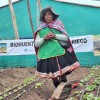
Andean Women Farmers in Peru Face Climate Crisis with Green Practices
"Up here in the highlands, there’s a lot of frost, and everything seems bleak. But I’m so happy since I got my greenhouse and started growing vegetables in a healthy way. I feel like we’re overcoming the challenges of the weather," Anacleta Mamani, a Quechua farmer from the community of Poques (about an hour’s drive from Cusco, the former imperial capital of Peru), told IPS.
Global Climate Action Progressing, but Speed and Scale Still Lacking
2025 marks the tenth anniversary of the Paris Climate Agreement. One of its chief architects, Christiana Figueres, says the world is heading in the right direction but warns that urgent action is needed to close critical gaps. The pact, adopted in 2015 by 195 nations, set out to limit global warming to "well below 2°C" above pre-industrial levels, striving for 1.5°C. But in 2024, the world shattered records as the hottest year ever, surpassing that crucial threshold.
The Ocean Creeps In: Tanzanian Coastal Communities Fight a Losing Battle
The first time Jumanne Waziri tasted salt in his morning tea, he thought his wife had made a mistake. “Why did you put salt instead of sugar?” he asked, setting his cup down in their home in Ununio, a quiet suburb north of Dar es Salaam.
Award Winning Women Goat Herders in Chile Confront Climate Change
Women goat herders in the municipality of Ovalle, in northern Chile, are confronting climate change by defending their heritage through improvements in the quality and variety of their products, which has led some to win international awards for their cheeses.
Not Seen in Living Memory: Kashmir’s Rivers Run Dry, Snow Disappears, and Hope Dissipates
The picturesque Kashmir Valley is battling nature’s fury. This time of year, its majestic mountains would typically be capped with thick snow, and its emerald streams would gush with fresh waters. However, none of these scenes are visible this year.
Blamed for ‘Causing’ Droughts: Zimbabwe’s LGBTQI Community Faces Climate Crisis Head-on
Takudzwa Saruwaka is hoeing weeds in a cowpea field in eastern Zimbabwe one morning in February, trying to beat torrential rains threatening from the gray clouds above.« Previous Page — Next Page »


The Week with IPS

NEXT STOP - SDGs
Tracking global progress towards a sustainable world
Tracking global progress towards a sustainable world
