Languages
Tuesday, September 8, 2026



News and Views from the Global South
COP30

AfDB Commits 11 Billion Dollars To Support Early Warning Systems, Food Security in Rural Africa
As increasingly frequent droughts and devastating floods are affecting agricultural productivity, leaving millions of people food insecure in Africa amid a lack of climate finance, the African Development Bank (AfDB) has committed USD 11 billion to support various climate-resilient and infrastructure projects in rural areas.
Africa Calls for Homegrown Climate Solutions in Just Transition
African climate negotiators and civil society organizations at the second Africa Climate Summit (ACS 2) have called on governments to include sustainable farming approaches and other Africa-led solutions in their revised Nationally Determined Contributions (NDC) and National Adaptation Plans (NAP) ahead of COP 30, as the only way to have their priorities on the global climate negotiation agenda.
Experts Launch a Climate and Health Curriculum for African Negotiators Ahead of COP30
Despite climate change being a health risk multiplier, health is often underrepresented in climate negotiation processes. Experts attribute this to a lack of funding by the African governments and a lack of capacity building among climate negotiators.
Banks Embed Climate Risk, Gender and Sustainability in Finance Products
As climate shocks intensify across East Africa, from failed rains in Kenya’s arid north to devastating floods in Tanzania’s coastal belt, the region’s banks are emerging as unlikely but powerful players in the resilience race.
Bending the Curve: Overhaul Global Food Systems to Avert Worsening Land Crisis
Current rates of land degradation pose a major environmental and socioeconomic threat, driving climate change, biodiversity loss, and social crises. Food production to feed more than 8 billion people is the dominant land use on Earth. Yet, this industrial-scale enterprise comes with a heavy environmental toll.
Climate Change An Existential Threat To Humanity, Urges Action – ICJ
The case was “unlike any that have previously come before the court,” President of the International Court of Justice Judge Yuji Iwasawa said while reading the court's unanimous advisory opinion outlining the legal obligations of United Nations member states with regard to climate change.
Bonn Climate Talks: Why World Needs to go Further, Faster, and Fairer
This 62nd meeting of the Subsidiary Bodies (SB62) from June 16 to 26, 2025 revealed the persistent complexities and political tensions that continue to challenge multilateral climate governance.
Oceans at Risk: Report Warns Global Fossil Fuel Expansion Threatens Marine Biodiversity
A newly released report by Earth Insight in collaboration with 16 environmental organizations has sounded a global alarm on the unchecked expansion of offshore oil and gas projects into some of the most biologically rich and ecologically sensitive marine environments on the planet.
UN Chief, Brazil Gather World Leaders to Reaffirm Commitments Paris Agreement
UN Secretary-General António Guterres and President Lula da Silva of Brazil on Wednesday, April 23, held a closed-door meeting with heads of state to discuss strengthening global efforts against the climate crisis and to ensure a just energy transition.« Previous Page


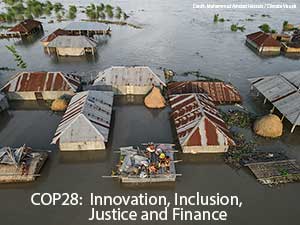
IPS at COP30
In early November negotiators, civil society, Indigenous people, media and others from about 200 countries will arrive in Belém, Brazil, for the 30th annual UN climate conference, COP30, marking a decade since the Paris Agreement was reached.
It is also a COP with huge expectations—as it takes place in a climate where there are strong political headwinds for multilateralism and in the knowledge that the climate crisis is upon us and the earth has experienced its hottest year on record.
There are also expectations that this will be the COP of implementation and for many in the developing world who are bearing the brunt of the climatic changes, their priority is climate justice, ensuring that those least responsible for climate change but most affected by it are placed at the forefront of the negotiations for finance and adaptation and mitigation plans.
While there has been progress with renewable energy surpassing coal after nearly 50 years.
Yet climate disasters are still ahead of the efforts to reduce emissions and contain them. The Baku to Belém Roadmap from the COP29 and COP30 presidencies will also need to show the scaling of climate finance up to USD 1.3 trillion annually will happen.
IPS will be at the conference bringing exclusive news and interviews, making sense of the negotiations and controversies, and looking at how the outcomes will impact the people of the developing world and climate-vulnerable regions.
IPS coverage is supported by the Open Society Foundations.


The Week with IPS

NEXT STOP - SDGs
Tracking global progress towards a sustainable world
Tracking global progress towards a sustainable world
