Languages
Wednesday, November 11, 2026



News and Views from the Global South
Crime & Justice

‘Only a Handful of Environmental Organisations Still Dare Challenge Corporate Projects in Court’
CIVICUS speaks to Cristinel Buzatu, regional legal advisor for Central and Eastern Europe at Greenpeace, about how Romania’s state gas company is weaponising the courts to silence environmental opposition.
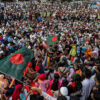
Bangladesh’s Democratic Promise Hangs in the Balance
When Bangladesh’s streets erupted in protest in mid-2024, few could have predicted how swiftly Sheikh Hasina’s regime would crumble. The ousting of the prime minister last August, after years of mounting authoritarianism and growing discontent, was heralded as a historic opportunity for democratic renewal. Almost a year on, the question remains whether Bangladesh is genuinely evolving towards democracy, or if one form of repression is replacing another.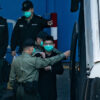
The Silencing of Hong Kong
Joshua Wong sits in a maximum-security prison cell, knowing the Hong Kong authorities are determined to silence him forever. On 6 June, police arrived at Stanley Prison bringing fresh charges that could see the high-profile democracy campaigner imprisoned for life. This is the reality of Hong Kong: even when behind bars, activists can be considered too dangerous ever to be freed.
Sudanese Refugees and IDPs Disproportionately Affected By Crisis
Since the wake of the Sudanese Civil War in 2023, Sudan has faced a dire humanitarian crisis that has been marked by extreme violence, widespread civilian displacement, and an overwhelming lack of basic services in relation to the massive scale of needs. The latest reports from a host of United Nations (UN) organizations shed light on the rapid deterioration of living conditions for Sudanese internally displaced persons (IDPs) and refugees.
Democracy under Attack: Why the World Needs a New UN Special Rapporteur
When tanks rolled through Myanmar’s streets in 2021, civil society groups worldwide sounded the alarm. When Viktor Orbán systematically dismantled Hungary’s free press, democracy activists demanded international action. And as authoritarianism returns to Tanzania ahead of elections, it’s once again civil society calling for democratic freedoms to be respected.
Women and War: Victims of Violence and Voices of Peace
In 2023, approximately 612 million women and girls lived within 50 kilometers of a conflict zone, more than 50 percent higher than a decade ago. During war, they disproportionately suffer from gender-based and sexual violence.
Mexico’s Judicial Elections: A Democratic Mirage
On 1 June, Mexico made history by becoming the only country in the world to elect all its judges by popular vote, from local magistrates to Supreme Court justices. This unprecedented process saw Mexican voters choose candidates for 881 federal judicial positions, including all nine Supreme Court justices, plus thousands at local levels across 19 states. Yet what the government heralded as a transformation that made Mexico the ‘the most democratic country in the world’ may turn out to be a dangerous deception.
UN Drug Office Warns that Global Drug Crisis Will Intensify
Since 1989, the United Nations (UN) has recognized June 26 as the International Day Against Drug Abuse and Illicit Trafficking in an effort to raise awareness around the global drug problem and foster a more compassionate world, free of drug abuse. Through this year’s campaign, “Break the Cycle. #StopOrganizedCrime”, the UN underscores the importance of addressing the root causes of global drug abuse and illegal drug trading, and investing in reliable systems that prioritize prevention, education, and health.
‘Enabling Machines to Make Life and Death Decisions Is Morally Unjustifiable’
CIVICUS discusses autonomous weapons systems and the campaign for regulation with Nicole van Rooijen, Executive Director of Stop Killer Robots, a global civil society coalition of over 270 organisations that campaigns for a new international treaty on autonomous weapons systems.

Women in Afghanistan Face a Total Lack of Autonomy
Nearly four years ago, the Taliban took control of Afghanistan and issued a series of edicts that significantly restricted women’s rights nationwide. This has resulted in a multifaceted humanitarian crisis, one marked by a notable decline in civic freedoms, stunted national development, and a widespread lack of basic services.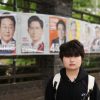
South Korea‘s Democracy Renewed
On a resounding 79.4 per cent turnout, South Korean voters have delivered a clear mandate for change. Lee Jae-myung of the centrist Democratic Party of Korea (DPK) decisively won the 3 June election, becoming the country’s new president after a turbulent time for South Korean democracy.
From Deterrence to Disarmament: Global Advocates Call for Justice and Peace
Marking 80 years since the dawn of the nuclear age, peace advocates, diplomats, educators, and atomic bomb survivors from around the world gathered for the “Choose Hope” symposium on March 12–13, 2025, in Santa Barbara, California. Co-organized by the Nuclear Age Peace Foundation (NAPF) and Soka Gakkai International (SGI), the event was held at the Music Academy of the West.
Tanzania and Uganda: Bad Places To Be an Opposition Politician
In East Africa's Tanzania and Uganda, political tensions are rising as they prepare for the next elections. Tanzania goes to the polls in October 2025, while Uganda’s presidential and general elections will take place early in 2026.
‘Live Facial Recognition Treats Everyone as a Potential Suspect, Undermining Privacy and Eroding Presumed Innocence’
CIVICUS discusses the dangers of live facial recognition technology with Madeleine Stone, Senior Advocacy Officer at Big Brother Watch, a civil society organisation that campaigns against mass surveillance and for digital rights in the UK.
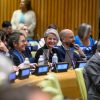
The Global Mental Health Crisis Surges Amid $200 Billion Funding Gap
Although access to mental health and psychosocial support services is considered a fundamental human right by the United Nations (UN), hundreds of millions of people experience limited or inadequate access to mental health and psychosocial support services.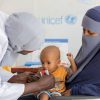
The Risk of Famine Looms Throughout Multiple Sudanese Counties
Over the course of 2025, the food security situation in Sudan has taken a considerable turn for the worst. Compounded by the Sudanese Civil War, millions of civilians face alarming levels of food insecurity and are at risk of experiencing famine. Humanitarian experts have described the situation in Sudan as being the worst hunger crisis in the world today.
El Salvador: Bukele’s Authoritarianism Goes Global
At a White House meeting, presidents Nayib Bukele and Donald Trump exchanged praises and joked about mass incarceration while discussing an unprecedented agreement: the USA would pay El Salvador US$6 million a year to house deportees – of any nationality, potentially including US citizens – in its Centre for Terrorism Confinement (CECOT), a notorious mega-prison. This agreement marked the evolution of Bukele’s authoritarian model from a domestic experiment to an exportable commodity for strongmen worldwide.
Victims of Japan’s Eugenic Protection Law Sterilized and Mutilated Without Consent
Victims of Japan's costly Eugenic Protection Law took to the stage sharing their life stories, offering their tragedies of sterilization and mutilation, in return for the hopes of “a society without discrimination”. At a side event on International Sharing of the Experiences and Lessons of Japan's Former Eugenic Protection Law held on June 10th, The Conference of Parties on the Convention of the Rights of People with Disabilities Discussed the struggle for Anti eugenic ideology. Hosted by the Japan Disability Forum along with several legal defence teams for the victims, an outline of ideology, policy, and retribution was displayed, in an attempt to fight against “eugenics-based discrimination”.
‘Truth and Justice Have No Statute of Limitations; The State Must Assume Its Responsibility’
CIVICUS discusses struggles for historical justice with Graciela Montes de Oca, a member of Mothers and Relatives of Detained and Disappeared Uruguayans, a Uruguayan civil society organisation that seeks truth, justice and prevention of future crimes like those committed under dictatorship.

‘The Regime Seeks to Consolidate Absolute Control by Eliminating All External Oversight’
CIVICUS discusses Nicaragua’s withdrawal from the United Nations Educational, Scientific and Cultural Organization (UNESCO) and other international organisations with Wisthon Noguera, an activist, student and deputy coordinator of the National Youth Platform of Nicaragua.
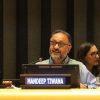
CIVICUS’ New Leader Speaks on Global Declines in Civic Freedom
On June 1, CIVICUS Global Alliance, announced the appointment of Mandeep Tiwana as its new Secretary-General. With his tenure underway, Tiwana sat down with an IPS correspondent to discuss CIVICUS’s work in promoting civic freedom and solidarity in an increasingly autonomy-restrictive world.« Previous Page — Next Page »





Issues of crime and justice are as pertinent to development as they have ever been. The struggle for abolition of the death penalty is not over, and penal reform is desperately needed in many countries around the world. From violence to religious persecution, white-collar crime to police brutality, we keep you updated with reports from around the world. IPS correspondents focus on the causes of crime, attempts to prevent it, and the process of bringing those who commit crimes to justice. We also cover the campaign against capital punishment, and for legal and prison reforms that would give prisoners the right to life, and also to justice and decency.

The Week with IPS

NEXT STOP - SDGs
Tracking global progress towards a sustainable world
Tracking global progress towards a sustainable world
