Languages
Wednesday, October 14, 2026



News and Views from the Global South
Crime & Justice
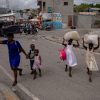
Humanitarian Situation in Haiti Deteriorates as Gender-Based Violence Soars
As gangs continuously seize more territory in the Haitian capital, Port-Au-Prince, the humanitarian crisis deepens. Gang violence in Haiti has considerably escalated following the deployment of the Multinational Security Support (MSS) mission and the appointment of the new Prime Minister, Alix Didier Fils-Aimé. Attacks on civilians continue to increase in brutality as the severely underfunded MSS mission and lackluster police efforts do little to combat gang activity. Girls and women have been disproportionately affected by rampant gender-based violence.
Blockages of Aid in Gaza Threatens Survival for 2.2 Million
Following the International Criminal Court’s (ICC) indictment of Israeli Prime Minister Benjamin Netanyahu for deliberate war crimes committed on the people of Gaza, there has been a considerable surge in hostilities, mostly concentrated in the enclave’s northern regions. The humanitarian crisis is expected to deteriorate as the availability of essential resources, such as water, food, fuel, and electricity has significantly dwindled over the past few weeks due to sustained blockages by Israeli authorities. Additionally, levels of civilian casualties and displacements have reached new peaks.
UNiTE: Violence Against Women—A Plight That Spares No Country Across All Continents
Despite the 1,583 legislative measures in 193 countries around the world, violence against women has not been eradicated or even abated.
60 Percent of Femicides Are at the Hands of a Partner or Family
Every 10 minutes, one woman or girl is killed at the hands of their partner or other family member. This is only scratching the surface on how femicide, one of the most extreme forms of violence against women, persists at high levels around the world. UN-Women and the UN Office of Drugs and Crime (UNODC) released a joint report, Femicides in 2023: Global Estimates of Intimate Partner/Family Member Femicides, on November 25, the International Day for the Elimination of Violence against Women.
Sudan Ravaged By Disease, Famine, and War
As living conditions in Sudan deteriorate as a result of the Sudanese Civil War, levels of famine and violations of international humanitarian law continue to accelerate among the roughly 11.5 million displaced persons. Conflict between the Rapid Support Forces (RSF) and the Sudanese Armed Forces (SAF) have severely hampered aid efforts, leaving millions of civilians to deal with widespread disease and an overall lack of essential resources.
Ensuring Violence-Free Homes for Sri Lankan Women
A woman’s right to live free from violence is upheld by international agreements like the 1979 Convention on the Elimination of All Forms of Discrimination against Women and the 1993 UN Declaration on the Elimination of Violence against Women.
It’s About our Entire Planet: The Pandemic of Violence Against Women
The 16 Days of Activism to end gender-based violence, started with seeking to eliminate violence against women (VAW). This year’s theme highlights the reality that violence against women and girls is of pandemic proportions. The figures are galling.
International Criminal Court Issues Arrest Warrant for Netanyahu
On November 21, the International Criminal Court issued arrest warrants for Israeli Prime Minister Benjamin Netanyahu, as well as the former defense minister Yoav Gallant. In a statement released by the ICC, both Netanyahu and Gallant are wanted for crimes against humanity and war crimes that spanned from at earliest October 8 2023 through May 20 2024. This coincides with Israel’s respective wars with Lebanon and Palestine, for which there have been extensive damage on civilian infrastructure, thousands of civilian casualties, and repeated blockages of humanitarian aid.
Stand Up, Speak Out: A Global Call to Men on the 25th Anniversary of International Day for the Elimination of Violence Against Women
In 1960, the Rafael Trujillo regime in the Dominican Republic assassinated the Mirabal sisters— renowned and respected for their courage and activism against dictatorship. To give their senseless violent death some meaning and to preserve their legacy, in 1999, the United Nations inaugurated November 25—the day of their assassination—as the International Day for the Elimination of Violence Against Women (EVAW).
Breaking Cycle of Violence to Save Mothers & Children: Why Ending Gender-Based Violence is Essential for Global Health
Each year, millions of women and children around the world die from preventable causes. Maternal, newborn, and child health (MNCH) is a shared global priority, yet we often overlook one of its most pressing—and preventable—barriers: violence against women.
Doctors Without Borders Halts Operations in Haiti Amid Threats from
Doctors Without Borders, the medical humanitarian organization, which has served in Haiti for over 30 years, announced on Wednesday that it would suspend its activities in Port-au-Prince, Haiti’s capital amid repeated threats from local law enforcement. This announcement indicates the precariousness of the situation in Haiti where humanitarian groups on the ground face security issues from even members of law enforcement.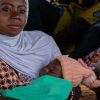
One in Three Women Experiences Gender-based Violence
Every year, the 16 Days of Activism against Gender-Based Violence (GBV) campaign led by UN Women serves as a powerful reminder of the widespread violence women and girls face worldwide.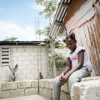
Contingent Mission in Haiti Exacerbates Gang Offensives
Over the past week, the deployment of the Multinational Security Support Mission (MSS) in Haiti and extended efforts by the Haitian National Police has led to local gangs ramping up their offensives in order to hold onto their territories. Humanitarian organizations fear that displacement will skyrocket without more efficient security controls and relief responses.
‘The International Community Must Stop Turning a Blind Eye to the Suffering of Sudanese Women’
CIVICUS discusses Sudan’s civil war and its impact on women with Sulaima Elkhalifa, a Sudanese human rights defender and expert on gender-based violence.

Human Rights Watch Condemns Israel’s “Deliberate” Military Offensives in Gaza
A new report from Human Rights Watch (HRW) postulates that Israeli military practices in the Gaza Strip constitutes as war crimes. Released on November 14, the new report details the scale of destruction in the Gaza Strip over a 13-month period, during which time the Israeli Defense Forces’ (IDF) undertook a campaign to enact “deliberate, controlled demolitions of homes and civilian infrastructure” that were conducted to drive millions of Gazans out of their homes and inflict as much damage as possible.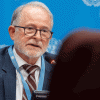
Human Rights Violations Against Women Rises in Afghanistan, While Taliban Enjoy Impunity
It has been three years since the 2021 Taliban offensive and the humanitarian crisis in Afghanistan continues to grow more dire. Human rights violations are committed by the Taliban insurgent group on a frequent basis, with gender-based discrimination and violence being regular occurrences for millions of Afghan women. Gender inequalities are pervasive, with freedom of speech and mobility being significantly limited. The humanitarian crisis is exacerbated by widespread impunity enjoyed by members of the Taliban.
‘Ending impunity for violations of Palestinians’ rights would strengthen global norms that protect all humanity’
CIVICUS discusses the gender dimensions of genocide in Gaza with Kifaya Khraim, International Advocacy Coordinator at the Women’s Centre for Legal Aid and Counselling (WCLAC). Founded in 1991, WCLAC is a feminist organisation that documents Israeli violations against Palestinian women and uses this evidence for international advocacy.
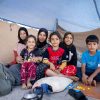
Bombardments in Lebanon Threaten Civilian Safety, Destroy UNESCO Cultural Heritage Sites
As winter approaches, the ongoing airstrikes and bombardments on Lebanon has threatened the lives and livelihoods of civilians across the country and neighboring regions, which has resulted in skyrocketing death tolls and levels of displacement. Since hostilities escalated in September, Lebanon has seen the destruction of a significant amount of critical infrastructure, including historical sites that are integral to Lebanese history.
Sudan Faces Esclations in Famine, Humanitarian Law Violations
After 19 months of conflict, the ongoing Sudanese Civil War continues to deteriorate living conditions for millions of Sudanese people. Intensive conflicts between the Rapid Support Forces (RSF) and the Sudanese Armed Forces (SAF) have greatly exacerbated nationwide levels of famine. Numerous civilians have been caught in the crossfire, leading to a rising death toll. Sexual violence and rape have been used as weapons of war, with thousands of cases going unreported due to a pervasive state of fear. Sudan has seen record numbers in displacement, becoming one of the biggest displacement crises in the world.
Haiti’s Transition of Power Predicted to Worsen Gang Violence
Gang violence has ravaged Haiti, causing thousands of civilian deaths, displacements, and violations of international humanitarian law. Turmoil is expected to escalate following the removal of Haitian Prime Minister Garry Conille from office on November 11.
Growing Death and Displacement Devastate Lebanon
The ongoing, escalating violence in Lebanon forces millions of Lebanese civilians to face daily bombardment, repeated orders of evacuation, routine destruction of critical infrastructure, and limited access to basic services. With the death toll and rates of displacement on the rise, humanitarian organizations fear that the upcoming winter season is expected to exacerbate these harsh conditions, making Lebanon almost uninhabitable.« Previous Page — Next Page »





Issues of crime and justice are as pertinent to development as they have ever been. The struggle for abolition of the death penalty is not over, and penal reform is desperately needed in many countries around the world. From violence to religious persecution, white-collar crime to police brutality, we keep you updated with reports from around the world. IPS correspondents focus on the causes of crime, attempts to prevent it, and the process of bringing those who commit crimes to justice. We also cover the campaign against capital punishment, and for legal and prison reforms that would give prisoners the right to life, and also to justice and decency.

The Week with IPS

NEXT STOP - SDGs
Tracking global progress towards a sustainable world
Tracking global progress towards a sustainable world
