Languages
Friday, September 18, 2026



News and Views from the Global South
Democracy
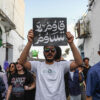
Tunisia: Civil Society Criminalised
In May, Tunisian lawyer and journalist Sonia Dahmani was handed her second conviction of the year. Her latest sentence, a two-year jail term, came in reaction to her criticism of poor prison conditions. She previously received an 18-month sentence for calling out the government’s anti-migrant policies. Dahmani faces five more charges under a 2022 cybercrime law that criminalises the spreading of what it calls ‘false information’.
My Journey Through 50 Years of Seychelles’ Independence
On the night of 29 June 1976, just before midnight, I stood among my fellow Seychellois at the heart of a moment that would change our history forever.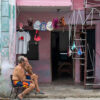
Cuba’s Last Hand
Ever since the Berlin Wall fell 37 years ago and the communist Eastern Bloc collapsed, Cuba has been debating economic reforms to its socialist system. Essentially, the discussion always revolves around the same issues: less state planning, more personal responsibility. In other words, a strong dose of capitalism as an antidote to inefficient and corrupt state bureaucracy.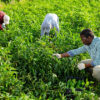
The Silent Metamorphosis
There is a question that is never asked plainly enough in reports on Haiti: why, despite decades of analysis, billions in international aid, and an abundance of national strategies, does the potential of Haitian youth remain so consistently underutilized? This report, The Silent Transformation, is an attempt at an honest answer.
AI Will Destabilize Jobs, the Middle Class and the Welfare State Unless We Act in Time
Artificial intelligence (AI) promises remarkable gains in productivity, science, medicine and education. But it is also poised to wipe out millions of jobs, hollow out the middle class, and drain the tax revenues that pay for hospitals, schools and pensions. The process has already begun, and the time to act is running out.
Aid Is Falling Fast. What Can African Countries Do?
For decades, official development assistance has been a central pillar of financing in sub-Saharan Africa. That pillar is now weakening—quickly and broadly.
Of 40 Million People Living with HIV today, 32.1 Million are now on Treatment, Living Long & Healthy
I am honoured to address this High-Level Meeting. I thank very much the President of the General Assembly for her leadership, our Co-Facilitators, and all the Member States for the extraordinary effort that brought us here now.
AI is Already Rewriting Reality for Billions of People– But It is Getting Women Wrong
A study of 133 AI systems found that 44 per cent demonstrated gender bias and 26 per cent demonstrated both gender and racial bias. Yet only 51 per cent of marketers currently use human oversight to test AI-generated creative before release. Ahead of the United Nations Global Dialogue on Artificial Intelligence Governance from 6 – 7 July and AI for Good Global Summit in Geneva, Switzerland from 7-10 July, UN Women sets out what is at stake – and what must change – to build a gender-equal digital future.
Global South Leaders Redesigning International Cooperation
The fallout from the sudden collapse of the old system of financing international cooperation has been disastrous, unleashing a wave of harm and leaving the world more vulnerable to shocks and less able to respond to them. The wreckage is plain to see. The issue is what to do next.
A UN Secretary-General who Defied the US – and Suffered a Backlash
When Egypt’s onetime Foreign Minister Boutros Boutros-Ghali was running for the post of U.N. Secretary-General in late 1991, he had to contend with the rival candidacy of Bernard Chidzero, then foreign minister of Zimbabwe.
Hong Kong: No Safety in Exile
When performance artist Sammu Chen tried to tie a red thread to a streetpost, plainclothes police stopped him before he could finish. Chen has twice been detained for his symbolic acts of commemoration of the 4 June 1989 Tiananmen Square Massacre, when Chinese authorities killed hundreds, perhaps thousands, to crush democracy protests.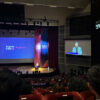
RightsCon’s Cancellation Signals a Growing Threat to Human Rights and Digital Freedoms
RightsCon, the world’s leading summit on human rights in the digital age, has served for over a decade as a vital global gathering, bringing together civil society, academics, technologists, policymakers, and the private sector in cross-border collaboration. The abrupt cancellation of RightsCon 2026, following intervention by Zambia’s government just days before the convening was due to commence in Lusaka, should concern us all.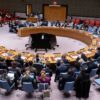
Will US Opposition to UN’s Socio-Economic Goals Play a Decisive Role in the Vote for Next Secretary-General?
As the campaign for a new UN secretary-general gathers momentum, will the US exercise the decisive vote -- or the veto-- in the final selection?
New Caledonia’s Election to Set the Stage for New Talks With France on Its Political Future
The French overseas territory of New Caledonia in the Pacific will hold elections on 28 June in the wake of the latest agreement on its political status with France being rejected. The representatives elected in the three provincial assemblies and territorial congress will then determine a new round of negotiations as the mission of achieving consensus on New Caledonia’s future continues.
The World Cup of Human Rights
This planet’s biggest sporting event—the FIFA Men’s World Cup—will soon kick off. Millions of people around the world will sit up, bleary eyed, watching matches at unreasonable hours and inventing feeble excuses for why we won’t be at work in the morning. More than one billion are expected to watch the finale on TV in mid-July. That’s a bigger audience than any Olympic sporting event and more than the number of people who have viewed Squid Game on Netflix.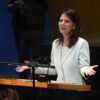
Downfall of a Superstar
This is the downfall of a diplomatic superstar. Germany’s defeat in the election to the UN Security Council is the consequence of a foreign policy that has proven disastrous in recent times, failing to uphold either the values or the interests of the Federal Republic.
Iran War Exposes Limits of US Power Projection
The outcome of the current Iran war is still in doubt, but one consequence is already becoming clear: it has weakened America’s capacity to project power. Many are asking who won. The more important question may be what the war has cost.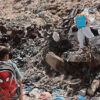
US-Israeli Ceasefire: You Cease, We Fire
If you have been paying attention to the ongoing wars in Ukraine, Iran, Lebanon, and many other places, perhaps you have noticed that battles today are far different from those of the last century. Now it’s not only tanks and planes but also scores of long-range missiles and massive flights of drones linked to cybernetic warfare.
When UN Elections Were Once Tainted by Trade-Offs, Cheque Book Diplomacy & Luxury Cruises…
The year 2026 seems to be an eventful year at the United Nations --a new President of the General Assembly (PGA), who will officially preside over the 81st session in mid-September, plus the election and appointment of a new Secretary-General (SG) who will takeover in January 2027 after the conclusion of a 10-year tenure by the outgoing SG Antonio Guterres.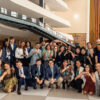
A New Youth Generation: Largest in History & a Decisive Force
In this exclusive interview, Dr. Felipe Paullier, UN Assistant Secretary-General (ASG) and Head of the United Nations Youth Office shares his leadership approach, insights on youth engagement, and his vision for driving institutional change from the grassroot level — redefining what is possible and proving that age is just a number.
The Search is On for the Next U.N. Secretary General in a Turbulent World
AS THE WORLD HURTLES TO HELL (albeit in a SpaceX rather than a hand basket), it might seem of only academic interest which cipher vegetates on the 38th floor of the U.N. Headquarters. However, the choice is due by the end of the year, unless, as has happened in the past, the Security Council is veto-bound and asks António Guterres to stay on as interim Secretary General.« Previous Page — Next Page »


The Week with IPS

NEXT STOP - SDGs
Tracking global progress towards a sustainable world
Tracking global progress towards a sustainable world
