Languages
Sunday, September 20, 2026



News and Views from the Global South
Democracy

An Ominous Reckoning for the Gulf States
Trump’s Iran war has left the Gulf shattered: US bases turned into targets, economies battered, and the “oasis” myth destroyed. Gulf rulers now confront a harsh reckoning over their reliance on Washington and the uncertain search for a new, fragile security order.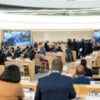
The “Extremely Dangerous and Unpredictable” situation in Middle East and Beyond
More than three weeks after the United States and Israel launched strikes on Iran, the conflict is spreading and intensifying in the region and beyond, with civilians bearing the brunt. Families across the region marked Eid and Nowruz under fire, in fear and uncertainty, and facing further hardship.
PORTUGAL: ‘The Far Right’s Electoral Legitimacy Can Eventually Become Governmental Power’
CIVICUS discusses Portugal’s presidential runoff election and the rise of the far-right Chega (Enough) party with Jonni Lopes, Executive Director of Academia Cidadã (Citizen Academy) and a Steering Committee member of the European Civic Forum, an organisation working on civic engagement, democratic participation and the protection of civic space at national, regional and international levels.

Torture and Physical Abuse of Children in Gaza Declared War Crimes
The ongoing Israeli-Palestinian conflict, which began October 2023, has claimed the lives of more than 73,600 Palestinians and about 1,195 Israelis. But there are widespread charges accusing Israel of war crimes, genocide, torture and the abuse of Palestinian detainees in Israeli jails.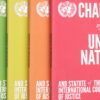
A World Order in Crisis: War, Power, and Resistance
Article 2(4) of the United Nations Charter prohibits member states from using threats or force against the territorial integrity or political independence of any state. Violating international law, the United States and Israel attacked Iran on February 28, 2026. The ostensible reason for this unprovoked aggression was to prevent Iran from developing a nuclear weapon.
‘The Political System Only Moves When Threatened Directly’
CIVICUS discusses Nepal’s upcoming election with youth activist Anusha Khanal of the Gen Z Movement Alliance, a youth-led civil society coalition mobilising for democratic accountability and governance reform in Nepal.
Europe and Multilateralism
“Europe can no longer be a custodian for the old-world order, for a world that has gone and will not return (…) we need a more realistic and interest-driven foreign policy.” These were some of the words pronounced one week ago by the President of the European Commission, Ursula von der Leyen, at the EU Ambassadors’ Conference in Brussels. A speech that sparked considerable controversy: an almost immediate rebuttal from the President of the Council, Antonio Costa; rumours of a motion of censure against Von der Leyen in the European Parliament; more or less public reproaches from several European leaders; and a swift and complete retraction by the President herself.
Is WWIII here?
It is becoming increasingly difficult to ignore the tension, violence and uncertainty in the world in recent years. The number of wars is growing, more and more money is being spent on weapons, and the rhetoric of major powers is becoming increasingly decisive.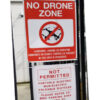
A Remotely-Piloted Weapon That Targets Civilians in War Zones
As the world continues to be weighed down in political and military turmoil, drones are being increasingly used as weapons of war in a rash of ongoing conflicts—including Ukraine vs Russia, Israel vs Palestine, US vs Iran and Israel vs Lebanon, plus in civil wars in the Democratic Republic of the Congo (DRC), Sudan and Haiti.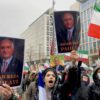
Iran Conflict: “Civil War Will Be Inevitable”
Iranian and Israeli flags fill the centre of Manchester, in northern England. There are also portraits of a king overthrown almost half a century ago and of his son, now a claimant to the throne from exile. It is yet another march of Iranians calling for Reza Pahlavi as an alternative to the regime of the ayatollahs.
Ranking U.S. Presidents: Best and Worst
Throughout its 250-year history, following the Declaration of Independence on July 4, 1776, the United States has elected 47 presidents. From George Washington in 1789 to Donald Trump in 2024, each U.S. president has left their mark on the nation and the world in various ways.
VENEZUELA: ‘An Economically Stable Authoritarian Model Could Become Entrenched’
CIVICUS discusses the situation in Venezuela following US intervention and the ousting of President Nicolás Maduro with Verónica Zubillaga, a Venezuelan sociologist who specialises in urban violence, state repression and community responses to armed violence.

Rubio Seduces Europe with Imperial Nostalgia
US Secretary of State Marco Rubio’s Munich speech last month seemed to seduce the European elite behind President Trump, against the ‘Rest’, especially the resource-rich Global South.
Global Arms Flow Jump Nearly 10 per cent as European Demand Soars due to Transfers to Ukraine
The ongoing military conflict between Ukraine and Russia—which began February 2022, with no visible signs of ending—has triggered major arms transfers to Europe.
Heralding an Era of Religious Wars
In recent months, the language surrounding the escalating confrontation between the United States, Israel, and Iran has taken on a tone that should trouble anyone concerned with global peace.
The US/Israeli Bombing of Iran: A Case Study in Contempt for International Law
Operation “Epic Fury” manifests an epic tantrum by President Donald Trump, supported by his sycophantic minions, with dire consequences for the people in the region, peace and security worldwide, the global economy, and the post-World War II international legal order.
Imagery, Algorithms, and the Ballot: What Takaichi’s Victory Says About Youth Politics in the Digital Age
Sanae Takaichi’s electoral victory in February marks a historic turning point in Japanese politics. As Japan’s first female prime minister and the leader of a commanding parliamentary majority, she represents change in both symbolic and strategic terms. Conventional wisdom long held that younger Japanese voters leaned progressive, were sceptical of assertive security policies, and disengaged from ideological nationalism. Yet a segment of digitally active youth rallied behind a politician associated with constitutional revision, expanded defence capabilities, and a more unapologetic articulation of national identity. This shift cannot be reduced to a simple conservative swing. Rather, Takaichi’s rise reflects a deeper transformation in how democratic politics is constructed in the digital age: the growing power of imagery, digital mobilisation, and algorithm-driven branding in shaping political choice—particularly among younger voters.
A New World Order Where Might is Right
As the build-up for a proposed “new world order” continues, a lingering question remains: will the country with the most powerful military reign supreme? The United Nations remains politically impotent. The UN charter is in tatters. The sovereignty of nation states and their territorial integrity have been reduced to political mockery. And the law of the jungle prevails—be it Palestine, Ukraine, Venezuela or Iran.
How UNDP & Global Partners are Tackling Root Causes of Violent Extremism in Ghana’s Borderlands
Across the world’s fragile borderlands where insecurity, climate stress, and marginalization intersect, communities often find themselves on the frontlines of violent extremism. Yet these same communities also hold the greatest potential for peace, when given the confidence, tools, and opportunities to shape their own future.
Over 25,500 Palestinians Killed: Absence of Accountability is Nothing Short of Shameful
The situation in the Occupied Palestinian Territory is a human-made disaster. The report before you sets out events between 1 November 2024 and 31 October 2025 that show Israel’s utter disregard for human rights in Gaza and the West Bank, and the serious violations also committed by Hamas and other Palestinian armed groups.
After a Brutal Winter, Millions of Ukrainians Face Deepening Displacement and Uncertainty
After surviving the harshest winter in a decade, millions of displaced Ukrainians are confronting a growing crisis marked by hardship and ongoing attacks as peace prospects remain distant.« Previous Page — Next Page »


The Week with IPS

NEXT STOP - SDGs
Tracking global progress towards a sustainable world
Tracking global progress towards a sustainable world
