Languages
Saturday, September 19, 2026



News and Views from the Global South
Democracy

NEPAL: ‘Voting on Discord Was a Very Gen Z Way of Doing Politics’
CIVICUS discusses Gen Z-led protests in Nepal with Abhijeet Adhikari (Abhi), a lawyer and political activist who took part in the protests.

No Kings? Meet King Don and King John – Part 1 of 3
This is the first part of a three-part commentary. Read Part 2: No Kings? Meet King Don and King John – Part 2 of 3, Part 3 of 3 After Donald Trump’s second election as president in November 2024, he said coyly that he wanted to be a dictator … but just for a day. On his first day in office, his sharpie signed an impressive pile of presidential orders, many of dubious legality. The next day he continued to govern like a DIY duce. He has not stopped since.
Feminist Governance and Democratic Change in Armenia
 The period after Armenia's 2018 "Velvet Revolution" maintains a fragile status which presents both substantial democratic and feminist achievements and rising internal and external international pressures.

The Impact of the Middle East Crisis on Women and Girls
Six weeks into the 2026 Middle East military escalation, UNFPA Arab States Regional Office warns that its impact on 161 million women and girls living in conflict-affected areas across the region remain largely invisible in conflict analysis, humanitarian response, and funding priorities.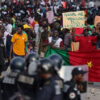
The Ballot Box Illusion: How Authoritarians Repackaged the African Ballot
In many countries across Africa, people have recently lined up to vote. But in country after country, there has been no real choice on offer. As CIVICUS’s 2026 State of Civil Society Report documents, what has frequently been on display is a procedural ceremony of democracy, orderly enough to satisfy observers, but hollow enough to leave those who hold the reins of power untroubled. Laws and structures that were supposed to promote democratic decisions have been manipulated into compliance checks, ticking all procedural requirements while lacking democratic substance. In too many cases, the ballot box has become a public relations exercise.
No Bones Broken, No Crime Committed: Inside the Taliban’s New Rules on Violence Against Women
The Taliban have announced new laws that effectively legalise domestic violence against women and children. Afghanistan's supreme leader, Mullah Hibatullah Akhundzada, signed a decree introducing a new criminal code in January. It contains three parts, ten chapters, and 119 articles that legalise violence, codify social inequality, and introduce punitive measures widely condemned as a return to slavery.
Wars Impose Lasting Economic Costs, While More Defense Spending Means Hard Choices
War is again defining the global landscape. After decades of relative calm following the Cold War, the number of active conflicts has surged in recent years to levels not seen since the end of the Second World War.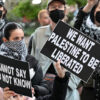
The Five Enablers of the Israeli-Palestinian Conflict
Every powerful actor in the Israeli-Palestinian conflict professes to seek peace. The US and EU repeat the two-state mantra, the Arab states invoke Palestinian rights, AIPAC proclaims its defense of Israel’s security, and Israeli opposition parties promise “responsible” leadership and stability.
Denmark’s Warning
When Danish Prime Minister Mette Frederiksen addressed her supporters on election night on 24 March, she chose her words carefully. Losing four percentage points after almost seven years in power, she suggested, wasn’t so bad given there’s been a pandemic, a war in Europe and a confrontation with Donald Trump over Greenland. The reality was the Social Democrats had recorded their worst general election result since 1903. Meanwhile, the far-right Danish People’s Party (DPP) tripled its seat count, despite years of the Social Democrats leading a systematic crackdown on immigration to try to prevent it gaining support.
The Day the General Assembly Moved to Geneva– to Provide a Platform to a PLO Leader…
The United Nations faces two crucial elections later this year: the election of a new Secretary General, with no confirmed date for polling, and the election of a new President (PGA), scheduled for June 2, for the upcoming 81st session of the General Assembly.
Why the Rohingya Refugees in Bangladesh Need Work, Not Just Rations
While global attention right now is on escalating geopolitical tensions involving the United States, Israel, and Iran, another crisis continues quietly in Bangladesh.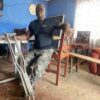
Will Sierra Leone’s Democracy Make Room for Persons with Disabilities?
As Sierra Leone prepares for its next national election in 2028, political parties across the country have begun setting strategies and preparing to select their candidates. However, persons with disabilities say they remain poorly represented and are calling on political parties to nominate them as candidates ahead of the election.
Over 1,000 Humanitarian Workers Killed Distributing Food, Water, Medicine & Shelter
In 2025, at least 326 humanitarians were recorded as killed across 21 countries, bringing the total number of humanitarians killed in three years to over 1,010. We recognise, grieve and honour each of our 326 colleagues, and commit the work ahead to their memory.
“Humanity at the Edge of Its Own Humanity”
We live in a century of extraordinary achievement. Humanity has split the atom, mapped the genome, and sent astronauts to the Moon, with plans now underway to reach Mars. Our knowledge has expanded, our tools have become more powerful, and our capacity to shape the world around us exceeds anything previous generations could have imagined. We communicate instantaneously across continents, diagnose diseases earlier, monitor climate patterns in real time, and design artificial intelligences that can aid in everything from medicine to climate modelling.
The Race Is On: Who Will Be the Next UN Secretary General?
Let the race begin! April 1st was the deadline for candidates to be nominated for Secretary-General. Was it a coincidence that the deadline was April Fool’s Day? Judging by the quality of the official candidates, we suspect so.
Regime Change – Sometimes It Works, Often It Doesn’t
Donald Trump ran on a platform of ending wars. After his success in Venezuela, he is intoxicated by his military achievements and is banking on regime change in several countries.

Post-Protest Bangladesh: Restoration More than Renewal
Bangladesh’s first credible election in nearly two decades delivered a landslide win for the Bangladesh Nationalist Party (BNP) and its leader Tarique Rahman, son of a former prime minister, just back from 17 years of self-imposed exile.
Tackling Political Exclusion is Central to Saving Democracy
Urgent steps need to be taken to rebuild the relationship between citizens and state to stem the decline of democracy globally. Experts point to inequality and political exclusion as two of the biggest drivers for democratic backsliding, with the exclusion of citizens from a role in policy and decision-making spaces leading to ‘hollow citizenship’.
US Aims at Heavy Staff & Budgetary Cuts, Seeks to Launch Cost-Saving Artificial Intelligence at UN meetings
The US has spelled out in detail its own concept of what a restructured United Nations should look like: after drastic reductions in staff, cutting down its budget, avoiding duplication in mandates, slashing peacekeeping operations worldwide and deploying artificial intelligence (AI) for translations and interpretations in six languages.
Iran War: What African Countries Can do to Get Through the Crisis and Emerge in a Better Place
By Easter 2026 it was still not clear when – or how – the war initiated by Israel and the US against Iran would end. But what was already clear was that it would harm Africa in a number of ways.
CONGO: ‘The Result Was Already Decided Before Polling Stations Opened’
CIVICUS discusses the presidential election in the Republic of the Congo with Ivan Kibangou Ngoy, executive director of Global Participe, a civil society action-research organisation focused on democratic governance based in Pointe-Noire.
« Previous Page — Next Page »


The Week with IPS

NEXT STOP - SDGs
Tracking global progress towards a sustainable world
Tracking global progress towards a sustainable world
