Languages
Thursday, November 19, 2026



News and Views from the Global South
Development & Aid

How is the COVID-19 impacting climate action?
 In the context of COVID-19 crisis, what are the risks for climate action?
Climate change still continues and climate impacts are still very visible in the Pacific. A few weeks ago, we had major forest fires in Australia and in other countries. Now we’re battling tropical cyclone Harold which is a result of climate change. This week a new study was released, pointing out that the great barrier reef in Australia suffered one of its most severe bleaching in 5 years. Climate change is still happening, so climate actions have to be pursued. People might have different priorities these days, with funding being reoriented to other activities, but the action definitely needs to be continued to strengthen the resilience of our systems to global changes.

Crisis Hits Oil Industry and Energy Transition Alike
While it attempts to cushion the effects of the coronavirus pandemic, the Latin American and Caribbean region also faces concerns about the future of the energy transition and state-owned oil companies.
Unite Behind Environmental Science: Transforming Values and Behaviour is as Important as Restoring Global Ecosystems
Restoring damaged ecosystems is vital to avoid the collapse of nature’s most valuable contributions to people, but International Day for Biological Diversity 2020 should also be a wake-up call about the importance of addressing our social, economic and systemic values, because it is these that are driving the destruction of nature.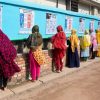
COVID-19: Global Supply Chain Resilience Relies on Soap & Water for Workers
As COVID-19 lockdown restrictions across the globe start to be relaxed, the collective conversation has shifted towards plans for a ‘new normal.’
Why More Must be Done to Fight Bogus COVID-19 Cure Claims
Fake and bogus cure claims are a longstanding, but neglected public health problem. Throughout recorded history, plagues have inspired anxiety and desperation. Time and again, this public nervousness has proved a fertile ground for false cures and claimants to thrive. In this sense, recent claims of COVID-19 cures and antidotes are no exception.
COVID-19 Pandemic and the Pacific Islands
As of 11 AM (AEST) on 20th May 2020 the incidence of COVID-19 virus (henceforth virus) on the Pacific Islands was limited. Active cases (deaths) in some of the Pacific Islands were Australia 7,072 (100), New Zealand 1,503 (21), PNG 8(0), Guam 154 (5), Fiji 18 (0), Timor-Leste 24 (0), French Polynesia 60(0), and New Caledonia 18(0).1 Standards of comparison are not uniform across the region since testing capacities of the various countries differ widely. The low number of cases in the smaller Pacific Islands compared to their larger neighbours, i.e., Australia and New Zealand, reflect both variations in testing standards as well as their smaller population size. The smaller Pacific Islands were also not subject to some of the aberrations experienced by the larger countries, e.g., large number of arrivals from foreign countries in planes and cruise ships.
Logistics: The Backbone of Humanitarian Efforts Fighting COVID-19 in Asia and the Pacific
While most of the world self-isolates at home and skies are emptier than they have been for decades, humanitarian flights transporting life-saving aid are revving up around Asia and the Pacific.
Cyclone Amphan – ‘We Didn’t Expect Devastation of Such a Scale’
Amid the social distancing measures posed by the COVID-19 pandemic, coastal communities in Bangladesh and India face a double threat as the record-breaking Cyclone Amphan made landfall yesterday (May 20).
Food Markets in the Caribbean Take Stock of Vulnerability during COVID-19
 The COVID-19 pandemic has raised the spectre of food insecurity as countries and citizens fear a return to the conditions that roiled the international food markets during the 2008 economic crisis.
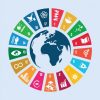
Sustainable Development Goals: What to salvage from Covid-19
Once the Covid-19 pandemic is under control, and the world economy is back on its tracks, the status and fate of the 2030 Agenda, also known as Sustainable Development Goals (SDGs), needs to be reassessed. The year 2020 was supposed to kick-off the Decade of Action. With just 10 years to go, plans were made to undertake "ambitious global efforts" to deliver the 2030 promise—by mobilising more governments, civil society, businesses, and calling on all people to make the Global Goals their own.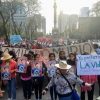
Mexico’s Development Banks Fuel the Fossil Energy Trade
Since 2012, Teresa Castellanos has fought the construction of a gas-fired power plant in Huexca, in the central Mexican state of Morelos, adjacent to the country's capital.
COVID-19 – China Tells World Health Assembly They Did their Best
This week’s 73rd World Health Assembly had member states adopt a resolution to review the global response to the coronavirus pandemic. The World Health Organisation (WHO) will also undergo an evaluation for its response to the outbreak.
To Restore Forests, First Start With a Seed
In 2011, when Rwanda committed to restoring 2 million hectares of land in a global effort to restore 150 million hectares of degraded and deforested areas by 2020 — it seemed like a big ask.
Checkmate! China’s Coronavirus Connection
Coronavirus outbreaks in China and later across the globe have been unprecedented in both its scale and impacts. In the era of changing world order, this pandemic has drawn the global attention towards the threats posed by the non-traditional security challenges.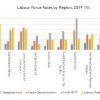
Striking at the core of the COVID-19 employment crisis
What is happening now
In the early months of 2020, much of the globe was put on pause as governments fought to contain the COVID-19 outbreak. For many, work came to a grinding halt as factories and shops were forced to close their doors, transforming a global health catastrophe into a labour market and economic crisis.
HIV Services Take a Backseat to COVID-19 in Russia
In Russia, which has one of the world’s worst HIV/AIDS epidemics, an already fragile healthcare system is buckling under the pressure of dealing with COVID-19.
EXCLUSIVE: In the Face of the COVID-19 Pandemic We Are Only as Strong as the Weakest of Us
When the COVID-19 virus travelled from Wuhan, China halfway across the world through Europe, the Americas and beyond in the space of a few weeks, it gave us proof, if one was ever needed, of how tightly interconnected we all are. Not only are our globalized economies interdepended, but also we ourselves are one with the environment around us, and with one another. We are one humankind sharing one planet. And yet, all too often we seem to forget it, as we carelessly revert to misguiding differences between “us” and “them.” Take, for example, the distinction between rich and poor countries, or as economists put it, between advanced economies and least developed countries. In the face of COVID-19, the only difference that matters is if we are sick or healthy. Other than that, we are all the same, regardless of economic status or geographic location.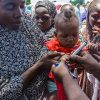
Africa Needs a DOVE Fund: Or Should We Starve So We Can Pay our Debts?
Sub-Saharan Africa has a debt problem. According to the most recent World Bank debt statistics, in 2018 the region had about $493 billion in long term external debt.
Covid-19 Straw Breaks Free Trade Camel’s Back
Economic growth is supposed to be the tide that lifts all boats. According to the conventional wisdom until recently, growth in China, India and East Asian countries took off thanks to opening up to international trade and investment.
The Hotting-Up of the Sino-American Spat: Most Dangerous Side-Effect of Covid-19?
When the United States and China signed the First-Phase of their Trade Agreement in January this year, President Donald Trump called it a “momentous step”, and the world believed they had stepped back from a dangerous brink. But, alas, to cite an idiom that is so current today, it was but a ‘false positive’. As the globe reels from the surgoing COVID-19 pandemic, it is possible that the rapid deterioration of US-China relationship can become one of the worst side-effects of this raging virus.
Coronavirus Leads to Nosedive in Remittances in Latin America
Remittances that support millions of households in Latin America and the Caribbean have plunged as family members lose jobs and income in their host countries, with entire families sliding back into poverty, as a result of the COVID-19 health crisis and global economic recession.« Previous Page — Next Page »


 2026 High-level Political Forum on Sustainable Development. Credit: UN Photo/Eskinder Debebe
In 2015, the United Nations and its Member States adopted the Sustainable Development Goals (SDGs) in an effort to make the world a more sustainable and peaceful place for future generations. Progress on the 17 SDGs has been uneven, and inequality persists across the globe. 10 years after adoption, the 2025 UN SDGs Report revealed that only 35% of the SDG targets are on track, with more than half moving too slowly, and 18% moving backwards from the 2015 baseline. Poverty remains one of the world’s most pressing issues, with hunger, violence, and inequality impeding the opportunities for all people to achieve success. In September 2024, the United Nations Summit of the Future introduced a new goal: to eradicate global poverty by 2030, ensure universal rights to basic services, and increase the overall standard of living in terms of industrialization, economic well-being, citizen health, and literacy. Furthermore, recent shifts in United States foreign aid policy – notably, major budget cuts to USAID and the termination of thousands of development programmes– have severely threatened vital lifelines of financial aid to impoverished communities around the world. Additionally, the United States’ withdrawal from the Paris Climate Agreement has undercut international efforts at sustainable development. With the upcoming 2030 deadline, the UN Secretary-General has called for urgent multilateralism across six priority areas: food systems, energy, digital connectivity, education, jobs and social protection, and climate and biodiversity. IPS sheds light on marginalized communities that struggle on a daily basis to survive and have their stories heard and respected.
Updated by Yilan Batista and Shuli Wong August 2026

The Week with IPS

NEXT STOP - SDGs
Tracking global progress towards a sustainable world
Tracking global progress towards a sustainable world
