Languages
Tuesday, November 24, 2026



News and Views from the Global South
Economy & Trade

Defining the End State Ecosystem: How Can We Get Better at it?
Restrictions on the movement of people impedes Africa's development, limiting economic integration and trade between African countries. Using a systems-thinking approach, champions and decision-makers have led the charge towards a visa free Africa.
World Bank Financializing Development
The World Bank has successfully legitimized the notion that private finance is the solution to pressing development and welfare concerns, including achieving the Sustainable Development Goals (SDGs) through Agenda 2030. A recent McKinsey report estimates that the world needs to invest about US$3.3 trillion, or 3.8 per cent of world output yearly, in economic infrastructure, with about three-fifths in emerging market and other developing economies, to maintain current growth.
The System, Youth and Democracy
If we ever needed proof of how the political system has become self-referential and unable to update itself, the latest student march in more than 1,000 towns is a very good example.Bangladesh moves to stop siphoning off money by multinational companies
(UNB/IPS) - Bangladesh is collecting data on international transactions of multinational companies to stop them from siphoning off money from the country.
Belt and Road Initiative vs Washington Consensus
With the Washington Consensus from the 1980s being challenged, President Donald Trump withdrawing the United States from the Trans-Pacific Partnership (TPP), and China pursuing its Belt and Road Initiative (BRI), most notably with its own initiatives such as the multilateral Asian Infrastructure Investment Bank (AIIB), the political and economic landscape in East Asia continues to evolve. Jomo Kwame Sundaram was interviewed about likely implications for developing countries in the region and beyond.
Climate Change: a Threat to Agriculture & UN’s Goal to Eradicate Hunger
The United Nations has vowed to eradicate extreme hunger and malnutrition on a self-imposed deadline of 2030. But it is facing a harsh realty where human-induced climate change – including flash floods, droughts, heatwaves, typhoons and landslides-- is increasingly threatening agriculture, which also provides livelihoods for over 40 per cent of the global population.
Fighting the World’s Largest Criminal Industry: Modern Slavery
Modern slavery and human trafficking is one of the fastest growing criminal industries and one of the biggest human rights crises today, United Nations and government officials said.
It’s Simple, but Requires Determination
I am drafting this on International Women’s Day - March 8 - with an eye towards World Water Day on March 22. On International Women’s Day we celebrate progress in gender equality. At the same time, we recognize how much remains to be done: how many women remain excluded from decision-making across many professions. Changing this is urgent. Water – clean and accessible – is getting scarcer at an alarming rate. While working to change this, we cannot afford to exclude women.
Seven Challenges for US Nominee for World Bank President
All incoming World Bank presidents bring a public record of their views about the bank and about development more generally. David Malpass, who is on track to become the bank’s next president, has not been shy in criticizing the role and management of the institution he now plans to lead.
Helping St. Vincent’s Fishers Maintain an Essential Industry in a Changing Climate
 From an influx of sargassum in near-shore waters, to fish venturing further out to sea to find cooler, more oxygenated water, fishers in St. Vincent and the Grenadines are battling the vagaries of climate change. The country is doing what it can to respond.

Tobacco Industry Targets Women in Asia
International Women’s Day on 8 March recognized and celebrated the progress women are making globally. The day also acknowledged the risks, exploitation and suffering many continue to endure.
HER LOST LAND
(The Daily Star) - I do not usually write very easily. As someone working mostly with people with little or no literacy, my forte, as I would like to call it, is the oral tradition. I speak, I talk, I converse. I write today based on my perceptions from my work with rural women with whom I have lived and learnt from over the last four decades.The Geneva Centre co-organizes a UN Library Event on Leadership in Modern Multilateralism
(Geneva Centre) - Multilateralism must be people-driven. The current rise of populism around the world is inextricably linked to a feeling of being excluded and kept out of decision-making processes broadly shared by ordinary people. These were the main conclusions of a joint event between the Geneva Centre for Human Rights Advancement and Global Dialogue and the UNOG Library entitled Leadership in Modern Multilateralism. The debate was held on 12 March 2019 at the United Nations Office in Geneva in the Library Events Room at Palais Des Nations.
Multilateralism: A Testimony
For over 70 years, the UN system has been perceived as the guardian of peace and development in the world. However, multilateralism today is undeniably under strain. The effectiveness of global institutions and of global policymaking is questioned, and alliances are fraying.
Innovative Sustainable Business: A Three Trillion-Dollar Opportunity that UN Environment Wants People to Develop
In the East African region, communities around the continent’s largest water body, Lake Victoria, regard the water hyacinth as a great menace that clogs the lake and hampers their fishing activities. But in Lagos, Nigeria, some groups of women have learned how to convert the invasive weed into a resource, providing them with the raw material needed to make handicrafts.
Women, Work, and Migration
Social barriers have historically been blamed for the lack of gender parity in the workplace. But there are other dimensions to this age-old discourse.
Promoting Privatization
Privatization has been central to the ‘neo-liberal’ counter-revolution from the 1970s against government economic interventions associated with Roosevelt and Keynes as well as post-colonial state-led economic development. Many developing countries were forced to accept privatization policies as a condition for credit or loan support from the World Bank and other international financial institutions, especially after the fiscal and debt crises of the early 1980s. Other countries voluntarily embraced privatization, often on the pretext of fiscal and debt constraints, in their efforts to mimic new Anglo-American criteria of economic progress.
The Crisis in Venezuela
My mission to Venezuela in November/December 2017 was the first by a UN rapporteur in 21 years. It was intended to open the door to the visit of other rapporteurs and to explore ways how to help the Venezuelan people overcome the protracted economic and institutional crisis.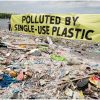
The Rising Trend of Zero Waste Lifestyles
Not too long ago, the term “zero waste” was just one of those boring policy directives or catchphrases thrown around by governments. But in the last few years, ‘going zero waste’ has taken on a new direction as a lifestyle trend of the insta-famous, who are helping to make zero waste a movement that anyone can get involved in.
Q&A: Inventor from a Small Fishing Village in Saint Lucia Provides Hope for Water Woes
Karlis Noel spends his days in his lab in the small, picturesque community of Laborie in St. Lucia. The former fisherman’s story might sound like an overnight success, but his present accolades in the field of engineering are the result of years of hard work and an unceasing drive to make life easier for communities in the throes of a water crisis.
Birds of a Feather: Kim Jong-un and Donald J Trump
After his first meeting with Kim Jong-un Donald Trump declared: "And then we fell in love, okay? No, really – he wrote me beautiful letters, and they're great letters." Maybe it was a joke, maybe not. At least Trump indicated that he and Kim Jong-un were friends. In his book De Amicitia, written 44 BCE, Marcus Tullius Cicero wrote "A friend is, as it were, a second self." Are Trump and Kim Jong-un really friends? At least they seem to have many personal traits in common.« Previous Page — Next Page »


 UN Commission on International Trade Law Holds Colloquium on Harmonizing Law in Age of Digital Trade and Finance. Credit: UN Photo/Manuel Elías
Trade has historically been a geopolitical tool that can both be used to propel development as well as entrench inequalities. In various nations in East Asia and Latin America, increased trade, as often seen in export booms, has allowed them to achieve influential standings within the global economy. On the other hand, many low-income countries in Sub-Saharan Africa, Asia, and Latin America struggle to maintain a robust trade performance, and oftentimes are subjugated to exploitative trade dynamics through intense extraction of their natural resources. In recent decades, international trade has reached a new era as emerging economies across the world are rising in economic preeminence. Stable international trade is crucial to world peace as global interconnectedness facilitates reliable diplomacy. Nevertheless, significant challenges are on the rise. Notably, a major wave of United States tariff escalations in January 2025 lifted US import taxes to their highest level since the 1930s, changing market dynamics and forcing renegotiations with global trading partners.These articles are aimed at informing readers about the complexities of trade and its varying effects on development, with a special focus on the consequences of the global economic crisis, the potential of fair trade and the gender implications of trade policies.
Updated by Yilan Batista and Shuli Wong August 2026

The Week with IPS

NEXT STOP - SDGs
Tracking global progress towards a sustainable world
