Languages
Wednesday, October 14, 2026



News and Views from the Global South
Economy & Trade

MEXICO: ‘Our Call for Justice for Our Missing Loved Ones Must Reach the World Just as World Cup Goals Do’
CIVICUS speaks about efforts to use the 2026 FIFA World Cup to highlight Mexico’s enforced disappearance crisis with Ana Enamorado, a Honduran national who continues to search for her missing son in Mexico, and founder of the Regional Network of Migrant Families.

Renewed Attacks on Strait of Hormuz Deepen Global Supply Chain Concerns
Renewed attacks on commercial vessels in the Strait of Hormuz have intensified concerns over global energy markets along with supply chain disruptions, as the United Nations calls for an end to escalating hostilities within the Persian Gulf.
AI Helping Modernize Trade Across Asia and the Pacific, Though Adoption Gaps Remain
Artificial intelligence is reshaping trade processes across Asia and the Pacific. However, despite growing interest, most economies have yet to deploy the technology at scale, according to a new study by the United Nations Economic and Social Commission for Asia and the Pacific (ESCAP) and the Asian Development Bank (ADB).
Invasive Prickly Pear Turned into Food, Clean Energy Source
An international academic partnership is helping turn one of Laikipia County’s most destructive and invasive plants, the prickly pear cactus (Opuntia stricta), into a source of food security and clean energy while also helping end perennial resource conflict in the region.
Feeding Africa: Women Farmers Key to Ending Hunger
As FAO coordinates the implementation of the International Year of the Woman Farmer 2026, gender team leader Tacko Ndiaye discusses why investing in Africa’s women farmers is essential for food security, economic growth and creating more resilient agrifood systems
Inside GEF’s Blended Finance Push: Turning Public Money Into Private Capital Leverage
For most of the Eighth Global Environmental Facility (GEF) Assembly last month, the atmosphere inside Samarkand’s sprawling Congress Centre echoed a growing confidence of global environmental policymakers.
Venezuela’s Humanitarian Crisis Deepens After Worst Earthquake in Decades
In recent weeks, Venezuela’s humanitarian situation has deteriorated sharply following the twin earthquakes on June 24. Marking the strongest seismic event since 1990, the earthquakes and subsequent aftershocks have resulted in a significant loss of life, widespread damage to critical infrastructure, and considerable disruption to livelihoods and humanitarian response efforts.
Towards a Human rights-Centred, Transformative Agenda Beyond 2030
The 2030 agenda cum SDGs are due to be completed in 2030, with negotiations towards a follow-up agenda to begin formally at the UN General Assembly in autumn 2027. Many direct or indirect discussions have, however, already begun, e.g. pluri-laterally at BRICS and G20 meetings and the EU; as well as at the UN in connection with the Summit of the Future, the Doha World Summit for Social Development, the Beyond GDP report; or in fora such as the Hamburg Sustainability Conference. Think tanks and academics, too, are brainstorming on how best to re-ignite a genuine commitment to the SDGs and at the same time reflect on the future.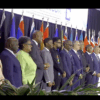
CARICOM Leaders Gather in Saint Lucia as Caribbean Confronts Mounting Global, Regional Challenges
Caribbean leaders are meeting in Saint Lucia for their annual summit, confronting a convergence of global and regional challenges ranging from rising living costs and climate change to crime, food security and geopolitical tensions.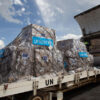
Ebola Outbreak Could Cost Africa $3.6 Billion and Threaten Nearly One Million Livelihoods
A new assessment from the United Nations Development Programme (UNDP) warns that the Ebola outbreak could cost Africa USD 3.6 billion, push 985,000 people into poverty, and put 300,000 jobs at risk.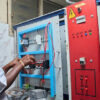
Africa’s Fourth Industrial Decade: From Political Mandate to Industrial Transformation
Amid shifting geopolitical, economic, and technological landscapes, it reflects growing international recognition that Africa’s sustainable industrial transformation is vital - not only for the continent’s future, but also for global prosperity.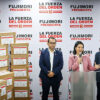
Peru’s Gridlock a Licence for Autocracy?
Right-wing candidate Keiko Fujimori has won Peru’s presidential runoff, narrowly defeating leftist Roberto Sánchez to become the country’s ninth president in a decade. She inherits a system so engineered for dysfunction that rather than making compromises, she may decide the concentration of power is her only means of survival. The constitution that created this trap was written by her father.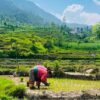
Dry Monsoon in South Asia: Looming Fears of Agricultural Loss, Extreme Heat, and Disaster
Monsoon season in South Asia, including Nepal, is a period of frequent rainfall, extreme heat, and a busy time of the year for farmers. Most farmers in Nepal depend on monsoon rain to plant paddey, the main source of food.
Abu Dhabi’s Coral Promise to the Future
In just the first half of this year, Abu Dhabi’s Environment Agency has cultivated 302,415 new coral colonies, bringing the total under the Abu Dhabi Coral Gardens Project to around 1.8 million – a scale of restoration that demands global attention.
UNCTAD: Governments Turn to Trade Policy to Secure Critical Mineral Supplies
Demand for critical energy transition minerals (CETMs) is expected to surge over the coming decades as countries expand clean technology capacity, develop electric vehicles, create battery storage, implement renewable energy systems, and introduce digital infrastructure according to UNCTADs latest report, The Shifting Dynamics of Critical Minerals Trade.
Middle East Conflict Fallout Pushes Countries toward US$1 Trillion Fossil Fuel Subsidy Bill, warns UN Development Programme
Developing countries’ efforts to tackle the ongoing effects of conflict in the Middle East carry a high price that leaves little room for critical investments in education, health and other development priorities, according to a new report by the UN Development Programme (UNDP) released today.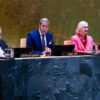
UN Peacebuilding Week: Military Expenditure Soars as Funding for Civilian Protection and Prevention Collapses
From June 22 to 26, the United Nations (UN) commemorated its first annual Peacebuilding Week, marking the 20th anniversary of the UN Peacebuilding Commission’s inaugural session. Featuring discussions among world leaders, policymakers, civil society, and advocates, the event explored how collaboration among governments, international organizations, and the private sector can enhance the visibility and effectiveness of peacebuilding efforts worldwide.
Agency Cannot Be Decreed
India's new education policy asks a great deal of its teachers. The National Education Policy of 2020 and its NISHTHA (National Initiative for School Heads' and Teachers' Holistic Advancement) training scheme, want teachers to be more than deliverers of syllabus. They are to be empowered professionals, agents of change who shape the future of children and, the policy says, of the nation itself. It is a generous and welcome ambition.
Tunisia: Civil Society Criminalised
In May, Tunisian lawyer and journalist Sonia Dahmani was handed her second conviction of the year. Her latest sentence, a two-year jail term, came in reaction to her criticism of poor prison conditions. She previously received an 18-month sentence for calling out the government’s anti-migrant policies. Dahmani faces five more charges under a 2022 cybercrime law that criminalises the spreading of what it calls ‘false information’.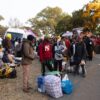
Xenophobia Won’t Bring Wealth – Only Misery – To South Africans Too
Usually, the fiesta to celebrate St Antony at the church with the same name in Crown Mines, Johannesburg, is a lively affair. The church is usually packed with congregants from the Portuguese community, including recent migrants from Mozambique and Angola.
My Journey Through 50 Years of Seychelles’ Independence
On the night of 29 June 1976, just before midnight, I stood among my fellow Seychellois at the heart of a moment that would change our history forever.« Previous Page — Next Page »





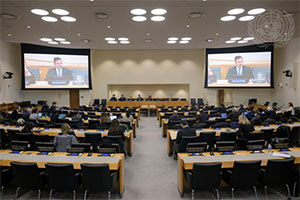 UN Commission on International Trade Law Holds Colloquium on Harmonizing Law in Age of Digital Trade and Finance. Credit: UN Photo/Manuel Elías
Trade has historically been a geopolitical tool that can both be used to propel development as well as entrench inequalities. In various nations in East Asia and Latin America, increased trade, as often seen in export booms, has allowed them to achieve influential standings within the global economy. On the other hand, many low-income countries in Sub-Saharan Africa, Asia, and Latin America struggle to maintain a robust trade performance, and oftentimes are subjugated to exploitative trade dynamics through intense extraction of their natural resources. In recent decades, international trade has reached a new era as emerging economies across the world are rising in economic preeminence. Stable international trade is crucial to world peace as global interconnectedness facilitates reliable diplomacy. Nevertheless, significant challenges are on the rise. Notably, a major wave of United States tariff escalations in January 2025 lifted US import taxes to their highest level since the 1930s, changing market dynamics and forcing renegotiations with global trading partners.These articles are aimed at informing readers about the complexities of trade and its varying effects on development, with a special focus on the consequences of the global economic crisis, the potential of fair trade and the gender implications of trade policies.
Updated by Yilan Batista and Shuli Wong August 2026

The Week with IPS

NEXT STOP - SDGs
Tracking global progress towards a sustainable world
Tracking global progress towards a sustainable world
