Languages
Tuesday, October 6, 2026



News and Views from the Global South
Economy & Trade
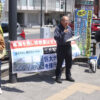
Communities vs. Datacentres
Few things unite Donald Trump’s most ardent supporters with the Democratic Party’s progressive wing, but datacentres are one of them. Across the USA, communities are joining forces across the political divide to oppose developments few want but governments seem determined to impose.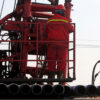
The Oil Market Absorbed the War Shock, but Buffers Are Running Low
The largest disruption to the global oil market in decades should have sent prices soaring. But after spiking at the start of the war in the Middle East, crude prices soon settled in a range of $90 to $100 per barrel, much lower than many had feared. Why didn’t prices climb higher? The answer is that a combination of factors helped cushion the initial blow. But much of that room has now been used up.
As Gold Prices Soar, Communities Pay the Price in Poisoned Rivers, Vanishing Forests and Organized Crime
The sweltering heat inside a London conference hall did not deter Indigenous leader Jackeline Mendoza Díaz from condemning the sheer destruction of the Peruvian Amazon. Her voice occasionally trembled with emotion but delivered a strong message — painting a picture far removed from the glittering gold bars traded in the world’s financial capitals.
Renewed Hostilities in the Strait of Hormuz Threaten to Compound Global Supply Chain Costs
A continuation of hostilities within the Strait of Hormuz is once again threatening one of the world's most critical supply chain arteries, posing another wave of disruption which could choke the global energy, shipping and commodity markets. With roughly a quarter of global seaborne oil trade transiting through the Strait, alongside significant flows of liquefied natural gas and fertilizers, further constraints on commercial traffic could send new cost pressures cascading through supply chains that have yet to absorb the full effects of the earlier conflict.
Full Effects of Strait of Hormuz Disruption May Not Be Felt Until Second Half of 2026
The full economic impact of the disruptions in the Strait of Hormuz may not become clear until the second half of 2026, warns the United Nations Conference on Trade and Development (UNCTAD).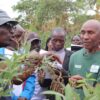
How Farmers Are Learning About Restoring Soils and Scaling Agroecology in Kenya
At Yumbuni Village in Kenya’s Makueni County, farmers from Vihiga and Kakamega counties have travelled over 560 kilometres to join their colleagues in Kathonzweni Ward and see the progress of experiments being carried out on different homemade organic fertilisers and other farm inputs.
WHO: Urgent Action Needed for the Future of Cancer Care
One in five people will be diagnosed with cancer in their lifetime, and when the emotional and physical toll on close family members is factored in, an estimated 92 percent of people globally will be affected by cancer at least once in their lifetime. This staggering statistic is the centerpiece of the World Health Organization (WHO)’s latest global report on cancer.
Pride: Once Again a Protest
On the morning of 28 June, riot police sealed off Taksim Square with iron barriers and enforced bans on all weekend gatherings in Istanbul. Marchers pressed ahead anyway, re-emerging from side streets each time police dispersed them. By the end of the day police had detained at least 50 people, including a journalist. It was Istanbul Pride’s 24th edition, and the 12th year running that the authorities banned it outright.
A License Is Not a Teacher
Ask why so many Indian classrooms struggle, and the answers arrive in the language of audit: Too few trained teachers, too many vacancies, weak colleges of education and low accountability. Each of these is real, and each matters. Yet none of them explains a quiet confession a veteran teacher made to me, years into her career, holding a teacher training degree all the while. “Only this program”, she said, “made me realize what my prior training had left out”. The program she was referring to is a small teaching preparation program in Gurugram, North India called I Am A Teacher, or IAAT.
Western Imperialist Unity Split by Rival Priorities
Trump insists the West must unite on his terms against the Rest, particularly China and Iran. Europe, however, wants greater Trump support for Ukraine’s Zelensky regime to replace Putin’s leadership of Russia.
Arab Regions Remain the Most Underrepresented in the Global Trade System
Despite the importance of international trade as an engine for economic growth and development, only fourteen of the twenty-two Arab states are members of the World Trade Organization (WTO). The remaining Arab states risk missing out on opportunities for greater integration into the global economy and the multilateral trading system facilitated by the WTO.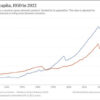
The Tale of Two Countries: Elite Stake and Development
Philippines was the most advanced Southeast Asian country with the highest per capita GDP until about the early 1960s. Its per capita GDP in purchasing power parity terms were about the same as South Korea’s and above that of Thailand in the early 1970s.The Nobel Laureate economist, Gunnar Myrdal, did not have much hope for “disease infested” Indonesia when in 1968 he published his famous Asian Drama: An Enquiry Into the Poverty of Nations. But Indonesia surged ahead since the late 1960s with growth acceleration exceeding that of Philippines; thus, eventually overtaking Philippines in GDP per capita in the mid-1980s. What factors separated Indonesia from Philippines?
Europe’s Funding Question Puts Tanzania’s Fragile Democracy on Trial
Every evening just before sunset, Salima Kitwana hobbles into her backyard holding a photograph.
MEXICO: ‘Our Call for Justice for Our Missing Loved Ones Must Reach the World Just as World Cup Goals Do’
CIVICUS speaks about efforts to use the 2026 FIFA World Cup to highlight Mexico’s enforced disappearance crisis with Ana Enamorado, a Honduran national who continues to search for her missing son in Mexico, and founder of the Regional Network of Migrant Families.
Renewed Attacks on Strait of Hormuz Deepen Global Supply Chain Concerns
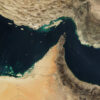
Renewed attacks on commercial vessels in the Strait of Hormuz have intensified concerns over global energy markets along with supply chain disruptions, as the United Nations calls for an end to escalating hostilities within the Persian Gulf.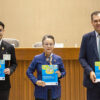
AI Helping Modernize Trade Across Asia and the Pacific, Though Adoption Gaps Remain
Artificial intelligence is reshaping trade processes across Asia and the Pacific. However, despite growing interest, most economies have yet to deploy the technology at scale, according to a new study by the United Nations Economic and Social Commission for Asia and the Pacific (ESCAP) and the Asian Development Bank (ADB).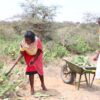
Invasive Prickly Pear Turned into Food, Clean Energy Source
An international academic partnership is helping turn one of Laikipia County’s most destructive and invasive plants, the prickly pear cactus (Opuntia stricta), into a source of food security and clean energy while also helping end perennial resource conflict in the region.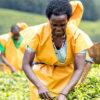
Feeding Africa: Women Farmers Key to Ending Hunger
As FAO coordinates the implementation of the International Year of the Woman Farmer 2026, gender team leader Tacko Ndiaye discusses why investing in Africa’s women farmers is essential for food security, economic growth and creating more resilient agrifood systems
Inside GEF’s Blended Finance Push: Turning Public Money Into Private Capital Leverage
For most of the Eighth Global Environmental Facility (GEF) Assembly last month, the atmosphere inside Samarkand’s sprawling Congress Centre echoed a growing confidence of global environmental policymakers.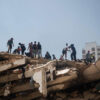
Venezuela’s Humanitarian Crisis Deepens After Worst Earthquake in Decades
In recent weeks, Venezuela’s humanitarian situation has deteriorated sharply following the twin earthquakes on June 24. Marking the strongest seismic event since 1990, the earthquakes and subsequent aftershocks have resulted in a significant loss of life, widespread damage to critical infrastructure, and considerable disruption to livelihoods and humanitarian response efforts.
Towards a Human rights-Centred, Transformative Agenda Beyond 2030
The 2030 agenda cum SDGs are due to be completed in 2030, with negotiations towards a follow-up agenda to begin formally at the UN General Assembly in autumn 2027. Many direct or indirect discussions have, however, already begun, e.g. pluri-laterally at BRICS and G20 meetings and the EU; as well as at the UN in connection with the Summit of the Future, the Doha World Summit for Social Development, the Beyond GDP report; or in fora such as the Hamburg Sustainability Conference. Think tanks and academics, too, are brainstorming on how best to re-ignite a genuine commitment to the SDGs and at the same time reflect on the future.« Previous Page — Next Page »





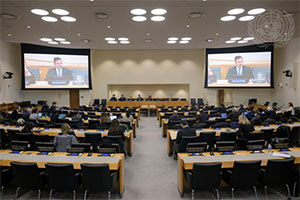 UN Commission on International Trade Law Holds Colloquium on Harmonizing Law in Age of Digital Trade and Finance. Credit: UN Photo/Manuel Elías
Trade has historically been a geopolitical tool that can both be used to propel development as well as entrench inequalities. In various nations in East Asia and Latin America, increased trade, as often seen in export booms, has allowed them to achieve influential standings within the global economy. On the other hand, many low-income countries in Sub-Saharan Africa, Asia, and Latin America struggle to maintain a robust trade performance, and oftentimes are subjugated to exploitative trade dynamics through intense extraction of their natural resources. In recent decades, international trade has reached a new era as emerging economies across the world are rising in economic preeminence. Stable international trade is crucial to world peace as global interconnectedness facilitates reliable diplomacy. Nevertheless, significant challenges are on the rise. Notably, a major wave of United States tariff escalations in January 2025 lifted US import taxes to their highest level since the 1930s, changing market dynamics and forcing renegotiations with global trading partners.These articles are aimed at informing readers about the complexities of trade and its varying effects on development, with a special focus on the consequences of the global economic crisis, the potential of fair trade and the gender implications of trade policies.
Updated by Yilan Batista and Shuli Wong August 2026

The Week with IPS

NEXT STOP - SDGs
Tracking global progress towards a sustainable world
Tracking global progress towards a sustainable world
