Languages
Wednesday, September 23, 2026



News and Views from the Global South
Energy
Gaza’s Deepening Health Crisis Leaves Hospitals Overwhelmed
Despite the implementation of a ceasefire between Hamas and Israel last October, Israeli forces continue to launch airstrikes into the Occupied Palestinian Territory. This has resulted in extensive destruction of infrastructure, loss of human life and exacerbating immense health needs amid an increasingly strained health system in Gaza.
Santa Marta Summit Aims to Push Fossil Fuel Phase-Out as Indigenous Voices Demand Urgent Action
A high-stakes international summit in Colombia starting today (April 24) is expected to sharpen global efforts to phase out fossil fuels, as governments, scientists and Indigenous leaders warn that the world is running out of time to avert irreversible climate damage.
“War-Shock Inflation” and Inflation Phobia: Lessons of History for Central Bankers
The global economy, is at the precipice of “stagflation” – growth slowdown and higher inflation – due to the energy price shock following the illegal US-Israel war on Iran. The International Monetary Fund (IMF) has recently termed this as a “textbook negative supply shock”. For the first time since the 1970s, the prospect of stagflation seems real.
Civil Society Launch a Campaign Against Extractive Industry Exploitation and Land Grabs
Over 800 households in Ikolomani Constituency in Kakamega County, Western Kenya, fear eviction to pave the way for a British firm, Shanta Gold Limited, to begin extracting gold valued at Sh683 billion ($5.29 billion) on an estimated 337 acres of residential and agricultural land.
Israeli Strikes Across Iran and Lebanon Raise Concerns of Broader Regional Instability
The past several weeks have marked a significant escalation in hostilities across the Middle East, with tensions rising among Israel, Lebanon, Iran, and the United States following large-scale exchanges of bombardment. Recent statements from U.S. President Donald Trump, including threats of extensive destruction in Iran, have further inflamed regional tensions and complicated ongoing diplomatic efforts. Humanitarian experts warn that these developments risk further destabilizing cross-border relations and could trigger a broader regional conflict.
Japan and Kazakhstan Draw Closer as Iran Crisis Reshapes Energy and Security Priorities
As tensions surrounding Iran deepen and uncertainty spreads across global energy markets, Japan is once again confronting a structural weakness: its heavy dependence on Middle Eastern oil.
Regime Change – Sometimes It Works, Often It Doesn’t
Donald Trump ran on a platform of ending wars. After his success in Venezuela, he is intoxicated by his military achievements and is banking on regime change in several countries.

Iran War Threatens World Food Crisis
While media coverage of Iran’s restrictions on passage through the Hormuz Straits focuses on fuel prices, partial closure is also disrupting crucial fertiliser and other supplies, risking catastrophe for billions worldwide.
War in Iran, Middle East Threatens Global Agrifood Systems
The current conflict in Iran and the Middle East region threatens to disrupt the global energy and agri-food sectors, as the closure of the Strait of Hormuz affects oil and fertilizer exports for farmers during critical harvest seasons.
Iran War: Winners and Losers
Who benefits from a war of choice against Iran? The immediate political winners may include President Donald Trump and Prime Minister Benjamin Netanyahu. But if the war continues for a longer period, the political consequences for both Trump and Netanyahu could be uncertain. However, the most consistent beneficiaries are defense contractors, defense manufacturers and military lobbyists, who profit regardless of the outcome.
Central Bank Hedging Triggered Gold Fever
In mid-1971, US President Nixon ended the dollar’s gold peg at $35 per ounce, triggering de-dollarisation. The 2025 gold and silver rush followed private speculators trying to profit from central banks hedging against perceived new risks.
Oil Shocks, Political Upheaval and the One Solution Governments Keep Ignoring
Once again, global oil prices are spiking, driven by the Israeli-US war against Iran. With Iran retaliating by attacking infrastructure and transport hubs and blocking the Strait of Hormuz, through which one-fifth of the world’s oil passes, oil supplies from the region are being choked, pushing up prices. The cost of a barrel of Brent crude – the international benchmark for oil prices – stood at US$73 before the conflict but has surged beyond US$100 since. It could go higher still as war continues.
The Implausible Regime Change in Iran and How the War Affects the World
The US/Israeli war on Iran might be like messing with a hornets’ nest, spreading fear and chaos all around. The Israeli government claimed that the war was a “preventive” measure to address an immediate threat of Iran constructing a nuclear bomb. However, this war has obviously been meticulously planned over a long period of time and it now seemed to be the right time to put this plan into action. The Iranian air defences had been weakened through earlier attacks, while recent Israeli strikes decapitated Hezbollah’s Lebanese leadership, Iran’s allies north of Israel. With Gaza destroyed and Syria’s unreliable Assad gone, Netanyahu had succeeded in securing his party’s coalition with the far-right and could continue to count upon the support of the Trump Administration, providing Israel with a free hand vis-à-vis the Palestinians and turning a blind eye to the massacre of civilians. The U.S. is continuously supporting Isreal with missile-defence systems, coordination, cooperation, and intelligence sharing.
VENEZUELA: ‘An Economically Stable Authoritarian Model Could Become Entrenched’
CIVICUS discusses the situation in Venezuela following US intervention and the ousting of President Nicolás Maduro with Verónica Zubillaga, a Venezuelan sociologist who specialises in urban violence, state repression and community responses to armed violence.
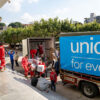
UN: Amid Security Risks in Middle East, Humanitarian Work is Underway
As military fighting breaks out across the Middle East with increasing frequency and intensity, the United Nations promises to ramp up its humanitarian response on the ground.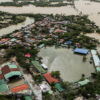
As La Niña Fades, WMO Experts Warn That El Niño Could Set New Global Heat Records
Earlier this week World Meteorological Organization (WMO) announced that the weakening conditions of La Niña conditions are beginning to fade, with climate conditions transitioning toward ENSO-neutral —a phase in which neither El Niño nor La Niña is present and oceanic and atmospheric conditions in the tropical Pacific remain near average. The agency noted that this shift could lead to the development of El Niño later in the year, a pattern typically associated with rising global temperatures and an increased risk of extreme weather events worldwide.
‘We Are Seeing an Economic Transition, but No Democratic Transition’
CIVICUS discusses the situation following the US intervention in Venezuela with Guillermo Miguelena Palacios, director of the Venezuelan Progressive Institute, a think tank that promotes spaces for dialogue and democratic leadership.

Protecting Africa’s Ocean Future and Why a Precautionary Pause on Deep-sea Mining Matters
The world is entering a decisive period for the future of the ocean. With the High Seas Treaty coming into force and meaningful progress being made on the World Trade Organization Agreement on Fisheries Subsidies, global momentum for stronger marine governance is building. Yet, new pressures linked to the push for deep-sea mining — the extraction of minerals from seabed thousands of meters below the ocean surface — threaten to undermine these gains. To safeguard progress, global decision-making will have to keep pace with such emerging risks. In this context, Africa will host several global discussions in 2026, including those that will shape the ocean's future, with a series of opportunities for leadership starting with the African Union Summit in February to the Our Ocean Conference in Mombasa, Kenya in June.
Venezuela at a Crossroads
When US special forces seized Nicolás Maduro and his wife from the presidential residence in Caracas on 3 January, killing at least 24 Venezuelan security officers and 32 Cuban intelligence operatives in the process, many in the Venezuelan opposition briefly dared hope.
U.S. Exit from Paris Agreement Deepens Climate Vulnerability for the Rest of the World
On January 27, the United States officially withdrew from the Paris Agreement, an international treaty adopted in 2015 aiming to reduce global warming and strengthen countries’ resilience to climate impacts. Following a year of regulatory rollbacks and sustained efforts by the Trump administration to dismantle federal climate policy, this move is expected to trigger wide ranging ripple effects—undermining international efforts to curb climate change, accelerating environmental degradation and biodiversity loss, and increasing risks to human health, safety, and long-term development.
Systemic Infrastructure Attacks Push Ukraine Into Its Deepest Humanitarian Emergency Yet
Nearly four years into Russia’s full-scale invasion, Ukraine faces another winter marked by widespread humanitarian suffering and continued indiscriminate attacks. The final months of 2025 were particularly volatile, characterized by routine bombardment of densely populated areas and repeated strikes on residential neighborhoods, critical civilian infrastructure, and humanitarian facilities. As hostilities expanded into new territories over the past year, humanitarian needs grew sharply, with many war-torn communities residing in uninhabitable areas.« Previous Page — Next Page »


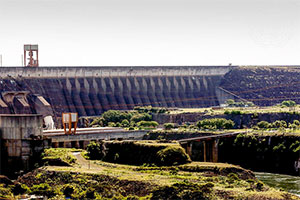 UN Power Plant, Paraguay. Credit: UN Photo/Evan Schneider
Energy has posed a great challenge for economies around the world. As global energy consumption skyrockets throughout the years, so does the need for sustainable solutions. The Sustainable Development Goals are essential in providing people with access to safe, affordable, and sustainable energy sources that minimize harm on the planet. Progress towards these goals opens the door for an advancement in modernization for communities on a global level and allows for a potential mitigation of tensions between nations.
The UN’s Summit of the Future in 2024 offered new initiatives that are being taken to achieve these goals, including a decreased reliance on fossil fuels, a switch to renewable energy sources, and improved climate financing.
IPS is well positioned to provide relevant, insightful, and compelling analysis of recent updates and measures being taken around the world to achieve a cleaner future.

The Week with IPS

NEXT STOP - SDGs
Tracking global progress towards a sustainable world
Tracking global progress towards a sustainable world
