Languages
Sunday, September 27, 2026



News and Views from the Global South
Energy
Biogas, a Solution to Poultry Pollution in El Salvador
Still in its early stages and with few players, the poultry sector in El Salvador is taking small steps toward environmentally sustainable production by using its biological waste to generate biogas and, in turn, electricity –an equation that benefits the natural environment, communities, and the farms themselves.
Clean Energy Sources Are Beginning to Overtake Fossil Fuels, But Is It Too Late?
As a result of the worsening climate crisis, extreme weather patterns have disrupted nearly all aspects of human life around the world. With the impacts of fossil fuel reliance being more pronounced than ever before, the United Nations (UN) has implored governments and industries to begin adopting more sustainable, renewable energy sources.
Global South calls for Strategic Energy Transition Amidst SDG Target Slowdowns
At the UN 2025 High Level Political Forum last week, global energy leaders warned that without urgent action in expanding access to clean energy, hundreds of millions will remain vulnerable, and the world will risk falling short of its 2030 SDG deadline.
Humans Have Blown Past 6 of 9 ‘Planetary Boundaries’: Governments Alone Won’t Fix This
Nearly ten years after the Paris Agreement — a legally binding commitment to reduce greenhouse gas emissions — the gap between climate goals and government actions remains stubborn.
China is the Driving Force Behind More, Newer Renewable Energies in Latin America
China, with its investments, products, technology, and innovation focused on solar and wind farms in Latin America and the Caribbean, as well as on electricity networks and services, stands out as a driving force for the region's shift toward energy less reliant on fossil fuels and increasingly cleaner and greener.
From Drylands to Dignity: How Solar Energy and Climate-Smart Farming Are Empowering Communities in Burkina Faso
In the heart of Burkina Faso’s drylands, in the village of Zoungou, a quiet transformation is underway. Alhaji Birba Issa, a smallholder onion farmer, bends over neat rows of lush green crops, the hum of solar-powered pumps audible in the background.
From Streets to Rivers: Driving Bangkok’s Sustainable Transport Future
Thailand’s transport sector is a significant contributor to national greenhouse gas emissions, accounting for 18.4 per cent of the country’s total emissions. Bangkok is at the centre of this challenge. With more registered vehicles than residents, the resulting traffic congestion worsens air pollution and strains the city’s roads and overall mobility infrastructure.
‘International Demand for Coltan Is Linked to Violence in the DRC’
CIVICUS speaks with Claude Iguma, a mining governance expert with a PhD in Social Sciences, who is based in Bukavu, South Kivu province, eastern Democratic Republic of the Congo (DRC).

UN Reform: Is it Time to Renew the Idea of Clustering the Major Environmental Agreements?
“Never let a good crisis go to waste.” Winston Churchill’s famous maxim feels very relevant today, when multilateralism and many environmental causes seem to be in retreat. We now face a triple planetary crisis of climate change, biodiversity loss, and pollution.
The Race Towards Clean Energy: A World Still Gripped by Coal
Global investments in energy exceeded USD 3 trillion in 2024, with at least USD 2 trillion being invested in clean energy technology and infrastructure. Infrastructure. Despite that progress, fossil fuel consumption continues to rise with little sign of slowing.
‘Only a Handful of Environmental Organisations Still Dare Challenge Corporate Projects in Court’
CIVICUS speaks to Cristinel Buzatu, regional legal advisor for Central and Eastern Europe at Greenpeace, about how Romania’s state gas company is weaponising the courts to silence environmental opposition.

World Bank’s IFC Finally Adopts Remedial Action Framework
The World Bank’s private sector arm has raised the bar — and others may follow. On April 15, the International Finance Corporation (IFC) became the first development finance institution to adopt a formal remedy policy, publishing its Remedial Action Framework (RAF) to address environmental and social harm caused by IFC-supported investment projects.
Pumped Storage Hydropower is an Option for Latin America
Having hydroelectric power without damming rivers, dismantling the environment or displacing populations is possible in Latin America and the Caribbean, with reversible power plants that take advantage of their mountainous geography, and pave the way for only renewable sources to generate electricity.
Multi-Year Drought Gives Birth to Extremist Violence, Girls Most Vulnerable
While droughts creep in stealthily, their impacts are often more devastating and far-reaching than any other disaster. Inter-community conflict, extremist violence, and violence and injustice against vulnerable girls and women happen at the intersection of climate-induced droughts and drought-impoverished communities.
Trump Undresses Rival Trade Myths
President Trump’s tariffs have exposed neoliberal trade ideology and undermined corporate lobbying in the name of free trade. But his rhetoric has also exposed the fallacies of his own economic strategy.
The Young Nigerian Innovator Lighting Up Communities With Recycled Solar Innovation
When Stanley Anigbogu heard his name announced as the 2025 Commonwealth Young Person of the Year in London earlier in March, he could hardly believe it. He had not expected to win, especially among a pool of brilliant nominees from across the globe.
A New Solar Power Plant Powers Progress in Zimbabwe’s Renewable Energy Sector
When load shedding was introduced over the past two years, Jose Tenete Domingos Lumboa had to deal with learning disruptions worsened by the backup generators in the eastern part of Zimbabwe.
Make Use of all Urban Waste, a Utopia in Brazil?
In 2014, Santa Catarina became the first and only state free of open-air garbage dumps in Brazil. Now, 14 of its municipalities are seeking to also free themselves from landfills and make use of nearly all urban solid waste.
Solar Energy Brings Water to Iconic Salvadoran Village of El Mozote
The worst massacre of civilians in Latin America occurred in the Salvadoran village of El Mozote, where environmental projects are beginning to emerge, slowly fostering awareness about protecting the natural resources of this deeply symbolic site, embedded in the country's historical memory.
Hundreds of Cholera Cases Are Declared Per Day in Sudan
A particularly virulent outbreak of cholera was detected in the Khartoum State of Sudan and is a direct result of the Sudanese Civil War, warns the United Nations.
In a Changing World, Protecting Nature is Protecting Our Future
In a world marked by armed conflict, threats to democracy, technological disruptions, and geopolitical tensions, many people are asking: Why should we prioritize environmental crises when there are other, more visible or perceived as more urgent challenges?« Previous Page — Next Page »


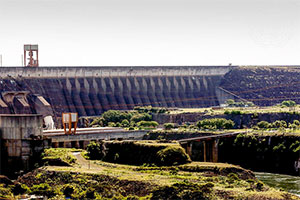 UN Power Plant, Paraguay. Credit: UN Photo/Evan Schneider
Energy has posed a great challenge for economies around the world. As global energy consumption skyrockets throughout the years, so does the need for sustainable solutions. The Sustainable Development Goals are essential in providing people with access to safe, affordable, and sustainable energy sources that minimize harm on the planet. Progress towards these goals opens the door for an advancement in modernization for communities on a global level and allows for a potential mitigation of tensions between nations.
The UN’s Summit of the Future in 2024 offered new initiatives that are being taken to achieve these goals, including a decreased reliance on fossil fuels, a switch to renewable energy sources, and improved climate financing.
IPS is well positioned to provide relevant, insightful, and compelling analysis of recent updates and measures being taken around the world to achieve a cleaner future.

The Week with IPS

NEXT STOP - SDGs
Tracking global progress towards a sustainable world
Tracking global progress towards a sustainable world
