
Saturday, November 28, 2026



News and Views from the Global South
Environment
RIGHTS: Go Green, Save the Indigenous
African indigenous peoples are important custodians of their natural environments with valuable local knowledge and skills, but are struggling to survive, according to a report.
La Niña and Climate Confusion
While the climate cycle known as La Niña gradually winds down over the equatorial Pacific, its local consequences have surprised experts in the countries most affected.
Fisherfolk to the Turtle Rescue!
A conservation campaign is motivating fisherfolk in southern Brazil to fight accidental capture of sea turtles.Ecobreves – ARGENTINA: Historic Ruling Defends Wetland
A 20-kilometer embankment constructed by an agri-business firm in the Esteros del Iberá wetlands, in the eastern Argentine province of Corrientes, must be demolished, says a court order.Ecobreves – BRAZIL: Banks Join Defense of Amazon
Banks, whether public or private, will have to apply environmental criteria as of July 1 in granting loans for rural activities in the Brazilian Amazon.Ecobreves – HONDURAS: Protests Against Forest Exploitation
More than 400 residents of three villages in El Porvenir municipality, located in the central Honduran department of Francisco Morazán, have protested forest exploitation on Pacaya Hill, which is the source of their water supply.Ecobreves – MEXICO: A Highway and Its Discontents
A project to build 62 kilometers of highway in an area neighboring the Mexican capital where there is a major forest has created tension between the government, environmentalists and residents.
ENVIRONMENT-INDONESIA: Deforestation Causing More Than Landslides
While conjecture remains over whether deforestation was to blame for the landslides and floods that killed dozens of people in Indonesia on Dec.26 last year, there appears to be a consensus regarding other consequences of forest destruction.
ENVIRONMENT-MEXICO: Record Reforestation, But Some Still Sceptical
A year ago, environmental activists criticised Mexico's national forest policy, saying it was deceptive and insufficient. Now voices are being heard that extol the government's effort and its goal to plant 280 million trees in 2008 - 30 million more than in 2007.ENVIRONMENT: Action Will Prove Much Cheaper
Government inaction will lead to increased climate change, species loss, increased water shortages and health problems by 2030, according to a new OECD report. But key challenges can be addressed at a fraction of the cost of inaction.
BRAZIL: Small Fishermen Trade in Nets for Oyster Farms
In a modest restaurant on a beach at the southern tip of the Brazilian island of Florianópolis, a couple celebrates, with champagne and oysters, "one more year of vacations and love."
CANADA: Native Leader Serving Six Months for Opposing Mine
Algonquin community leader Robert Lovelace had never been charged with an offence, but when a uranium company began prospecting for radioactive ore on unceded native land without engaging in consultation, he decided to take action, organising a non-violent blockade.
Q&A: Car-Centric Urban Growth Fuelled By Subsidies
Pollution and road congestion are at crisis proportions in India’s cities. Yet, the government encourages car-centric urban growth, subsidised by public largesse, says Anumita Roychowdhury of the non-governmental Centre for Science and Environment (CSE), which is leading a campaign for cleaner air in Delhi.DEVELOPMENT: Rising Rice Prices Hit Asian Stomachs
Soaring global rice prices are hitting the stomachs of Asia’s poorest citizens.CLIMATE CHANGE: The Ostrich Brigades
Colder than usual January temperatures in the United States have brought the climate change deniers out of hibernation, flooding websites, and opinion and letters pages about the "great global warming hoax". They even organised their own conference on denial in New York City this week.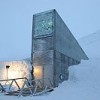
DEVELOPMENT: NGOs Wary of Doomsday Seed Vault
Agricultural non-governmental organisations (NGOs) working in India and elsewhere are criticising the newly-opened Global Seed Vault (GSV) at Svalbard in Norway as fundamentally unjust in its objectives.
Q&A: ''Plan by TNCs to Control Seeds Bound to Fail''
An attempt by a handful of developed countries and trans-national corporations (TNCs) to monopolise and control the world's seeds is doomed to failure, says Tewolde Berhan Gebre Egziabher, director-general of Ethiopia's Environment Protection Agency, and a formidable negotiator at biodiversity-related fora.DEVELOPMENT-SWAZILAND: To Relocate or Not To Relocate?
Climate change appears to have permanently altered certain areas of east and southern Swaziland, where good harvests have not been achieved for over a decade. Agriculture officials and non-governmental organisations (NGOs) now question whether these areas can still support communities.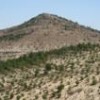
Record Reforestation, But Still Some Discontent
An unprecedented budget for Mexico's forest policies and the government's goal to plant hundreds of millions of trees have not been enough to calm the debate about the scope of deforestation.Ecobreves – BRAZIL: Yanomami Fight Mine
Eight Yanomami Indians protested before Brazil's Chamber of Deputies on Feb. 26 against attempts to authorize mining operations on their land.Ecobreves – VENEZUELA: Blue Crab Victim of Pollution
The blue crab (Callinectes sapidus) that inhabits the eastern shore of Lake Maracaibo, in northwest Venezuela, is the victim of oil pollution and urban waste.« Previous Page — Next Page »


Through our global network of local writers, we are continuing our award-winning coverage of global and local environmental challenges, with a focus on the people for whom the ecosphere matters in a direct way: rural dwellers who have little means to protect themselves against adverse conditions; communities that need to switch to sustainable development in order to survive; poor women and children, who are the most vulnerable in natural disasters. Sponsored by the United Nations Environment Program (UNEP), the United Nations Development Program (UNDP) and The World Bank (WB), IPS also maintains the award-winning Tierramérica, a specialised information service on environment and development.

The Week with IPS

Tracking global progress towards a sustainable world


