
Sunday, November 29, 2026



News and Views from the Global South
Environment
CLIMATE CHANGE: Global Consensus, Lingering Discrepancies
The Intergovernmental Panel on Climate Change (IPCC) has achieved a general consensus with respect to the report presented at its 27th session this week in Spain, but it must still overcome discrepancies raised by some countries.
Q&A: 'Nature Capital Is the Market Too'
If the world political agenda is dictated to by the economy, "we need natural and social capital to be included in the market," says Robert Costanza, director of the Gund Institute for Ecological Economics at the University of Vermont in the U.S.CLIMATE CHANGE-EU: A Little Tax Proposed on a Lot of Emissions
Members of the European Parliament (MEPs) have voted to require airlines to obtain permits to emit greenhouse gases.ENVIRONMENT-BRAZIL: Clean-up Efforts, a Drop in the Ocean
The contrasts are striking, and are plain to visitors from the moment they arrive in Rio. From the plane they can see the sparkling jewel of Guanabara bay, as they land on its largest island, but then they have to drive past the fetid waters of a sluggish channel and a number of "favelas" or shanty towns to get to the city centre and tourist areas.
ENVIRONMENT: Mekong River Commission Remiss – Activists
The campaign to save South-east Asia’s largest waterway from being blocked by a series of massive dams picked up pace this week, with activists accusing a regional river authority of abandoning its mission to protect the Mekong River.ECONOMY-CHINA: Jittery as Fuel Prices Surge
China’s fast-growing economy might appear impervious to rising oil prices but government leaders are jittery as crude surges toward the sensitive 100 US dollar mark.
SOUTH KOREA: 'Toilet Training' for Adults Underway
Move over toddlers, adults need to be potty-trained too.CLIMATE CHANGE: The Worst Can Still Be Avoided
Climate change is not inexorable, if measures are adopted immediately, said scientists and government officials as the 27th session of the Intergovernmental Panel on Climate Change (IPCC) began Monday in Spain.
Q&A: “The U.S. Has Its Own Toilet Problem”
Come Nov. 21, the United Nations will formally launch the "Ínternational Year of Sanitation, 2008", with the primary goal of finding ways to provide toilet facilities to some 2.6 billion people worldwide who lack proper sanitation.
ENVIRONMENT: Between a Reef and a Hard Place
Coral reefs face certain extinction in a few decades unless there are unprecedented reductions in carbon emissions, leading Australian scientists warn.PHILIPPINES: Water Privatisation – Boon or MNC Conspiracy?
Supporters call it a model for the future. But critics say it is a conspiracy by multilateral financial institutions to privatise water supplies and open the floodgates for multinational corporations (MNCs) to reap profits from Asia's poor.
BRAZIL: Biofuel Revolution Reaches Airline Industry
Biokerosene has the potential to take off on the international market faster than other alternative fuels, even though it is among the newest and faces stricter quality standards because it is to be used in aviation.
Lightning in the Sky Fed by Underground Methane
The lightning of the Catatumbo, in the north of the South American continent, is one of the biggest natural regenerators of the atmospheric ozone that protects life on Earth from the Sun's harmful rays.Ecobreves – HONDURAS: Mining Companies Accused of Pressuring Lawmakers
The Honduran Civic Alliance for Mining Law Reforms has accused mining companies operating here of putting pressure on Congress to postpone approval of legislative changes.Ecobreves – BRAZIL: Sugarcane Expansion Rejected
The population of the Brazilian town of Uberaba, in the eastern state of Minas Gerais, has mobilized against the expansion of sugarcane fields.Ecobreves – ARGENTINA: 50 Projects for Achieving the MDGs
Some 50 projects of public policy and of civil society actions aimed at achieving the Millennium Development Goals (MDGs) in Argentina were presented at a course for promoting the goals, adopted in 2000 by the United Nations.Ecobreves – MEXICO: Mangroves in Danger
Before year end, Mexican lawmakers could pass a bill that would dismantle protection of mangrove forests, a type of ecosystem that today covers a total of 650,000 hectares -- 306,000 less than in 1993.URUGUAY-ARGENTINA: Smoke from Pulp Mill Clouds Relations
Everything was in place for the beginning of the end of the long-running conflict: a friendlier face about to be sworn in as president in Argentina, a tiny bit of flexibility on the part of Uruguay, a few points of agreement, and a Spanish mediator appointed by the King.AGRICULTURE: Costly Prosperity
Many of the people who are now complaining that biofuels are driving up agricultural prices fought in the past against the "deterioration of the terms of exchange," or the devaluation of commodities with respect to manufactured goods, as a key factor in underdevelopment.ENERGY: Fossil Fuel Train Heads into Overdrive
Today's skyrocketing fossil fuel use will accelerate far faster in the coming decades, driving oil prices higher and virtually guaranteeing catastrophic climate change in the decades to come, energy experts say.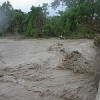
DOMINICAN REPUBLIC: Noel Leaves Poorest in Dire Straits
The bus carrying relief volunteers from the Colectiva de Mujeres y Salud stopped at the flooded Bao River, about three hours' drive from the capital, unable to cross.« Previous Page — Next Page »


Through our global network of local writers, we are continuing our award-winning coverage of global and local environmental challenges, with a focus on the people for whom the ecosphere matters in a direct way: rural dwellers who have little means to protect themselves against adverse conditions; communities that need to switch to sustainable development in order to survive; poor women and children, who are the most vulnerable in natural disasters. Sponsored by the United Nations Environment Program (UNEP), the United Nations Development Program (UNDP) and The World Bank (WB), IPS also maintains the award-winning Tierramérica, a specialised information service on environment and development.

The Week with IPS

Tracking global progress towards a sustainable world


