Languages
Friday, October 23, 2026



News and Views from the Global South
Featured
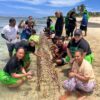
Bridging Knowledge Systems: How Pacific Communities Are Reclaiming Climate Solutions Through Nature
Climate change is no longer a distant threat. Across the Pacific, it is a daily reality reshaping coastlines, livelihoods, and the delicate balance between people and the environment. But in a region long defined by resilience, solutions are not being invented from scratch. They are being remembered, strengthened, and scaled.
AI: ‘African Governments Are Using “smart City” Systems to Monitor Dissent and Consolidate State Control’
CIVICUS discusses the spread of AI-powered surveillance in Africa with Wairagala Wakabi, executive director of the Collaboration on International ICT Policy for East and Southern Africa (CIPESA) and co-editor of Smart City Surveillance in Africa: Mapping Chinese AI Surveillance Across 11 Countries, the latest report by the African Digital Rights Network (ADRN) and the Institute of Development Studies (IDS).
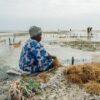
Explainer: How the GEF Funds Global Environmental Action
The Global Environment Facility, widely known as the GEF, plays a central role in financing environmental protection across the world. It supports developing countries in tackling climate change, biodiversity loss, land degradation, pollution, and threats to ecosystems.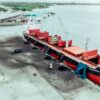
Shipping Industry Seeks Certainty as Experts Back Strong Net-Zero Framework
As global shipping braces for another round of high-stakes negotiations, a volatile mix of rising fuel costs, geopolitical tensions and deep political divisions is testing the fragile consensus around a proposed Net-Zero Framework (NZF) aimed at decarbonising one of the world’s most polluting industries.
The Five Enablers of the Israeli-Palestinian Conflict
Every powerful actor in the Israeli-Palestinian conflict professes to seek peace. The US and EU repeat the two-state mantra, the Arab states invoke Palestinian rights, AIPAC proclaims its defense of Israel’s security, and Israeli opposition parties promise “responsible” leadership and stability.
Denmark’s Warning
When Danish Prime Minister Mette Frederiksen addressed her supporters on election night on 24 March, she chose her words carefully. Losing four percentage points after almost seven years in power, she suggested, wasn’t so bad given there’s been a pandemic, a war in Europe and a confrontation with Donald Trump over Greenland. The reality was the Social Democrats had recorded their worst general election result since 1903. Meanwhile, the far-right Danish People’s Party (DPP) tripled its seat count, despite years of the Social Democrats leading a systematic crackdown on immigration to try to prevent it gaining support.
The Day the General Assembly Moved to Geneva– to Provide a Platform to a PLO Leader…
The United Nations faces two crucial elections later this year: the election of a new Secretary General, with no confirmed date for polling, and the election of a new President (PGA), scheduled for June 2, for the upcoming 81st session of the General Assembly.
Civil Society Launch a Campaign Against Extractive Industry Exploitation and Land Grabs
Over 800 households in Ikolomani Constituency in Kakamega County, Western Kenya, fear eviction to pave the way for a British firm, Shanta Gold Limited, to begin extracting gold valued at Sh683 billion ($5.29 billion) on an estimated 337 acres of residential and agricultural land.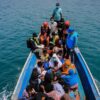
Why the Rohingya Refugees in Bangladesh Need Work, Not Just Rations
While global attention right now is on escalating geopolitical tensions involving the United States, Israel, and Iran, another crisis continues quietly in Bangladesh.
ARGENTINA: ‘Under the New Law, Workers Have No Real Scope to Defend Their Rights’
CIVICUS discusses recent regressive changes to Argentina’s labour laws with Facundo Merlán Rey, an activist with the Coordination Against Police and Institutional Repression (CORREPI), an organisation that defends workers’ rights and resists state repression.
From Flooded to Future Ready: Why Asia Pacific Cities must Become ‘Sponges’
As the Pacific recovers from a severe cyclone season and Asia braces for the monsoon, flood readiness has become a defining test of sustainable urban development.
Informal Settlements Grapple With Climate Extremes in Pacific Islands
A rising cycle of poverty and extreme weather threatens many towns and cities, especially those situated on coastlines, in the Pacific Islands. Urban centres in the Pacific have grown at an unprecedented rate this century, rapidly straining national resources for urban planning. But governments are now making progress on improving people’s lives in the informal settlements that dominate the urban sprawl in some of the region’s largest cities.
Will Sierra Leone’s Democracy Make Room for Persons with Disabilities?
As Sierra Leone prepares for its next national election in 2028, political parties across the country have begun setting strategies and preparing to select their candidates. However, persons with disabilities say they remain poorly represented and are calling on political parties to nominate them as candidates ahead of the election.
Unexpected Ally Stepping Up Against Sexual Assault in Kenyan Slums: Landlord
Trigger warning: This article discusses child rape. Their quiet latent power comes from being ever-present eyes and ears on the ground. As they move around their compounds, collecting rent and checking on anywhere from 10 to 20 houses occupied by as many as 200 people, they see and hear things.
Nations pledge $3.9bn to Global Environment Facility as Race to Meet 2030 Goals Tightens
With just four years left to meet a series of global environmental targets, governments are committing to shore up one of the world’s main environmental funds, the Global Environment Facility (GEF), with a $3.9 billion pledge.
Humanitarian Response in Lebanon ‘Under Significant Strain’ after Wednesday Airstrikes
On April 8, Israeli military forces launched the deadliest series of airstrikes on Lebanon since hostilities escalated in early March, resulting in the deaths of at least 254 civilians. This latest incident threatens to further complicate humanitarian efforts in Lebanon that are already under immense pressure.
Stateless at Home: Kenyan Somalis Struggle to Reclaim Citizenship from Refugee Records
In 2006, Amina Saida was only two years old when her parents moved to the Dadaab refugee camp in northern Kenya, near the border with Somalia.
The Race Is On: Who Will Be the Next UN Secretary General?
Let the race begin! April 1st was the deadline for candidates to be nominated for Secretary-General. Was it a coincidence that the deadline was April Fool’s Day? Judging by the quality of the official candidates, we suspect so.
Cambodia Unveils Statue Honouring Tanzanian-Born Bomb-Sniffing Rat Magawa
At Mazimbu village, not far from Tanzania’s Sokoine University of Agriculture (SUA), Stephano Jaka still remembers the night he trapped and killed a rat that had been feasting on his maize cobs – stored in a meticulously woven basket designed to protect grains from rodents.
From Dialogue to Delivery: The Pacific’s Climate Mobility Moment
Rising seas, intensifying storms, saltwater intrusion and shifting coastlines are the lived realities of Pacific communities today. Families are making difficult decisions about whether to stay, adapt or move. Some communities have already relocated. Others are preparing for that possibility. Many are determined to stay for as long as possible on lands that hold ancestral meaning and identity.
Post-Protest Bangladesh: Restoration More than Renewal
Bangladesh’s first credible election in nearly two decades delivered a landslide win for the Bangladesh Nationalist Party (BNP) and its leader Tarique Rahman, son of a former prime minister, just back from 17 years of self-imposed exile.« Previous Page — Next Page »





The Week with IPS

NEXT STOP - SDGs
Tracking global progress towards a sustainable world
Tracking global progress towards a sustainable world
