Languages
Thursday, November 19, 2026



News and Views from the Global South
Global Geopolitics
World Heading to Slow Motion Health Crisis
Sixty percent of all global deaths are now caused by non- communicable diseases (NCDs) such as cancer, diabetes and lung disease, according to a report by the U.N. Secretary-General's office.MIDEAST: Confrontation Begins Before the Sailing
Activists are engaged in a harsh confrontation with Israeli authorities days before the international ‘Freedom Flotilla II – Stay Human’ sets sail towards the Gaza strip in an attempt to break the naval blockade Israel has imposed since 2007.TURKEY-ISRAEL: Diplomatic Wounds Leave Half-Healed Scars
Turkey and Israel are close to resolving their dispute over last year's flotilla fiasco, but the partnership that existed between them for more than a decade will almost certainly stay submerged.On the Road to Green Energy for All
Like our cave-dwelling ancestors of 200,000 years ago, nearly three billion people still use fire for cooking and heating. Of those, some 1.5 billion people have no access to electricity. For a billion more, their only access is to sporadic and unreliable electricity networks.Navigating Challenges, Brazil Steps Up AIDS Response
Long heralded as a model for the global response to HIV/AIDS, Brazil is intensifying its actions, at home and abroad, in the face of potential setbacks including an arising need for new treatment regimens, the resultant increase in drug prices and the debate over intellectual property rights.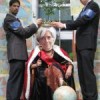
Days Ahead of Official Election, Lagarde ‘Crowned’ IMF Chief
In a small park situated between the headquarters of the International Monetary Fund (IMF) and the United States Department of the Treasury in Washington, French Finance Minister Christine Lagarde was crowned head of the world's most powerful monetary institution on Thursday.Prescription Drug Abuse on the Rise
Some 13 million people across Europe, Russia, and other parts of the world remain largely dependent on Afghanistan's poppy production to fuel their addiction to heroin, according to a new U.N. report on global use of illicit drugs.AFGHANISTAN: Obama Takes the Centrist Option on Withdrawal
In a much-anticipated decision, U.S. President Barack Obama announced here Wednesday evening that he will withdraw 10,000 of the 100,000 U.S. troops currently deployed in Afghanistan by the end of this year and a total of 33,000 by some time next summer.
Second Humanitarian Flotilla Prepares to Sail for Gaza
As the second Freedom Flotilla, made up of some 10 ships carrying 1,000 activists from 20 countries, gets ready to sail for the besieged Gaza Strip, Israeli authorities are stepping up their threats.U.N. Chief Quashes Reports of Run for President of Korea
Ban Ki-moon, who has been re-elected Secretary-General of the United Nations for a second five-year term beginning next January, dismissed longstanding speculation that he plans to run for the office of president in his home country, South Korea.Libya Deaths Trigger Rift Over NATO Campaign
Civilian deaths have raised serious misgivings about the U.N.-authorised NATO intervention in Libya among the most ardent supporters of the ongoing air campaign.Poor Countries Host Vastly More Displaced People Than Wealthier Nations
The hardest part of Jan Egeland’s job is coming home at the end of the day. He is the Director of the Norwegian Institute for International Affairs and the former U.N. Emergency Relief Coordinator, and has travelled to the farthest reaches of the world to help protect refugees and displaced people.Pew Survey Reaffirms Pakistanis Hostility Toward the U.S.
The Pakistani public’s perceptions of the United States have hit their lowest levels since the 2002 invasion of Afghanistan, according to a new survey released here Tuesday by the Pew Global Attitudes Project (GAP).
Carbon Markets Are Not Cooling the Planet
Carbon markets have been widely promoted as the only way to generate enough money to enable industries and countries to reduce their carbon dioxide emissions, which are largely responsible for global warming. The only problem is that nearly 20 years after their conception, they have failed to work, and have also been subject to fraud and other financial crimes.Syria Accuses EU of Fomenting ‘Chaos’
Walid al-Muallem, Syria’s foreign minister, has said the European Union’s reaction to President Bashar al-Assad’s speech on Monday showed it wanted to "plant strife and chaos" in the country.Women’s Soccer Coming to the Fore
This time last year the entire world gathered in front of TV screens to watch the World Cup. According to International Federation of Association Football (FIFA) estimates, 3,178,856 people made their way to South Africa, and around the globe 700 million viewers watched the Spanish victory in the final match.U.S.: Supreme Court Walmart Decision Is a “Blow to Justice”
Labour and women’s rights groups are strongly criticising the Supreme Court’s rejection of a class action suit brought by current and former female employees of Walmart who sought to represent 1.5 million female employees who claim that the company discriminated against women.OP-ED: Growing Goat Herds Signal Global Grassland Decline
After the earth was created, soil formed slowly over geological time from the weathering of rocks. It began to support early plant life, which protected and enriched it until it became the topsoil that sustains the diversity of plants and animals we know today. Now the world's ever-growing herds of cattle, sheep, and goats are converting vast stretches of grassland to desert.Building Vaccines for the “Bottom Billion”
As the world marks 30 years since HIV/AIDS was first identified, vaccine researcher Dr. Peter Hotez hopes intervention programmes can begin to incorporate treatment for some lesser-known ailments called neglected tropical diseases, or NTDs.Africa Faces Explosive Population Growth
The African continent, which is projected to make significant economic gains over the next decade, is in danger of being weighed down by a dramatic explosion in population growth.OP-ED: Ban’s Second Term: The Case for a Woman Secretary-General
Last Friday's recommendation to give the incumbent U.N. Secretary-General Ban Ki-moon another five-year term drew the international community's attention to another opaque, non- democratic process that is the hallmark of the 15-member Security Council's decision-making.« Previous Page — Next Page »


Is the world dominated by three great empires -- the U.S.A, China and the European Union? How much power do the great behemoths of the south -- India, Brazil, and South Africa -- wield? And where does Russia fit in that equation? Are we in the middle of a new Cold War? What are the implications of the armed conflict with Georgia? What about the new axis: Venezuela-Russia? And what role does Turkey play? What about issues like Climate Change and other global forces like the food crisis and the high energy prices? How is all this reshaping the world's forces? IPS looks for some answers.

The Week with IPS

NEXT STOP - SDGs
Tracking global progress towards a sustainable world
Tracking global progress towards a sustainable world
