Languages
Friday, November 13, 2026



News and Views from the Global South
Global

Developing Countries COVID-19 Debt Crisis Could Put SDGs & Climate Agreement Completely Out of Reach
The inability of developing nations to spend on post COVID-19 recovery and resilience has placed the world on the "the verge of a debt crisis". “We face the spectre of a divided world and a lost decade for development,” United Nations Secretary-General António Guterres said on Monday, Mar. 29, during a high-level meeting on financing development post COVID-19.
Identities

IMF, World Bank Must Urgently Help Finance Developing Countries
COVID-19 has set back the uneven progress of recent decades, directly causing more than two million deaths. The slowdown, due to the pandemic and policy responses, has pushed hundreds of millions more into poverty, hunger and worse, also deepening many inequalities.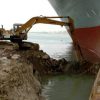
After the Ever Given: What the Ship Wedged in the Suez Canal Means for Global Trade
In the early hours of March 23, the container ship Ever Given was blown off course by high winds on its way through the Suez Canal. At 400 metres long, the Ever Given is longer than the canal is wide, and the ship became wedged firmly in both banks, completely blocking traffic.
Humanitarian & Food Aid Can Never be Enough to Manage Cascading Disasters
The intersection of crisis, climate change and COVID-19 has resulted in a “rapid rise in hunger”, according to United Nations World Food Programme (WFP) Deputy Executive Director Amir Abdullah.
Debt Moratoria in the Next Pandemic: Be Prepared, and Be Fair
Imagine it is 2025 and that, unfortunately, another pandemic is sweeping the world. Much like in the 2020 crisis, borrowers have seen their livelihoods upended and are struggling to repay loans.
Centering Equity: A Vision for Global Health in 2021
2020 will be remembered as the year that changed the world, as COVID-19 spared no country, no community, and no person. As the pandemic continues in 2021, there is recognition that some groups are impacted more than others, not just by the virus itself, but also by the socio-economic and access inequities exacerbated by global shutdowns. Globally, countries, and organisations are seeking to build back better and address inequities.
Hope & Numbers: What will it take to Tip the Scales on Climate Action?
We should be well on the way to solving the climate crisis by now. According to the Paris Agreement, last year should have been the year that all countries presented their commitments to cut carbon emissions for limiting global climate heating to within 1.5oC of pre-industrial levels.
End Vaccine Apartheid Before Millions More Die
At least 85 poor countries will not have significant access to coronavirus vaccines before 2023. Unfortunately, a year’s delay will cause an estimated 2.5 million avoidable deaths in low and lower-middle income countries. As the World Health Organization (WHO) Director-General has put it, the world is at the brink of a catastrophic moral failure.
The UN Food Systems Summit: How Not to Respond to the Urgency of Reform
Global food systems have been failing most people for a long time, and the COVID-19 pandemic has made a critical situation even worse. 265 million people are threatened by famine, up 50% on last year; 700 million suffer from chronic hunger; and 2 billion more from malnutrition, with obesity and associated diet-related diseases increasing in all world regions.
Why Water & Sanitation Systems are Vital for the Economy
This World Water Day, we celebrate the value of water, which at first might be a given: after all, water is the basis of all life. Without water we have no health, wealth, equality, or education.
The Value of Water Goes Far Beyond its Stock Price
In the midst of a global pandemic, when the presence of water in our lives has never seemed more important, its future availability has also never been more uncertain.
Access to Safe Water Never Loses Value
The global community is celebrating World Water Day 2021. In the COVID-19 pandemic era, the importance and value of water for all people has never been clearer. Access to safe water is essential for public health and thriving communities.
A Moral Failure: Billions of People with No Access to Clean Drinking Water
Water is integral to sustainable development, but we are well behind on the goals and targets that we have set ourselves.
How Technology Reproduces & Amplifies Harassment & Abuse of Women Journalists
“Email and social media access attempts, extremely aggressive comments, photo montages, massive defamation and intimidation campaigns on WhatsApp. This is what women journalists are facing for doing our job,” said Brazilian journalist Bianca Santana.
Clean Water Vital for Protecting Those on the Frontline of Climate Change in Post-Pandemic World
For many, the last year will be remembered as the time our day-to-day lives screeched to a halt. As Covid-19 spread mercilessly across the world, wreaking havoc on health and livelihoods, world leaders, health experts and scientists grappled with how to protect populations and stem the tide of the virus.
UN Sanitizes Killings of Children in Armed Conflicts
The horrendous killings of children in military conflicts and civil wars – both by national armed forces and militant groups – have triggered widespread condemnation by human rights organizations worldwide.
Achieving Gender Equality for Women’s Re-entry to the Labour Force Post COVID-19
During the height of the COVID-19 lockdowns, while many sought safety being at home, women in the healthcare, child care, aged care, teaching and services fields — who hold the majority of jobs in those occupations — went to work everyday.
A Global South Organization – a Sine Qua Non for Developing Nations’ Influence in World Arena
I observed the Group of 77 (G77) shortly after the 1964 Geneva Conference on Trade and Development (UNCTAD), the 1968 UNCTAD 2 in New Delhi and the 1972 UNCTAD 3 in Santiago. The Group was influential at the time, benefiting from several factors helpful for its functioning which are no longer present, namely:
Every Girl Can’t Be a Scientist Until We Make Big Changes
Over a month ago, the world celebrated the International Day of Women and Girls in Science. But the celebrations ring hollow when there’s still been no meaningful progress in the representation of women in the research sciences field. At present, less than 30 percent, of scientific researchers worldwide are women, a percentage that has been the same for almost a decade.
Failing to Collect Data About Women is no Trivial Offence
Women get freezing cold in trains and in big city offices because the air conditioning is set for men’s sensitivity to the cold. They spend the whole theatre interval (when visits to the theatre were still possible) in the queue because there are too few toilets.« Previous Page — Next Page »


The Week with IPS

NEXT STOP - SDGs
Tracking global progress towards a sustainable world
Tracking global progress towards a sustainable world
