Languages
Friday, November 13, 2026



News and Views from the Global South
Global

Inequality, COVID-19 and the Plight of the Young
Inequality characterizes the world we live in, predisposing how we act and think. We perceive our existence as composed of dichotomies – men and women, young and old, black or white, as well as a difference between those who have and those who do not have access to wealth, health, education and influence. Dichotomies are also born out of comparisons, about how things are now and how they could have been, how they were before and how they are now.
COP26 and India’s NDCs
Climate change is one of the most pressing issues that the world is collectively facing at the moment. It is contended that strengthening the global response is pertinent to combat the threat of climate change.
Magellan, Inquisition and Globalisation
Globalisation’s beginnings are symbolised by Ferdinand Magellan’s near circumnavigation of the world half a millennium ago. But its history is not simply of connection and trade, but also of intolerance, exploitation, slavery, violence, aggression and genocide.
Are High-Ranking UN Jobs the Political Birthright of Big Powers?
The United Nations has continued to pursue a notoriously longstanding tradition of doling out some of the highest-ranking jobs either to the five big powers, who are permanent members of the Security Council—namely the US, UK, China, France and Russia – or to Western industrialized nations such as Spain, Italy, Canada, Sweden, Germany, plus Japan.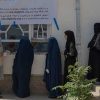
How to Achieve Peace in Afghanistan
There is much expectation about US President Joe Biden's Afghanistan strategy to end the United States' longest war effectively. So far, he continues to rely on Ambassador Zalmai Khalilzad, the Special Envoy for Afghanistan, appointed by Mr. Trump.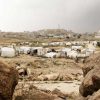
Peace & Security in Armed Conflicts Mean Presence of Food & Absence of Gunfire
In 1941, the people of Greece were facing a horrific winter. The Axis powers had plundered local supplies and introduced an extortionate tax on Greek citizens. Allied forces imposed a cruel blockade, cutting off imports. Prices skyrocketed. Hundreds of thousands of civilians perished.
Women Will Not Reach Parity at the Pinnacle of Power for Another 130 Years, Predicts UN
The United Nations says the highest levels of political power remain the furthest from achieving gender parity in an increasingly male-dominated power structure worldwide.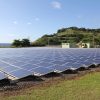
Only Small Percentage of COVID-19 Recovery Allocated to Green Initiatives
Last year, only $368 billion of a $14.6tn budget geared towards COVID-19 recovery measures across the world’s largest 50 countries took into account green recovery initiatives, according to a report launched yesterday, Mar. 10.
More ‘Can & Must be Done’ to Eradicate Caste-Based Discrimination, Says UN Rights Chief
There is hardly a better way to promote human rights in Nepal than celebrating Muskan Khatun for being one of the winners of the prestigious International Women of Courage (IWOC) Award, released on the International Women’s Day by the Government of the United States of America.
Extent of Violence Against Women During Pandemic Exposed
COVID-19 restrictions exposed women and girls to heightened abuse – revealing the conditions in which gender-based violence became the shadow pandemic on the continent, a recent webinar attended by parliamentarians from Africa and Asia heard.
Can Free Phones Close the Digital Gender Divide?
The gender gap in mobile phone ownership is well-documented. For years now, the financial inclusion community has been trying to get phones into the hands of more women at the last mile — spurred on by mounting evidence that mobile money can increase women’s financial resilience, expand their economic opportunities and improve their intra-household bargaining power.
Prioritise Pandemic Relief, Recovery: No Time for Debt Buybacks
Developing country governments are being wrongly advised to use their modest fiscal resources to pay down accumulated debt instead of strengthening pandemic relief and recovery. Thus, debt phobia risks deepening and extending COVID-19 recessions by prioritising buybacks.
The Ethics of AI to Ensure Food Security and Development
One year after the call for a group of international and religious organizations and important multinational companies to incorporate ethics into the design of artificial intelligence (AI), Pope Francis said in a tweet: “I hope that more and more people of good will cooperate in the promotion of the common good, the protection of those lagging behind and the development of a shared algor-ethics”.
International Women’s Day, 2021
Why Green Growth and Climate Action Fall Short Without Addressing Gender Inequality
As the global effort to address climate change has strengthened over the last few years, so has the realization that rising temperatures and climactic disruptions disproportionately impact women, particularly in developing countries, as they tend to be more dependent upon natural resources and are thus overrepresented in resource-intensive economic sectors. Furthermore, inherent in gender inequality are disadvantages for and discrimination against women in all facets of society, including in the economy and politics. Thus, it is unfortunate, yet perhaps unsurprising, that these structural disparities are mirrored in the negative effects of climate change. Therefore, if gender differences are not incorporated into climate change plans, women will be unable to access the co-benefits that arise from concerted climate action.

International Women’s Day, 2021
Why Gender Parity & Diversity are Paramount to a Just COVID-19 Recovery
To commemorate International Women’s Day, the United Nations has called for “Women in leadership: Achieving an equal future in a COVID-19 World,” as the day coincides with the dark week when WHO declared the virus a global pandemic.

International Women’s Day, 2021
Every Girl Has a Right to An Education
Access to an inclusive quality education is a universal human right. When the inherent right to a good education is ignored or denied, the consequences are severe. For a girl in country of conflict or forced displacement, the impact is brutally multiplied.

International Women’s Day, 2021
Women Must Continue To Claim Power & Challenge The Unseen Barriers
Power is an intriguing concept and it means different things to different people. In simple words, power is the ability to influence the behavior of others to get what you want. Power distribution is usually visible in most societies when there is a clear and obvious division between the roles of the men and expectations from women. One can’t talk about power without talking about patriarchy - in which men always hold the power and women are largely excluded from it. Women are almost always taught power and ambition are two dirty words, and should not be linked to their personalities.
International Women’s Day, 2021
Women’s Leadership in the Global Recovery from COVID-19 Pandemic
Today is International Women’s Day (IWD), and the theme for this year’s celebration is "Women in leadership: Achieving an equal future in a COVID-19 world." We recognize the tremendous contribution and leadership demonstrated by women and girls around the world in shaping our recovery from the COVID-19 pandemic and a more sustainable future.

International Women’s Day 2021
A Post-COVID World Needs Amplified Women’s Voices in Politics, Climate Change
The theme for International Women’s Day 2021, ‘Women in Leadership: Achieving an Equal Future in the COVID-19 World,’ is grounded in the reality that this women’s day is unlike any other.

International Women’s Day, 2021
A Just COVID-19 Recovery – Not Without Women’s Leadership
Almost exactly a year ago today, I packed my computer and a couple of necessities in the office in New York, hugged the colleagues, and headed home to what most people thought would be a couple of week’s Covid-19 lockdown. Little did we know.

International Women’s Day, 2021
International Women’s Day: To Change the World, Women Must Choose to Challenge
Among the greatest gifts with which I have been blessed were parents who instilled in me a deep-rooted sense of identity, and the unequivocal belief that there was no difference between what a boy and a girl could achieve.
This assurance sustained me while growing up, as the tenth child out of twelve wonderful siblings, and through the numerous times when it was suggested by others that I would never succeed, simply because I was black, poor and female.
« Previous Page — Next Page »


The Week with IPS

NEXT STOP - SDGs
Tracking global progress towards a sustainable world
Tracking global progress towards a sustainable world
