Languages
Monday, November 16, 2026



News and Views from the Global South
Global
Cover-up at the UN: You Scratch My Back & I’ll Scratch Yours
The ongoing battle between China and the United States is threatening to paralyze the most powerful body at the United Nations – the 15-member Security Council (UNSC)—which has virtually gone MIA (missing in action) on some of the key politically-sensitive issues of the day.
”Murder Most Foul” – the Death of Olof Palme
Just as the U.S. is haunted by the 1963 murder of John F. Kennedy, Sweden is troubled by the 1986 murder of its Prime Minister Olof Palme. The American feelings were aired on Bob Dylan´s latest album, Rough and Rowdy Ways, containing a 16 minutes long song with lines like:
Are We Going from San Francisco?
Seventy-five years ago, on 26 June 1945, before the Japanese surrender ending the Second World War, fifty nations gathered at San Francisco’s Opera House to sign the United Nations (UN) Charter.
Put Climate at the Heart of COVID-19 Economic Recovery Plans
Cast your mind back. Six months ago—it seems like a lifetime—the world’s attention was on Madrid. The United Nations was meeting to take stock of international progress in fighting climate change. Headlines were dominated by young people pointing out—rightly—that governments were still not doing enough. They demanded urgent and ambitious action to cut emissions and help the most vulnerable.
Safety of Children an Afterthought for Tech Companies
Global upheaval caused by the COVID-19 pandemic has left society’s most vulnerable exposed. Instances of child sexual exploitation material (CSEM) found online have increased at an alarming rate over past months.
How Deforestation Helps Deadly Viruses Jump from Animals to Humans
The coronavirus pandemic, suspected of originating in bats and pangolins, has brought the risk of viruses that jump from wildlife to humans into stark focus.
The Best Law Capital Can Buy
Katharina Pistor’s recent book, The Code of Capital: How the law creates wealth and inequality shows how law has been crucial to the creation of capital, and how capital continues to survive, evolve and enhance its ability to ‘make money’, or secure wealth legally, i.e., through the law.
Looking Beyond the Lowest-common Denominator? DFID/FCO Merger
Nazia has a herd of 5 cows. She has two daughters in secondary education, a seat on the Village Council, a savings account and a permanent home. Nazia has dignity, security and prospects beyond poverty. This is Nazia’s story because alongside her commitment and conviction to create a better life, she benefited directly from the UK government, and its global leadership in the drive to end extreme poverty.
COVID-19 Increases Suffering of Children in Conflict
The current coronavirus pandemic is having a profound affect on children in conflict zones -- with girls especially being at higher risk of violence and sexual health concerns.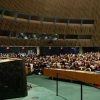
The US & the UN — A Looming Confrontation
The recent approach of the US to the UN and its agencies has left many shaking their heads. The US, under President Roosevelt, played a seminal role in creating the UN and its key agencies after World War II and subsequently nurturing them.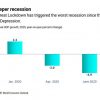
Reopening from the Great Lockdown: Uneven and Uncertain Recovery
The COVID-19 pandemic pushed economies into a Great Lockdown, which helped contain the virus and save lives, but also triggered the worst recession since the Great Depression. Over 75 percent of countries are now reopening at the same time as the pandemic is intensifying in many emerging market and developing economies. Several countries have started to recover. However, in the absence of a medical solution, the strength of the recovery is highly uncertain and the impact on sectors and countries uneven.
Sweden-Costa Rica: Same Paths on Climate Change, Different on COVID-19
The lack of a coordinated international response had led to varying results worldwide in dealing with the COVID-19 pandemic. Two countries that have long coordinated their response to global goals like promotion on democracy, human rights and environmental issues, Sweden and Costa Rica highlight how public policy matters. While with their similar approaches to climate change the two walk together, their different approaches to COVID-19 have reaped disparate results, and death tolls.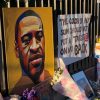
The UN’s Failure to Act on Race
Racism is not only an American problem but a plague that people of African descent have had to endure since time immemorial. Rather than seizing this historic moment to act decisively, the United Nations, the world’s highest platform for human rights, dithered on the issue when it was called on to establish a full commission of inquiry on race following the outrageous killing of George Floyd on May 25 2020.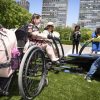
It is a Challenge to Provide Disability-Inclusive Education. But it is Worth it
Many countries in sub-Saharan Africa get bad press for their progress in providing inclusive education. Just two in three children complete primary school on time, while the number of out-of-school children and youth is 97 million and growing. Less is said, however, about the range of tools many countries in the region are deploying to include some of those furthest behind in mainstream schools: students with disabilities.
E-learning Divide Places World’s Disadvantaged Children at Risk of Dropping Out
The COVID-19 pandemic has brought a new layer of challenges to inclusive education. As many as 40 percent of low and lower-middle income countries having not supported disadvantaged learners during temporary school shutdowns, finds United Nations Educational, Scientific and Cultural Organization’s 2020 Global Education Monitoring Report released today, Jun. 23.
Unlawful Use of Force by Police at Protests Across the US
Police forces across the United States have committed widespread and egregious human rights violations in response to largely peaceful assemblies protesting systemic racism and police violence, including the killing of Black people.
Racism, Shitholes and Re-election
Over the course of his presidency, US President Donald Trump’s racism has become more evident with more leaks of his private remarks, which he has been generally quick to deny, qualify and explain away.
Message to Ostracized World Leaders: You Don’t Need a US Visa to Address the UN
The coronavirus pandemic is beginning to transform the United Nations into an institution far beyond recognition. The Secretariat building has been shut down since mid-March, and the UN campus will continue to remain a ghost town through end July-- and perhaps beyond-- with nearly 3,000 staffers, delegates and journalists working, mostly from home.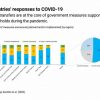
You’ve Got Money: Mobile Payments Help People During the Pandemic
The practical challenge of quickly getting financial support in the hands of people who lost jobs amid the COVID-19 economic crisis has baffled advanced and developing economies alike. Economic lockdowns, physical distancing measures, patchy social protection systems and, especially for low-income countries, the high level of informality, complicate the task. Many governments are leveraging mobile technology to help their citizens.
Children in Out-of-Home Care: Lessons from the Pandemic
As the world continues to struggle with the Covid-19 pandemic, the situation in institutions like prisons or care homes has shown how quickly overcrowded facilities can become a breeding ground for an infectious disease. But what about other congregate facilities like residential institutions for children, such as orphanages? What risks do they face? And how should governments be responding during - and after - this pandemic?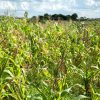
Agriculture: Rooted in Racism
There has been far less social progress in the United States in the last 155 years than many people would like to believe. In 2020, racism still seeps its way into every aspect of life; from unconscious bias and micro-aggressions in everyday interactions to domestic and international policy and enforcement.« Previous Page — Next Page »


The Week with IPS

NEXT STOP - SDGs
Tracking global progress towards a sustainable world
Tracking global progress towards a sustainable world
