Languages
Monday, November 16, 2026



News and Views from the Global South
Global

Cheap or Adequate and Accessible to Everyone?
The COVID-19 pandemic has revealed some lesser-known realities, or some we had not wanted to think about, and exposed its consequences for the right of people to feed themselves in dignity.
Q&A: Understanding COVID-19’s Impact on Food Security and Nutrition
While it is too early to assess the full impact of the global COVID-19 lockdowns, at least 83 million to 132 million more people may go hungry this year -- 690 million people were classified as hungry in 2019 -- as the pandemic has highlighted the vulnerabilities and inadequacies of global food systems.
Re-Conversion of Hagia Sophia into a Mosque a Very Trumpian Move
President Erdogan’s “reconversion” of the Hagia Sophia, into a mosque is a very Trumpian move, making a populist gesture to his base evoking shared misconceptions of history, reckless of its actual diplomatic and economic cost.
Can Private Finance Really Serve Humanity?
The recent explosion of private finance has nursed the hope, dream or illusion that it can be mobilized for the public good, e.g., to achieve the Sustainable Development Goals, associated with Agenda 2030. However, such hopes ignore how changes in financial investing have deeply transformed corporations, national economies and prospects for the world economy and social progress.
Toward a More Resilient Europe
Europe, like the rest of the world, faces an extended crisis. An element of social distancing—mandatory or voluntary—will be with us for as long as this pandemic persists. This, coupled with continued supply chain disruptions and other problems, is prolonging an already difficult situation. Based on updated IMF projections released last month, we now expect real GDP in the EU to contract by 9.3 percent in 2020 and then grow by 5.7 percent in 2021, returning to its 2019 level only in 2022. If an effective treatment or vaccine for COVID 19 is found, the recovery could be faster—but the opposite would hold true if there are large new waves of infection.
The Fuzia Story: Empowering Women Through the Fusion of Cultures and Ideas
A young and dynamic digital platform, named Fuzia, has attracted millions of women social media followers and 100,000 active global users with its eclectic mix of content. The platform showcases women’s talent and provides a support network.
On World Youth Skills Day, Don’t Forget the Importance of Soft Skills
It’s no secret that under pandemic lockdown for so many months, young people around the world have coped in tremendous ways. They have found new outlets for learning and creative channels for developing and using their skills.
COVID-19 & Why We Care
Among the many compelling points made by Dr. Anthony Fauci in our “Rethinking Health” webinar this week was the absolute essentiality of global collaboration and transparency to contain the pandemic with which we are faced.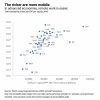
Teleworking Is Not Working for the Poor, the Young and the Women
The COVID-19 pandemic is devastating labor markets across the world. Tens of millions of workers lost their jobs, millions more out of the labor force altogether, and many occupations face an uncertain future. Social distancing measures threaten jobs requiring physical presence at the workplace or face-to-face interactions. Those unable to work remotely, unless deemed essential, face a significantly higher risk of reductions in hours or pay, temporary furloughs, or permanent layoffs. What types of jobs and workers are most at risk? Not surprisingly, the costs have fallen most heavily on those who are least able to bear them: the poor and the young in the lowest-paid jobs.
Beware the ‘Hunger’ to Access Indigenous Peoples’ Land and Resources for Post-COVID-19 Recovery
When governments and states begin their recovery journey from the economic downturn caused by the coronavirus pandemic, there might be a heightened threat to indigenous peoples, their land and resources. “The fear is [that] the economic recovery is based on access to land and natural resources,” Lola García-Alix, senior advisor on Global Governance at the International Work Group for Indigenous Affairs (IWGIA), told IPS.
Financialization: Tackling the Other Virus
The 1971 Bretton Woods (BW) system collapse opened the way for financial globalization and transnational financialization. Before the 1980s, most economies had similar shares of trade and financial openness, but cross-border financial transactions have been increasingly unrelated to trade since then.
UN Chief Warns of Deadly Germs as Potential Bioterrorist Weapons
The coronavirus—which has claimed the lives of over 538,000 people and infected more than 11.6 million worldwide—has destabilized virtually every facet of human life ever since its outbreak in late December.
Innovative Financial Approaches Key to Unleash SIDS Economic Potential
Our world is transfixed by the great human toll and economic impact of the worst global pandemic in a century. For the 65 million inhabitants of small island developing states (SIDS), the impact of the novel coronavirus (COVID-19) is reminiscent of the worst forms of extreme weather events that SIDS contend with annually. Such events cost lives, undermine our hard-earned development gains, and hamper the aspirations and quality of life of our people. Our governments are routinely compelled to shift already scarce resources from social and economic investments to recovery and sustenance in the aftermath of disasters. For decades islands have been treading a development tightrope, which is increasingly precarious with the intensification of adverse climate impacts.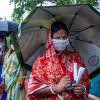
Security Council’s Overdue COVID-19 Ceasefire Resolution Must Put Women & Youth at Center
More than three months after UN Secretary General Antonio Guterres made an urgent appeal for a global ceasefire in response to the COVID-19 pandemic, the UN Security Council has finally passed a resolution supporting his call.
Why Does Racism Prevail? Leading Scholars Apply their Minds
All people belong to one biological species and there are no human “races”. So why does belief in race persist? It may be a scientific misconception, but it is real. It defines the lived experience of many people and determines how governments act and how people treat one another. How did race come to have this power and this durability?
The Missing SDG: Ensure the Digital Age Supports People, Planet, Prosperity & Peace
As the nations of the world prepare to gather virtually to assess progress towards the Sustainable Development Goals (SDGs), society is just beginning to imagine what a post-COVID world might be like.
When Women and Children Cannot Escape their Abusers
Reports of escalating violence against women and children made the news almost everyday in March and April following the announcement of lockdowns to control the spread of Covid-19. The main concern has been that victims cannot escape their abusers or seek help when they share a confined space and are under constant scrutiny and the threat of violence.
Q&A: Child Marriage, FGM and Harmful Practices on Women’s Bodies to Increase Because of COVID-19
An additional 5.6 million child marriages can be expected because of the coronavirus pandemic, which resulted in a short-term increase in poverty and the shutdown of schools. The current pandemic is also expected to have a massive impact on the projected growth of harmful practices on women’s bodies.
Global Economic Recovery must Prioritise Restructuring of Debt for Developing Countries
Unless there is a restructuring of debt for developing countries, the servicing for this debt will take away valuable resources from these nations that are needed to prevent the further suffering of people during the coronavirus pandemic -- particularly with regards to safeguarding the health systems, and protecting the “integrity and resilience of economies”.
Rethink Food Security and Nutrition Following Covid-19 Pandemic
The Covid-19 crisis has had several unexpected effects, including renewed attention to food security concerns. Earlier understandings of food security in terms of production self-sufficiency have given way to importing supplies since late 20th century promotion of trade liberalization.
Nuclear Testing, Never Again
Seventy-five years ago, on July 16, the United States detonated the world’s first nuclear weapons test explosion in the New Mexican desert. Just three weeks later, U.S. Air Force B-29 bombers executed surprise atomic bomb attacks on the cities of Hiroshima and Nagasaki, killing at least 214,000 people by the end of 1945, and injuring untold thousands more who died in the years afterward.« Previous Page — Next Page »


The Week with IPS

NEXT STOP - SDGs
Tracking global progress towards a sustainable world
Tracking global progress towards a sustainable world
