Languages
Monday, October 5, 2026



News and Views from the Global South
Global
Nuclear Weapons, Far from Diminishing, Keep Rising
The United Nations, whose primary mandate is to maintain international peace and security, has been one of the longstanding leaders in the global campaign for a world without nuclear weapons. But the progress has been relatively slow – despite the growing number of anti-nuclear treaties. Perhaps the only consolation is the absence of a nuclear attack or a nuclear war in over 80 years.
International Women’s Day, 2025
It’s time for a Feminist Woman Secretary General at the UN
In 2025, the United Nations will celebrate 80 years of shaping global policies, fostering peace, and driving international development. Yet, in those eight decades, not a single woman has held the position of Secretary-General.
Changing Distribution of World Population
As the world’s population increased five-fold since the start of the 20th century, the changes in the geographic distribution of the billions of people across the planet have been ongoing and significant.
International Women’s Day, 2025
New Report Finds Sexist Laws Persist Worldwide
A new global report analyzing sex discrimination in laws reveals that while some commendable gains have been achieved in strengthening legal protections for women and girls over the past five years, progress remains slow, uneven, and increasingly under threat from a growing backlash against women’s rights.
Is the UN Facing its Biggest Single Crisis in 80 Years?
The United Nations, in its nearly 80-year-old history, is on the verge of fighting for its survival, as the Trump administration continues with its threats to drastically cut funding and pull out of several UN agencies which provide mostly humanitarian assistance worldwide. Elon Musk, the tech billionaire, who acts as a virtual Prime Minister to President Trump, has called on the U.S. to exit the North Atlantic Treaty Organization (NATO) and the United Nations.
COP 16 Conference made Key Steps Towards a More Just Transition for Indigenous Peoples & Peasant Communities
With global temperatures continuing to break records and every global indicator of the health of the natural world showing decline, the need to quickly move away from fossil fuels and environmentally destructive practices has never been more apparent. But as has often been pointed out, how this ‘green transition’ is achieved matters.
The Gates to Paradise Are Closing
In 2020, a historic announcement emerged from the Global Trafficking in Persons Report, an annual assessment that evaluates human exploitation in 129 countries. For the first time, the world witnessed a 13% decrease in the number of victims. For those of us who fight against this heinous crime, it felt as if a door to paradise had opened—an Eden where no human being is for sale.
COP16 Agrees to Raise Funds to Protect Biodiversity
The second round of the UN Biodiversity Conference, COP16, concluded in the early hours of Friday, February 28 in Rome, with an agreement to raise the funds needed to protect biodiversity.
Looming Tariffs Threaten Food Supplies
Who bears the brunt in trade wars? The answer is absolutely everyone. Not just the countries enacting or retaliating with tariffs and export bans, and not just the citizens of those countries. It’s everyone.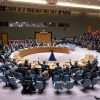
U.S. Passes on UN Ukraine Resolution amid the Humanitarian Crisis
From late 2024 to early 2025, the humanitarian situation in Ukraine has taken a turn for the worst, with poverty, violence, displacement, and damage to critical infrastructures having grown in intensity. Following the 2022 invasion of Ukraine by Russia, tensions have grown among member states of the United Nations (UN) on how to resolve the Russo-Ukrainian War.
The Impact of US Funding Freeze on Civil Society Around the World
The U.S. administration has the prerogative to review and adjust public expenditure policies, including foreign aid. However, this power must be exercised responsibly, adhering to national and international legal frameworks, including the principles of human rights law.
20 Years of the WHO FCTC: It’s Time to Make Big Tobacco Pay
The world took a historic step in the fight against tobacco when the World Health Organization Framework Convention on Tobacco Control (WHO FCTC) came into force—the first legally binding global health treaty of its kind.
Governments Are Having A Hissy Fit Over It
Yeah, governments are having a hissy fit over it. And their hissy fit is not over the usual concerns of governments such as defense, the economy, trade, inflation, unemployment, crime, or terrorism.
How AI Can Help Both Tax Collectors and Taxpayers
New technologies have the potential to improve the relationship between governments and citizens. Tax portals, customs IT systems and online services have simplified interactions with public authorities, reduced bureaucratic hurdles, and increased transparency. Now, generative artificial intelligence (GenAI) is emerging as the next transformative force.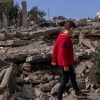
Outlook for 2025: Strengthening the Foundations of Children’s Futures
In 2025, the world is facing a new and intensifying era of crisis for children. Climate change, economic instability, and conflict are hitting harder and more often, intersecting in ways that make the challenges of addressing them even more severe.
America First Deepens World Stagnation
Donald Trump’s Make America Great Again (MAGA) appeal captured US mass discontent against globalisation. In recent decades, variations of America First have reflected growing ethnonationalism in the world’s presumptive hegemon.
Civil Society at the Finance in Common Summit Calls for Community-led, Equitable, and Human Rights-based Development
As public development banks gather for the Finance in Common Summit (FiCS) in Cape Town, South Africa, civil society and community activists from across the world are demanding a shift to a community-led, equitable, and human rights-based development approach, that prioritise people and planet over profit, and a reform of the global financial architecture.
Global Heating in The Coldest Place on Earth
It was 7:30 a.m. I got ready the fastest I could, adrenaline kicking in, curiosity and excitement peaking. I rushed out of my cabin, opened the big exit door, and there in front of me was the first visual of the majestic white continent - Antarctica.
Is the UN’s Human Rights Agenda in Jeopardy?
The UN’s human rights agenda is in danger of faltering since the Geneva-based Office of the High Commissioner for Human Rights (UNHCHR) is planning to “restructure” the office, under the moniker OHCHR 2.0. But this proposal, if implemented, would result in the abolition of the Special Procedures Branch, established by the Human Rights Council (HRC), to report and advise on human rights from thematic and country-specific perspectives.
Where do UN Member States Stand on a Feminist Secretary-General?
The selection of the next UN Secretary-General (UNSG) will be a pivotal moment in global efforts to resist authoritarianism and work together to address shared problems. Where do UN Member States stand on appointing a feminist woman to this role?
Social Media in the Global South Needs More Protections
In the western world, numerous studies over the past two decades have shown that the rise of social media in popularity has been linked to negative mental health symptoms, especially among young people. Platforms such as Instagram, Facebook, X (formerly known as Twitter), and TikTok have been criticized for fostering competitive and toxic environments, which contribute to higher rates of anxiety, cyber-bullying, depression, disordered eating, and low self-esteem. While the use of social media in the Global South has skyrocketed in the late 2010s, the ramifications on people in those regions has received much less coverage in mainstream media.« Previous Page — Next Page »





The Week with IPS

NEXT STOP - SDGs
Tracking global progress towards a sustainable world
Tracking global progress towards a sustainable world
