Languages
Wednesday, November 18, 2026



News and Views from the Global South
Headlines

Fear of Population Ageing
Fear of population ageing is all over the news media and in government offices of country capitals worldwide. Planet Earth is becoming “planet ageing”.
Role of Regional Economic Cooperation in Inclusive Digital Transformation in Asia
Digitalization is a key driver of competitiveness and development. As the world takes the path to unprecedented digital advancement, Asia continues to be a powerhouse of digital transformations in a wide range of areas from microchip manufacturing to electric vehicles, from digital currency to e-commerce.
UN Hobbled by Junta and Under Pressure Over Myanmar Aid Crisis
Nearly 18 million people – about one-third of Myanmar’s population – need humanitarian aid this year because of civil war and the post-coup economic crisis, according to the latest United Nations estimates.
UN Confronts Existential Challenge After Russia’s Invasion of Ukraine
Paralysed by its own Charter and structure, the world organisation that is charged with preventing wars confronts an existential challenge from Russia’s invasion of Ukraine.
A Last-Ditch Effort to Save a High Seas Treaty from Sinking
When the United Nations began negotiations on a legally binding treaty to protect and regulate the high seas, one diplomat pointedly remarked: “It’s a jungle out there”—characterizing a wide-open ocean degraded by illegal and over-fishing, plastics pollution, indiscriminate sea bed mining and the destruction of marine eco-systems.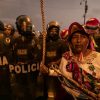
Privilege and Centralism in Lima Goad Protesters in Peru
The current political and social upheaval in Peru is not a temporary problem, but has to do with deeply-rooted inequality and social hierarchies, according to historian José Carlos Agüero.
Climate Crisis is a Child Crisis and Climate-Resilient Children, Teachers and Schools Must Become Top International Agenda
From southern Ethiopia to northern Kenya and Somalia, the most severe drought in the last 40 years is unfolding. It is simply too hot to go to school on an empty stomach, and close to 3 million children are out of school, with an additional 4 million at risk of dropping out entirely across the Horn of Africa.
When Two Elephants Fight: How the Global South Uses Non-Alignment To Avoid Great Power Rivalries
An African proverb notes that “when two elephants fight, it is the grass underneath that suffers”. Many states in the global south are, therefore, seeking to avoid getting caught in the middle of any future battles between the US and China. Instead, they are calling for a renewal of the concept of non-alignment. This was an approach employed in the 1950s by newly independent countries to balance between the two ideological power blocs of east and west during the era of the Cold War
‘Hate Speech Loads the Gun, Misinformation Pulls the Trigger’ – And It Is Profitable
In this world of wars, massive weapons production, sales and use; of sharpening inequalities and deadly climate emergencies, hate speech and its inhumane impact, is being amplified at ‘unprecedented scale’ by new technologies.
Taking a Stance on Feminists’ Prejudice Against Religious Minority Women
Since researching the experiences of gender discrimination against women in poverty who belong to religious minorities, many fellow feminists have turned their back on me.
Act on the Taliban and Secure Our Right to Education, Afghan Women and Girls’ Plea
It has been more than 500 days since the Taliban regime in Afghanistan shut down schools and shattered the education dreams of girls and women like Somaya Faruqi, who has been forced to leave her homeland to continue her education.
ECW High-Level Financing Conference Raises More than 826 Million USD to Keep Crisis-Impacted Children in School
As an unparalleled, unprecedented global education crisis unfolds, an estimated 222 million crisis-impacted children are desperate to learn. As barriers to accessing education increase, darkness beckons, and education is their last hope.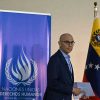
Venezuela: The End of Civil Society as We Know It?
In late January, the UN High Commissioner for Human Rights, Volker Türk, finished an official visit to Venezuela. He said he’d found a fragmented society in great need of bridging its divides and encouraged the government to take the lead in listening to civil society concerns and responding to victims of rights violations.
One Year Later: The Impact of the Russian-Ukrainian Conflict on Africa
In today’s interconnected world, shots fired in one corner of the globe create ripple effects in other, seemingly far, places. One year since the Russian invasion of Ukraine, African countries, although physically miles away, have not been spared its aftershocks.
Driven by the War, Russian Women Arrive en Masse to Give Birth in Argentina
They began to arrive en masse in Argentina in the second half of 2022, a few months after the Russian invasion of Ukraine. They are pregnant Russian women who land in the capital to give birth, with the hope of gaining an Argentine passport, given the fact that so many countries refuse to let in people with Russian passports today.
How the Privatization of Eletrobras May Lead To an Uncertain Future in Brazil’s Energy Transition and Favor Price Increase to the End-Consumer
Eletrobras is Latin America’s biggest electricity company, responsible for around 30% of Brazil’s power capacity and 50% of all its transmission lines. In 2021, the Brazilian government announced it would reduce its controlling shares in this state-owned company from 72% to 10%. Given Eletrobras’ dominant role in Brazil’s power sector, this divestment in the government’s controlling shares merits a more complete understanding of the implications for Brazil’s energy transition and energy security.
World Leaders, Private Sector Urged to Establish an International Green Bank to Win Climate Change Battle
As the effects of climate change escalate and natural disasters such as earthquakes, floods, and droughts become more frequent and severe, threatening lives and livelihoods, humanity is losing the climate battle.
China and Russia Fail to Defund UN Human Rights Work
United Nations member states agreed to fully fund UN human rights mechanisms that China, Russia, and their allies had sought to defund in the 2023 budget. This should set a precedent for UN human rights funding in the future.
Turkey’s Shaky Foundations
Geology explains the terrible earthquake that shook Turkey and Syria on February 6 with academic coldness: the Arabian, Eurasian and African plates pressure the Anatolian plate. On the surface, geopolitics resorts to concepts like "fault", "tension" or "fracture" to explain things too. When one looks at Turkey, both disciplines’ maps can easily overlap each other, with a death toll calculated in the tens of thousands.
Outlook for 2023: Children in ‘Polycrisis’
The year 2022 was incredibly difficult for people around the world. We were confronted by a series of major crises, including a continuing pandemic, a major war in Europe, an energy crisis, rising inflation and food insecurity.
Sierra Leone’s Gender Law Boosts Women’s Participation in Politics, Business
Sierra Leone's new gender equality law will benefit women with political aspirations – as well as stimulate development, say analysts.« Previous Page — Next Page »


