Languages
Tuesday, November 17, 2026



News and Views from the Global South
Health
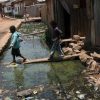
SDG Setback ‘Tremendous’ as COVID-19 Accelerates Slide
Crucial global goals to reduce hunger and poverty and curb climate change have gone backwards or stalled, the United Nations Secretary-General warns in a new report, as the COVID-19 outbreak moves from being a health crisis to becoming the “worst human and economic crisis of our lifetimes”.
War-Fighting in the Future and Our Current Hobson’s Choice!
Despite all the preoccupation with the current raging pandemic, it sadly appears that there has been no let-up in the global arms race among the major powers. In mid-May, the United States President Donald Trump, at an event for his new Space Force at the White House made a significant announcement, It was that the US was building right now an “incredible” new missile which would travel faster than any other in the world “by a factor of almost three”. This was obviously a response to the latest Russian ‘Avangard’ missile, which Russian President Vladimir Putin claims in invincible, with a speed of twenty times that of sound. The Chinese, reportedly are also feverishly working on their own hypersonic counterparts. All these would be strategic tools to significantly alter the war-fighting capabilities of humanity in the future.
No Woman Should Ever Die Giving Life
Consider this. 24 women, children and babies were murdered at a hospital in Kabul, the Afghan capital. Even by standards of a country as accustomed to bloodshed as Afghanistan, the May 12 attack on a Kabul maternity clinic was an event of unmitigated horror.
Innovation Is an Imperative – for Sustainable Food Systems
Hunger and food insecurity continue to rise. The official 2019 statistics refer to 821 million people suffering from hunger all over the world. According the recently launched Global Report on Food Crises, there are further 135 million people facing crisis levels of hunger or worse. WFP estimates that due to the impacts of COVID19, additional 130 million people could be pushed to the brink of starvation by the end of 2020. This means a total increase of 265 million people. If there will be no appropriate and urgent actions, “we could be facing multiple famines of biblical proportions within a short few months”, said David Beasley, WFP Executive Director, addressing the UN Security Council on 21st April.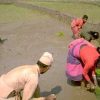
Women are Often an After-Thought in a Humanitarian Crisis
In an interview*, Bina Pradhan, an independent researcher, focuses on gender, macroeconomics and emerging issues of inequality. She is affiliated with the Federation of Business and Professional Women, Nepal (FBPWN), and has been working on the promotion and advancement of women in enterprise development and trade, post-earthquake community reconstruction, and rebuilding people’s lives and livelihoods with a focus on sustainability.
Politics, Profits Undermine Public Interest in Covid-19 Vaccine Race
With well over five million Covid-19 infections worldwide, and deaths exceeding 340,000, the race for an effective vaccine has accelerated since the SARS-Cov-2 virus was first identified as the culprit.
Kenya’s Adolescent Women Left Behind As More Married Women Access Contraception
It was only when 17-year-old Eva Muigai was in her final trimester that her family discovered she was pregnant. Muigai, a form three student who lives with her family in Gachie, Central Kenya, had spent her pregnancy wearing tight bodysuits and loose-fitting clothes that hid her growing baby bump.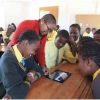
Education Post-COVID-19: Customised Blended Learning is Urgently Needed
Many well meaning education benefactors and commentators in South Africa have expressed that in the light of the COVID-19 pandemic online self-guided learning could solve some of the current teaching problems and address the educational backlog. What learners need, the reasoning goes, is to get free internet access to educational support materials on offer online. Nothing could be further from the truth.
‘Declare remittance as an essential financial service’
The UK and Switzerland are calling for greater global collaboration to ensure access to digital remittance services to support people during the coronavirus outbreak.
How is the COVID-19 impacting climate action?
 In the context of COVID-19 crisis, what are the risks for climate action?
Climate change still continues and climate impacts are still very visible in the Pacific. A few weeks ago, we had major forest fires in Australia and in other countries. Now we’re battling tropical cyclone Harold which is a result of climate change. This week a new study was released, pointing out that the great barrier reef in Australia suffered one of its most severe bleaching in 5 years. Climate change is still happening, so climate actions have to be pursued. People might have different priorities these days, with funding being reoriented to other activities, but the action definitely needs to be continued to strengthen the resilience of our systems to global changes.

Unite Behind Environmental Science: Transforming Values and Behaviour is as Important as Restoring Global Ecosystems
Restoring damaged ecosystems is vital to avoid the collapse of nature’s most valuable contributions to people, but International Day for Biological Diversity 2020 should also be a wake-up call about the importance of addressing our social, economic and systemic values, because it is these that are driving the destruction of nature.
Why More Must be Done to Fight Bogus COVID-19 Cure Claims
Fake and bogus cure claims are a longstanding, but neglected public health problem. Throughout recorded history, plagues have inspired anxiety and desperation. Time and again, this public nervousness has proved a fertile ground for false cures and claimants to thrive. In this sense, recent claims of COVID-19 cures and antidotes are no exception.
COVID-19 Pandemic and the Pacific Islands
As of 11 AM (AEST) on 20th May 2020 the incidence of COVID-19 virus (henceforth virus) on the Pacific Islands was limited. Active cases (deaths) in some of the Pacific Islands were Australia 7,072 (100), New Zealand 1,503 (21), PNG 8(0), Guam 154 (5), Fiji 18 (0), Timor-Leste 24 (0), French Polynesia 60(0), and New Caledonia 18(0).1 Standards of comparison are not uniform across the region since testing capacities of the various countries differ widely. The low number of cases in the smaller Pacific Islands compared to their larger neighbours, i.e., Australia and New Zealand, reflect both variations in testing standards as well as their smaller population size. The smaller Pacific Islands were also not subject to some of the aberrations experienced by the larger countries, e.g., large number of arrivals from foreign countries in planes and cruise ships.
Cyclone Amphan – ‘We Didn’t Expect Devastation of Such a Scale’
Amid the social distancing measures posed by the COVID-19 pandemic, coastal communities in Bangladesh and India face a double threat as the record-breaking Cyclone Amphan made landfall yesterday (May 20).
Sustainable Development Goals: What to salvage from Covid-19
Once the Covid-19 pandemic is under control, and the world economy is back on its tracks, the status and fate of the 2030 Agenda, also known as Sustainable Development Goals (SDGs), needs to be reassessed. The year 2020 was supposed to kick-off the Decade of Action. With just 10 years to go, plans were made to undertake "ambitious global efforts" to deliver the 2030 promise—by mobilising more governments, civil society, businesses, and calling on all people to make the Global Goals their own.
COVID-19 – China Tells World Health Assembly They Did their Best
This week’s 73rd World Health Assembly had member states adopt a resolution to review the global response to the coronavirus pandemic. The World Health Organisation (WHO) will also undergo an evaluation for its response to the outbreak.
Checkmate! China’s Coronavirus Connection
Coronavirus outbreaks in China and later across the globe have been unprecedented in both its scale and impacts. In the era of changing world order, this pandemic has drawn the global attention towards the threats posed by the non-traditional security challenges.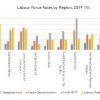
Striking at the core of the COVID-19 employment crisis
What is happening now
In the early months of 2020, much of the globe was put on pause as governments fought to contain the COVID-19 outbreak. For many, work came to a grinding halt as factories and shops were forced to close their doors, transforming a global health catastrophe into a labour market and economic crisis.
HIV Services Take a Backseat to COVID-19 in Russia
In Russia, which has one of the world’s worst HIV/AIDS epidemics, an already fragile healthcare system is buckling under the pressure of dealing with COVID-19.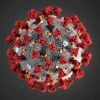
EXCLUSIVE: In the Face of the COVID-19 Pandemic We Are Only as Strong as the Weakest of Us
When the COVID-19 virus travelled from Wuhan, China halfway across the world through Europe, the Americas and beyond in the space of a few weeks, it gave us proof, if one was ever needed, of how tightly interconnected we all are. Not only are our globalized economies interdepended, but also we ourselves are one with the environment around us, and with one another. We are one humankind sharing one planet. And yet, all too often we seem to forget it, as we carelessly revert to misguiding differences between “us” and “them.” Take, for example, the distinction between rich and poor countries, or as economists put it, between advanced economies and least developed countries. In the face of COVID-19, the only difference that matters is if we are sick or healthy. Other than that, we are all the same, regardless of economic status or geographic location.
Covid-19 Straw Breaks Free Trade Camel’s Back
Economic growth is supposed to be the tide that lifts all boats. According to the conventional wisdom until recently, growth in China, India and East Asian countries took off thanks to opening up to international trade and investment.« Previous Page — Next Page »


 Bangladesh: Sarid, born one month early, receives specialized newborn care and grows stronger every day. Credit: UNICEF/UNI944397/Mojumder
Since the onset of the 2000s, global life expectancy has seen an overall rise, attributed to significant technological and scientific innovations in healthcare. Due to an increased understanding of different conditions as well as a rise in cooperation among healthcare experts around the world, there have been major strides made in ensuring that as few people die from chronic illnesses as possible. Despite the belief that healthcare is a fundamental human right, people from low- or middle-class backgrounds, marginalized groups, and underdeveloped countries have far more limited access to basic healthcare services.
The COVID-19 pandemic showed how marginalized communities are disproportionately affected by health crises, proving that we have much work to do in ensuring that no one dies of terminal conditions. While the global response to the coronavirus saw significant strides in immunization and vaccine development, the global outbreak of mpox in 2022 and its upsurge in parts of Africa in 2024 must remind us to remain vigilant.
Other major disease outbreaks in recent years have been linked to the destruction of infrastructure during warfare. Notably, in 2024, the Gaza Strip witnessed a return of the poliovirus since its eradication in the region 25 years ago. Israel’s blockade on Gaza has resulted in the collapse of the region’s sewage plants and desalination plants, and also destroyed healthcare capacities. The UN stated that this lack of clean water and sanitation would lead to an outbreak of cholera and other deadly infectious diseases. The 2026 OCHA Humanitarian Situation Report confirmed that the over two years of conflict in Gaza has produced a catastrophic health emergency, with millions remaining dependent on relief aid amid tight restrictions and no functioning public health system.
IPS is committed to providing full and comprehensive coverage on healthcare challenges around the world. IPS seeks to address the multifaceted causes of such challenges, including unprecedented pandemics, conflict-driven disease outbreaks, as well as socioeconomic barriers to equal healthcare access. IPS is also dedicated to reporting on innovations in the healthcare industry.

The Week with IPS

NEXT STOP - SDGs
Tracking global progress towards a sustainable world
Tracking global progress towards a sustainable world
