
Sunday, November 15, 2026



News and Views from the Global South
Indigenous Rights
MEXICO: Murder of Reporters Highlights Indigenous Divisions
The airwaves of "Radio Copala, the Voice That Breaks the Silence" only cover a few hectares in an indigenous region in the southern Mexican state of Oaxaca. But since the murder of two of the station’s four reporters, they have reached across borders.POLITICS-SOUTH ASIA: Dealing With Nepal’s Himalayan Shift
After greatly surprising the world through its spectacular victory in direct first-past-the-post elections to the country’s new constituent assembly, the Communist Party of Nepal-Maoist (CPN-M) now appears likely to perform far better than expected in the proportional representation (PR) component of the house too.CHILE: Fishermen Clash Over Pulp Mill Waste Pipeline
A group of mainly Mapuche indigenous fisherfolk opposed to the installation of a pipeline to dump waste from the Celulosa Arauco y Constitución (Celco) paper pulp mill into the ocean in southern Chile complain that they have been the target of attacks by other fishermen who reached an agreement for a payout from the company.
Q&A: Somalia Recalls the Old Ways for Peace
Somalia has been torn apart by civil war for nearly two decades. Several attempts at finding a peaceful resolution to the conflict have unravelled, leaving the country without a functioning central administration for well over a decade.ARCHAEOLOGY-VENEZUELA: Treasure Island
Cubagua, a 24-square-kilometre island off of Venezuela’s northern Caribbean coast, is uninhabited but guards the archaeological testimony of three stages of human history and prehistory in the Americas.PERU: Mine Opponents Face Lawsuit Based on Press Clippings
Local activists and politicians in the northern Peruvian region of Piura who are facing charges of terrorism and extortion because of their activism to oppose mining investment projects supported by the government say the only evidence against them are photocopies of newspaper articles.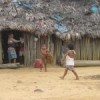
VENEZUELA: Bari People Left Without Land by Oil, Cattle, Coal
For 900 years, Barí indigenous hunters roamed freely throughout a vast region in western Venezuela. "Now they want to sentence us to die by locking us up in this corral, watching the white man get rich by destroying the land that used to be ours," says schoolteacher Conrado Akambio.RIGHTS-PAKISTAN: Harsh Colonial Law Set To Change
In May 2007, officials sealed a multi-storey shopping plaza belonging to three brothers from the Federally Administered Tribal Areas (FATA) because their tribesmen were reported to have abducted two former employees of the Pakistan Tobacco Company.
WORLD HEALTH DAY: Climate Change a Challenge to Human Species
World Health Day, celebrated Apr. 7, is a good opportunity to "call attention to the fact that the survival of humanity is at stake" because of climate change, according to Mirta Roses, director of the Pan-American Health Organisation.
RIGHTS: Finland's Sami Fear Assimilation
There are growing concerns among the Sami people in Finland that their traditional way of life as an indigenous people is under threat.MEDIA-AUSTRALIA: Aboriginal Radio Holds Its Own
When the Brisbane Indigenous Media Association (BIMA) applied for a community radio license 15 years ago they had to compete with a Christian group which argued that there were more Christians than aborigines in Brisbane and thus merited a license first.CHINA: Minority Outbursts – More Than Bad Olympics PR
As the outburst of anger among China’s restive ethnic minorities spreads, the danger for Chinese communist leadership is more than a a public relations fiasco ahead of the all-important Beijing Olympic games but a serious threat to its mandate, analysts here say.CHILE: Bachelet Unveils New Indigenous Policy
Chilean President Michelle Bachelet has announced a new policy for indigenous people, which includes novel approaches to political participation and the protection of natural resources in the hands of the country’s native groups.NEPAL: Tibetans Warned of Deportation to China
When King Gyanendra staged his military-backed coup in February 2005, Nepal’s political parties - including the then outlawed Communist Party of Nepal (Maoist) - formed an alliance that successfully opposed the monarch's assault on civil liberties.CHINA: Olympic Torch Rolls Despite Tibet Trouble
China has invoked the authority of a legendary emperor, revered as the ancestor of all Chinese people, to bless the Beijing Summer Olympics and emphasise national unity. But lingering tensions in Tibet and a choppy passage for the Olympic torch detract from the lavish rites planned for the Yellow Emperor.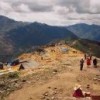
PERU: The Price of Mining Competitiveness
Peru has climbed from the 52nd to the 28th position in an international study on competitiveness in the global mining industry, surpassing Brazil, Argentina, Russia, South Africa and Bolivia. But how much is the local population in mineral-rich zones benefiting from the growth in competitiveness, and how does this phenomenon impact the environment?POLITICS-INDIA: Floundering Over Tibet Policy
Caught between its position recognising Tibet as part of China and growing pressure from pro-Western lobbies within its policy-making elites to support protests by Tibetan separatists, the Indian government is hard put to define a coherent stand on developments across its border.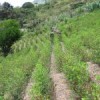
BOLIVIA: Coca Leaf Defended by Growers, Scientists… and Taxi Drivers
"They will have to kill us to make us stop planting coca," Bolivian coca grower Luis Mamani told IPS in response to a call from the International Narcotics Control Board (INCB) to prohibit traditional uses of the plant like coca leaf chewing.
POLITICS-DR CONGO: In a Governmental Vacuum, Yearnings for a Lost Empire
On a broad hillside high above the meandering flow of the Mpozo River, a handful of policemen guard a ruin.
CHINA: Under Pressure to Rethink Tibet Policy
As continuing Tibetan protests testify to the failure of China’s policy of accelerated economic development with harsh political controls in the Himalayan region, pressure on Beijing to begin dialogue with the Dalai Lama, the exiled Tibetan leader, is growing.POLITICS-KENYA: An Intractable Land Dispute Grinds On
More than a week after the launch of an army operation to flush out the Sabaot Land Defence Force (SLDF) in Mount Elgon, a district along the border with Uganda, the fugitive chief of the outlawed militia has reportedly urged an end to the campaign, but remained defiant towards government.« Previous Page — Next Page »


The planet's roughly 350 million indigenous peoples took notable steps on the international stage in the last decade. They got the world's governments to agree to create a body to represent them at the United Nations, the Permanent Forum on Indigenous Issues, and to appoint a special rapporteur responsible for their human rights. In 2007 a Universal Declaration on the Rights of Indigenous Peoples was approved by the UN. Yet the living conditions of most "tribal", "aboriginal", "native" or "first" peoples remain precarious. IPS, with its network of contributors at the UN and linked to indigenous communities worldwide, is committed to tracking the world community's efforts to do justice to the rights and aspirations of these peoples, with a special current focus on Latin America's 40 million rural indigenous peoples.

The Week with IPS

Tracking global progress towards a sustainable world
