
Sunday, November 15, 2026



News and Views from the Global South
Indigenous Rights
Q&A: 'Olympics Used to Legitimise Chinese Rule in Tibet'
Pema Gyalpo was official representative of the Dalai Lama in Japan from 1975 to 1990. Founder of the Tibet Culture Centre International, he is known for his many books on Tibet, his columns in major newspapers, and as an international affairs expert.RIGHTS-AUSTRALIA: Concerns Over New Indigenous People’s Body
Indigenous Australians have largely welcomed the government’s scrapping of the controversial National Indigenous Council (NIC) to make way for a new representative body.
RIGHTS-CHINA: Tibet Protests Won't Slow Olympic Torch
A crackdown on Tibetans protesting against Chinese rule over their Himalayan homeland - in the ancient capital of Lhasa and other Tibetan cities - is beginning to parallel the brutal suppression of the 1989 Tiananmen pro-democracy demonstrations.
CLIMATE CHANGE: Most Vulnerable Left to Sink or Swim
The world's minorities and indigenous groups are the "silent victims" of the potentially disastrous effects of climate change, says a new study by Minority Rights Group (MRG) International.ENVIRONMENT-NICARAGUA: Indigenous Groups Sound Forest Fire Alarm
Indigenous community leaders have sent a letter to the Nicaraguan authorities requesting protection against the risk of a potentially huge forest fire that would endanger about 60,000 families.RIGHTS-MEXICO: Indigenous Candidate Disqualified Because ‘Not a Man’
Eufrosina Cruz was unable to exercise her constitutional right to stand for election as mayor of a small municipality in the southern state of Oaxaca because, according to the "uses and customs" of her indigenous community, women can neither vote nor be elected.RIGHTS-US: U.N. Panel Finds Two-Tier Society
The United States government is drawing fire from international legal experts for its treatment of American Indians, Blacks, Latinos and other racial minorities.RIGHTS-GUATEMALA: Trial on Disappearances Marks a ‘Before’ and ‘After’
"My husband had taken a cow out to pasture when an army platoon took him away. He was missing for 25 years, until his corpse was exhumed two years ago," María Magdalena C., an indigenous woman from the village of Choatalum in the central Guatemalan region of Chimaltenango, told IPS.
PARAGUAY: Fighting for Survival in a Green Desert Wonderland
"The first red stains on Nicanor’s white shirt" reads the inscription on a memorial niche at the side of the road to Ypecuá, 230 kilometres from Asunción, where peasant farmers are fighting for their land and against the diseases caused by agrochemicals used on nearby soybean plantations.CHILE: Emerging Party Seeks Self-Government for Mapuche People
Wallmapuwen, which means "people of the Mapuche land" in the language of that indigenous group, aims to formally become a political party in July this year in the southern Chilean regions of Araucanía, Los Ríos and Los Lagos. One of its main goals is to achieve self-government for the Mapuche people.RIGHTS: Go Green, Save the Indigenous
African indigenous peoples are important custodians of their natural environments with valuable local knowledge and skills, but are struggling to survive, according to a report.
RIGHTS-PERU: US Judge Awards Millions in Damages to Massacre Survivors
A U.S. federal judge ordered retired Peruvian army major Telmo Hurtado to pay 37 million dollars to two survivors of a 1985 massacre in which 69 indigenous peasants, mainly women and children, were killed in the highlands village of Accomarca.
CANADA: Native Leader Serving Six Months for Opposing Mine
Algonquin community leader Robert Lovelace had never been charged with an offence, but when a uranium company began prospecting for radioactive ore on unceded native land without engaging in consultation, he decided to take action, organising a non-violent blockade.RIGHTS-COLOMBIA: Displaced Pay Homage to Victims of Paramilitaries
"It was an homage to the indigenous people, Afro-Colombians, peasant farmers and everyone else who has been killed in this absurd war," indigenous activist Manuel Bautista told IPS at the start of a three-day march that will end in the Colombian capital Thursday.PERU: Massacre Participant Unsuccessfully Seeking Asylum in US
In a desperate attempt to keep out of the reach of the Peruvian justice system, which is investigating a 1985 massacre of 69 highland villagers by the military, retired army captain David Castañeda is seeking - unsuccessfully so far - political asylum in the United States.
BRAZIL: Keeping Indigenous Identity Intact in “Urban Village”
"I desperately want to go back. I feel like I’m living in a prison here, but I stay on because I love my children," says Conceição Gonçalves, who misses the indigenous village of Taunay where she lived until last year, when she moved to the capital of the Brazilian state of Mato Grosso do Sul.
BRAZIL: Indigenous Groups Defend Constitutional Right to Land
Thousands of indigenous people in the west-central Brazilian state of Mato Grosso do Sul are living in precarious camps or small overcrowded reservations, lacking the land they need to grow the food needed to overcome high levels of malnutrition.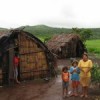
BRAZIL: Rising Indigenous Death Toll Sparks Calls to “Stop the Genocide”
Valdelice Verón still regrets not being at her father’s side, but he had sent her to the city. And she still remembers that early morning on Jan. 12, 2003, when her daughter called out, "Mommy, grandpa’s on TV." It was the news that her father was in the hospital, critically wounded.
BRAZIL: Guarani Education Empowers Women Leaders
Leia Aquino gave up her plans to work in a hospital in order to be near her husband, a nurse, the day she saw a motorcyclist badly injured in an accident. Her aversion to the sight of so much blood led her to become a teacher instead, and now she runs a school for indigenous children on the Brazil-Paraguay border.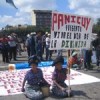
RIGHTS-GUATEMALA: A Minute of Silence for the Victims
"I’m a widow. The army took away my husband," said Celestina Otzoy, an indigenous woman who had five children when her husband was "disappeared" in 1982 in the central Guatemalan region of San Juan de Comalapa during the country’s 1960-1996 armed conflict.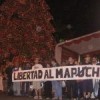
LATIN AMERICA: Justice Disserved for Indigenous Prisoners
While Mapuche Indians in Chile complain that the government has "criminalised" their land-rights protests, many indigenous people are in prison in Mexico and Peru because there were no translators to explain why they were on trial.« Previous Page — Next Page »


The planet's roughly 350 million indigenous peoples took notable steps on the international stage in the last decade. They got the world's governments to agree to create a body to represent them at the United Nations, the Permanent Forum on Indigenous Issues, and to appoint a special rapporteur responsible for their human rights. In 2007 a Universal Declaration on the Rights of Indigenous Peoples was approved by the UN. Yet the living conditions of most "tribal", "aboriginal", "native" or "first" peoples remain precarious. IPS, with its network of contributors at the UN and linked to indigenous communities worldwide, is committed to tracking the world community's efforts to do justice to the rights and aspirations of these peoples, with a special current focus on Latin America's 40 million rural indigenous peoples.

The Week with IPS

Tracking global progress towards a sustainable world
