Languages
Saturday, October 17, 2026



News and Views from the Global South
Inequality
Socialism Is Slow to Mature
In 1921, a few years into the Soviet experiment, V. I. Lenin published an essay with the revealing title ‘New Times and Old Mistakes in a New Guise’. The essay opened a line of inquiry that would remain with Lenin until the end of his life three years later. What captivated him was the issue of how to build socialism in a country ravaged by war, with minimal capital at its disposal, a largely peasant society with high rates of illiteracy (around 70%), and no public administration capable of running a socialist-oriented state. In the essay, Lenin reflected:

PHILIPPINES: ‘A Protest Is One Day, but Organising Is the Thousands of Conversations That Make That Day Possible’
CIVICUS discusses Gen Z-led protests in the Philippines with Charles Zander, a 17-year-old climate justice activist from Bohol and youth campaigner for Greenpeace Philippines.
Speaking Up for Girls’ Education Carries Heavy Risks in Afghanistan
Qadoos Khatibi, an Afghan university lecturer, and Fayaz Ghori, a civil society activist, also from Afghanistan, were detained by the Taliban’s Ministry for the Promotion of Virtue and Prevention of Vice. Their crime? Advocating for girls’ right to education.
African Countries Up Efforts to Tax High-Income Individuals
African countries are exploring ways to tax high-earning individuals as the continent seeks to expand its revenue collection amid what experts say is a growing gulf between rich and poor.
Climate-Driven Disruptions to Education in Africa Raise Protection Risks for Millions of Children
The escalating global climate crisis has led to an increase in the frequency of climate-induced natural disasters, affecting millions worldwide. As governments struggle to keep up due to persistent funding shortfalls and inadequate preparedness and response mechanisms, education systems in Eastern and Southern Africa continue to deteriorate, pushing millions of children into displacement and poverty, further deepening long-term inequalities.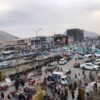
Online University Throws a Lifeline to Afghan Women Shut Out of Education
Ever since childhood, Khatera’s (not her real name) dream was to study medicine at university and become a doctor.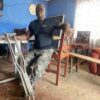
Will Sierra Leone’s Democracy Make Room for Persons with Disabilities?
As Sierra Leone prepares for its next national election in 2028, political parties across the country have begun setting strategies and preparing to select their candidates. However, persons with disabilities say they remain poorly represented and are calling on political parties to nominate them as candidates ahead of the election.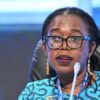
UNECA Warns Africa Risks Remaining Uncompetitive, Urges AI Adoption
Africa must move swiftly to harness data and frontier technologies such as Artificial Intelligence (AI) to drive its economic growth and make the continent globally competitive in the digital economy, a senior official at the United Nations Economic Commission for Africa (ECA) has told policymakers.
Failing to Learn: Afghan Girls Repeat Grades to Avoid Exclusion
It is almost unheard of for a student to deliberately fail final school exams for no apparent reason. Therefore, when 13-year old Sara (not her real name) from Mazar-i-Sharif in Afghanistan took her school report home to her parents, they were shocked to learn that the top-performing student had failed her final exams and would not advance to the next level. But there was no longer a next level for Sara, even if she had passed.
Nepal’s Gen Z Electoral Revolution
Less than six months after Nepal’s Generation Z rose up in protest, the country has a new prime minister. A 35-year-old former rapper who soundtracked the protests swept to power in a landslide in the 5 March election.
“At Africa’s First Our Ocean Conference, a Test of Global Will on High Seas Protection and Deep-Sea Mining”
When the 11th Our Ocean Conference opens in Mombasa and Kilifi, Kenya, from June 16-18, 2026, it will mark the first time this influential meeting has been held on African soil. For coastal and island nations across the continent and the wider Indian Ocean – and for the Global South more broadly – the stakes could not be higher: the promises and commitments made there will help decide whether the ocean becomes a source of justice and resilience, or deepens existing inequalities.
80 Percent of Rural Households Without Direct Water Access – World Water Report
A new United Nations report has warned that global water inequality remains one of the most pressing development challenges of the decade, with billions still lacking safe drinking water and sanitation – while women and girls continue to bear the heaviest burden of water insecurity.
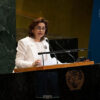
At CSW70, Advocates Warn Conflict Is Deepening Barriers to Justice for Women and Girls
The 70th session of the Commission on the Status of Women (CSW70) has brought together global leaders, gender equity advocates, and youth representatives at the United Nations (UN) Headquarters to advance efforts to strengthen mechanisms for justice, equality, and representation for women and girls worldwide. With challenges particularly pronounced in conflict zones, this year’s priority theme —“ensuring and strengthening access to justice for all women and girls — focuses on repealing discriminatory laws and addressing persistent structural barriers that prevent women and girls from being fully heard, represented, and treated equally.
Maison des Talibés Confronts Abuse of ‘Talibé’ children in Senegal
When you walk through the streets of Senegal’s cities, you notice them almost immediately: young boys in worn clothes, clutching plastic cans or tin bowls, weaving between cars and pedestrians to ask for spare change or food. They are often barefoot, alone and hungry. These children are known as talibés.
Generative AI Could Deepen Inequality, Revenue Losses in Creative Industries
As generative artificial intelligence (AI) rapidly expands across nearly every sector of society, those that work in cultural and creative industries are expected to bear some of the greatest losses. With AI-generated content projected to dominate global markets in the coming years, combined with a lack of strong regulatory frameworks to protect intellectual property and AI’s ability to produce content quickly at a low cost, the United Nations Educational, Scientific, and Cultural Organization (UNESCO) warns that generative AI may become a major driver of inequality, threatening the livelihoods of millions of cultural workers around the world.
From Grief to Guns: Baloch Women in Conflict
Fozia Shashani, 26, a member of the Baloch Yakjehti Committee, said it was “most painful” to hear reports that two Baloch women – Hawa Baloch, 20, and Asifa Mengal, 24 – had taken part in active combat as suicide bombers. The path, she said, was in complete contrast to her belief in peaceful resistance. Yet, she added, such extreme choices were the result of a state that had “failed its people.”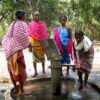
The Global Struggle for Equality for Women and Girls
The global struggle for equality for women and girls has been ongoing for centuries, with no single country having achieved full equality. In many countries, women and girls continue to face discrimination, harassment, unequal treatment, injustice, domestic violence, and a lack of security and safety.
Population Inequities in ‘The Appointment in Samarra’
While death is inevitable for everyone, the timing of “The Appointment in Samarra” varies significantly among and within populations. Fortunately, mortality levels of human populations have declined significantly worldwide in recent years, leading to increased survival rates and delayed appointments in Samarra.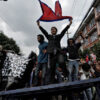
A Grim Year for Democracy and Civic Freedoms – but in Gen Z There Is Hope
2025 has been a terrible year for democracy. Just over 7 per cent of the world’s population now live in places where the rights to organise, protest and speak out are generally respected, according to the CIVICUS Monitor, a civil society research partnership that measures civic freedoms around the world. This is a sharp drop from over 14 per cent this time last year.
In Zimbabwe, School Children Are Turning Waste Into Renewable Energy-Powered Lanterns
When going home after school, Monica Ben not only takes with her a pen and exercise books but also a lantern to light the dark room and completes her daily homework in Mashonaland East province.
Continued Inaction Despite G20 Report on Worsening Inequality
Although inequality among countries still accounts for a far greater share of income inequality worldwide than national-level inequalities, discussions of inequality continue to focus on the latter.« Previous Page — Next Page »





This page includes independent IPS news coverage supported by the Norwegian Ministry of Foreign Affairs, to put the issue of inequality higher up the news agenda during the run-up to the 2015 MDG deadline and the process to forge a new development consensus
