Languages
Saturday, August 15, 2026



News and Views from the Global South
Inequality
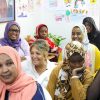
Gender Inequality in Science Limits Progress Towards Solving Complex Global Challenges
Today is the International Day of Women and Girls in Science and a time to take stock of progress, successes, and setbacks towards open and gender-inclusive science. Gender equality remains elusive in science, as only one in three scientists is a woman. Not only do these inequalities hold women back, but they also limit scientific progress.
Online Education: A Lifeline for Afghan Girls Amid Taliban Restrictions
Since the Taliban regained power in Afghanistan in 2021, girls and women have been systematically banned from education, making Afghanistan the only country in the world that denies schooling to girls over the age of 12. The situation continues to deteriorate, with even primary school enrollment for girls in decline, according to UNESCO.
The Challenge of the “Carbon Aristocracy”
For centuries, innumerable countries were ruled by an entrenched, typically inherited, political class: the “aristocracy.” The term comes from the Ancient Greek words “aristos”, meaning best, and “kratia,” meaning power. As a result of long and hard-fought democratic struggles, these aristocracies have largely dwindled worldwide (albeit, not everywhere).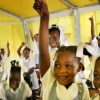
Tax the Super-Rich. We have a World to Win
Why can’t there be education for every child? Why can’t there be healthcare for everyone who needs it? Why can’t everyone be freed from hunger and deprivation? Though these are promised to all as rights, people are repeatedly told that there is no money.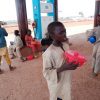
Malnutrition in Nigeria Rises Alarmingly, Urgent Action Needed
In June 2024, 26-year-old Zainab Abdul noticed her two-year-old daughter growing pale, losing weight, and battling diarrhea. She wasn’t surprised. Since jihadist-linked bandits had forced them out of their village in Kadadaba, Zamfara State, in northwestern Nigeria, her family had been living in a refugee camp with limited access to food.
A World Where Rich Get Richer, Poor Get Poorer — and Billionaires Rise
Perhaps one of the UN's most ambitious and longstanding projects – the launching of 17 Sustainable Development Goals (SDGs)-- is aimed, among other things, at helping developing nations eradicate extreme poverty by 2030. But that elusive goal has made little or no significant progress.
Martin Luther King Jr’s Legacy on Health Equity Through the Eyes of a Black African Doctor
Every year, January 20 is celebrated as Martin Luther King Jr. Day. He was a leader in the Civil Rights Movement who fought for equality and justice, especially for Black people, through peaceful protests and powerful speeches. The day is observed annually on the third Monday of January, close to his birthday on January 15. It is a time to remember his work, reflect on his message of fairness and nonviolence, and engage in acts of service to help others in our communities.
Trillions in Dirty Money: How Hidden Loopholes Fuel Corruption and Inequality
It is no longer a secret that at major global summits there are more lobbyists than official delegates. There, they participate as ‘guests,’ and most of them work for big business corporations. Their goal? To deter the adoption of policies that conflict with their employers’ interests.
These Billion Humans Simply Do Not Exist
Perhaps demographers would consider designing a new classification system to separate from their estimates of the world’s total population –eight billion plus– the billion humans who live without legal identity and, thus, are deprived from the most basic rights.
Power Arrives but the River Dries Up for Brazil’s Amazonian Dwellers
The flow of the igarapé always dropped for three months every year, but now it has been dry for two years in a row, complains Maria Aparecida dos Anjos, looking at the trickle of water that when flooded reaches the stilts of her wooden house, 50 metres away and on a slope of more than 10 metres high.
Bangladesh in Crisis: Which way out?
This piece is not about the crisis or the chaos that the country is now facing after successfully toppling the autocratic regime of Sheikh Hasina. Rather, it is about the crisis of confidence and social capital or trust — interlinked, nonetheless.
It’s the Greed, Stupid!
The available data is self-explanatory: business-prompted human activities have already altered over 70% of the Earth’s lands, with 24 billion tonnes of fertile soil lost due to industrial agriculture, the excessive use of chemicals, overgrazing, deforestation, pollution and other major threats.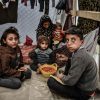
FAO Renews Its Commitment to Right to Food Guidelines
The Food and Agriculture Organization (FAO) launched its newest report on the Right to Food Guidelines on December 10, which focuses on that focused on the urgency of food security as well as the measures that will be taken by the organization to eradicate hunger and malnutrition in the coming decade.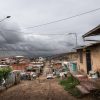
Latin America’s Poor Are More Urban and More Vulnerable
Poverty, while declining in Latin America and the Caribbean so far this century, shows a new face, that of the looming vulnerability of the poor as they become less rural and more urban, the United Nations Development Programme (UNDP) says in a new analysis.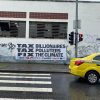
South Africa’s G20 Presidency: A Call for Transformative Leadership in a Fractured World
South Africa’s G20 Presidency begun in December, with only 12% of SDG targets on track and significant backsliding on more than 30%. As we write this today, there is an urgent need for a paradigm shift and practical solutions for a progressive, people-centred, and development-driven agenda in a fractured global landscape that needs collective healing.
New Approaches Urgently Needed to Tackle Resurgent Social Crises
Despite uneven economic recovery since the pandemic, poverty, inequality, and food insecurity continue to worsen, including in the Asia-Pacific region, which used to fare better than the rest of the Global South.
COP29 Falls Short on Finance
COP29, the latest annual climate summit, had one job: to strike a deal to provide the money needed to respond to climate change. It failed. This was the first climate summit dedicated to finance. Global south countries estimate they need a combined US$1.3 trillion a year to transition to low-carbon economies and adapt to the impacts of climate change. But the last-minute offer made by global north states was for only US$300 billion a year.
Mayan Farmers Improve Their Livelihoods and Polyculture of Milpa in Mexico
María Bacab, a Native Maya, considers herself the “guardian of seeds” as she cares for the milpa - an ancestral Mesoamerican polyculture that mixes maize, beans, squash and other vegetables - and promotes its practice and use in Mexico.
Signs of Things to Come As COP29 Presidency Releases New Draft Text
Today the COP29 Presidency released a much-awaited new draft text as the end draws near.
Western Finance Ruining Economies of the Rest
Western financial policies have been squeezing economies worldwide. After being urged to borrow commercial finance heavily, developing countries now struggle with contractionary Western monetary policies.
Cities Will Be Hit Hardest By Climate Change, UN Report Warns
Cities are in a unique position, simultaneously the biggest emitters of greenhouse gasses and the most affected areas of the greenhouse effect. As a new UN report shows that rapid urbanization and industrialization have adverse effects on the environment, causing a rise in sea levels, prolonged rainfalls and flooding, and an increase in overall temperature. The coastal areas that cities most often inhabit face the brunt of these effects, with marginalized populations being the most vulnerable.« Previous Page — Next Page »


This page includes independent IPS news coverage supported by the Norwegian Ministry of Foreign Affairs, to put the issue of inequality higher up the news agenda during the run-up to the 2015 MDG deadline and the process to forge a new development consensus
