Languages
Monday, September 28, 2026



News and Views from the Global South
Middle East & North Africa

Defending Democracy in a “Topsy-Turvy” World
It is a bleak global moment—with civil society actors battling assassinations, imprisonment, fabricated charges, and funding cuts to pro-democracy movements in a world gripped by inequality, climate chaos, and rising authoritarianism. Yet, the mood at Bangkok’s Thammasat University was anything but defeated.
‘Turkmen Authorities Are Carrying out a Systematic Campaign to Eliminate Independent Voices’
CIVICUS speaks about the disappearance of Turkmen activists Abdulla Orusov and Alisher Sahatov with human rights defender Diana Dadasheva from the civil movement DAYANÇ/Turkmenistan and with Gülala Hasanova, wife of Alisher Sahatov.
Gaza Shows Subtle Signs of Recovery as UN Agencies Work to Meet Aid Needs
Since the declaration of a ceasefire between Israel and Hamas on October 10, families in the Gaza Strip have begun returning to previously inaccessible areas, as humanitarian organizations work to scale up aid operations to meet growing needs on the ground even amid security risks, including unexploded ordnance.
They Have Known Nothing but War—The Plight of Syria’s Out-of-School Children
The war has deprived thousands of Syrian children of their right to education, especially displaced children in makeshift camps. Amidst difficult economic conditions and the inability of many families to afford educational costs, the future of these children is under threat.
The Inescapable Reality the Israelis Must Face
The ceasefire agreement and the release of Israeli hostages and Palestinian prisoners are only the first steps on the long and treacherous road that could end the calamitous, decades-long Israeli-Palestinian conflict. In my recent article, “A Rare Alignment:The World Stands Ready, Are the Palestinians?”
With Ceasefire in Effect, Tonnes of Aid Expected to be Delivered into Gaza
After two years of conflict with Israel, Hamas has released the remaining 20 living hostages, while Israel has freed 250 Palestinian prisoners and over 1,700 detainees who have since returned to Gaza. Following a ceasefire agreement that took effect on October 10, Israeli forces are set to withdraw from designated areas within the Gaza Strip as humanitarian organizations mobilize to assist Palestinians in urgent need.
Trump’s Gaza Peace Plan: Today, Tomorrow and the Day After
Back in January last year, my Toda Policy Brief 182 was published with the title “Israel and Gaza: Yesterday, Today and Tomorrow”. On 29 September this year, President Donald Trump and Israeli Prime Minister Benjamin Netanyahu held a joint press conference to announce a peace plan for Gaza. The plan’s title could well have been “Gaza: Today, Tomorrow and the Day After”. Trump’s yearning for the Nobel Peace Prize is no secret, possibly out of Obama-envy. If the bold and audacious 20-point Gaza plan succeeds, he will surely deserve the award. For it entails the end of Hamas as a governing force in Gaza and a security threat to Israel, gives Arabs the stability they seek in the region, promises a terror-free future for Israel and keeps alive the dream of a Palestinian state. That said, however, potholes, there be a few on the pathway to Middle East peace.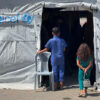
More than 42,000 Gazans Suffer Life-Changing Injuries as Health System Nears Collapse
In recent months, the humanitarian situation in Gaza has sharply deteriorated, with escalating hostilities driving mass civilian displacement and overwhelming the already fragile healthcare system, pushing it to the brink of collapse. UN officials are warning that thousands of civilians have been left with life-altering injuries without treatment.
Justice for Palestinians Can’t Wait for a Peace Deal
The calamitous situation in Gaza, with Palestinian civilians facing extermination and ethnic cleansing by Israeli forces, was a major focus of the annual United Nations General Assembly (UNGA) high-level week. Along with recognition of the state of Palestine by France, the United Kingdom, Australia, and Canada, among others, states made key commitments on human rights and accountability that were overwhelmingly adopted by the UNGA and now need to be fulfilled.
Israel, Gaza, and the Erosion of International Order
As a world leader and beneficiary of the international system, the United States should be at the forefront of efforts to enforce rules and laws to prevent the proliferation of weapons of mass destruction, protect civilians in conflict, and block weapons transfers to states that engage in war crimes or genocide.
West Bank: Record Number of Demolitions over Building Permits as Israel Furthers Annexation Agenda
In less than nine months, Israel has demolished more Palestinian homes and structures in the occupied West Bank, including East Jerusalem, over building permits than in the whole of last year.
Record Number of Women Living Within Striking Distance of Military Conflicts
The battlefield is no longer distant; for millions of women, it’s next door. An estimated 676 million women – nearly 17 percent of the global female population – lived within 50 kilometres of a deadly conflict last year, according to a new report from the Peace Research Institute Oslo (PRIO). That is the highest figure recorded since the end of the Cold War.
Mamdani’s Stand on Genocide is More Important than the Dynamics of Arresting Netanyahu
No leader responsible for mass atrocities enjoys greater impunity on the international stage than Benjamin Netanyahu. This is due to the strange stranglehold of the pro-Israel lobby on the two major political parties in the United States.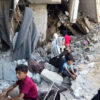
World Leaders Should Commit to Human Rights, International Justice
World leaders gathering at the United Nations General Assembly from September 22-30, 2025, should commit to protecting the UN from powerful governments seeking to defund and undermine the organization’s capacity to promote human rights and international justice, Human Rights Watch said today.
UN Independent Commission Finds That Israeli Forces Have Committed Genocide in Gaza
On September 16, the Israeli military began its ground offensive in Gaza City, accompanied by intensified bombardment of residential areas and a surge in civilian displacement. Concurrently, the United Nations Independent International Commission of Inquiry on the Occupied Palestinian Territory, including East Jerusalem and Israel, issued a report in which it found that Israel is responsible for committing genocide in Gaza, citing deliberate efforts to destroy Palestinian life, carried out with near-total impunity.
Struggle For Water Continues Following Israeli Attacks on Lebanon
Just under a year into a fragile ceasefire, 150,000 people in southern Lebanon continue to deal with the potentially lethal aftermath of Israeli bombing, highlighting the devastating long-term effects of conflict.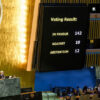
The Cruel Deceptions of Peace in Palestine
In a long past due move, the UN General Assembly voted 142-10 to approve a plan called “The New York Declaration” that hopes to revive the long dead Two State Solution for Palestinian Independence.
Israel, Hamas, the US and Qatar—Unraveling the Mess
Israel’s brazen attack on Hamas’ negotiating team in Qatar while they were deliberating a new ceasefire with Israel raises serious questions not only about the legality of the attack, which violated international laws and norms, and concerns over Qatar’s sovereignty, but also the potential regional and international fallout.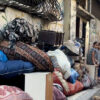
Palestinians Pushed into Deeper Crisis with Israeli Displacement Order on Entire Gaza City
Israel’s intent to displace around 1 million civilians, half of whom are living in famine, is impossible and illegal Oxfam said, while the Israeli military continued to flatten Gaza City building by building as its mass forced displacement of civilians in the city gains terrifying momentum.
Translating Recognition of a Palestinian State into Reality
During the upcoming annual UN General Assembly, several key European countries are expected to recognize a Palestinian state. The question that looms is how to translate such a significant development into reality, whereby the Palestinians will realize their national aspiration for statehood
50 Years On: Lebanon’s Civil War, Feminist Peacebuilding, and the Fight Against Silence
 This year marks half a century since the start of Lebanon’s civil war in 1975 - a conflict that lasted 15 years, killed over 150,000 lives, and resulted in as many as 17,000 missing. Decades later, the legacy of that war is still everywhere: in the silence of classrooms without history books, in families who never knew what happened to their missing loved ones, and in violence made mundane in all parts of society.
« Previous Page — Next Page »


The Week with IPS

NEXT STOP - SDGs
Tracking global progress towards a sustainable world
Tracking global progress towards a sustainable world
