Languages
Thursday, October 1, 2026



News and Views from the Global South
Natural Resources

An Overdose of Renewables, New Energy Risk in Brazil
Wind and solar power sources, essential for the energy transition to mitigate the climate crisis, have become a risk of power outages in Brazil.
UN80 – Is it time for the Re-emergence of the Global Ministerial Environment Forum?
“We shall have to do more with less” was the summary message from a meeting in Oslo, Norway, this spring (2025), where the Minister of Foreign Affairs of Norway, Espen Barth Eide and Guy Ryder, Under-Secretary-General for Policy at the UN and Chair of UN80, both spoke about UN80 and the necessity to reform the UN.
Frontline of a Planetary Emergency: Africa Demands Climate Justice and Action
The room at the Swiss Inn Nexus Hotel in Bole was silent but tense as Sunita Narain, one of the world’s most influential environmental voices, fixed her gaze on rows of African journalists, scientists, and policymakers. Her tone was gentle, but the words cut deep.
Better Use of the World’s Expertise in Navigating the Polycrisis
Other articles in this series on clustering conventions that are addressed by the Triple Environmental Crisis of pollution (Stanley-Jones), biodiversity (Schally) and climate change (Azores) I have touched on the idea of clustering not only conventions but the science-policy bodies established separately to serve them. We address the question of the negative consequences of maintaining status quo and identify how “consolidating knowledge” might make a difference.
Mexico Experiments With Residential Solar Panels, But They Are Still Insufficient
Over the past four months, Mexican researcher Nicolás Velázquez has paid around US$23 for electricity, thanks to the photovoltaic system installed in his home in the northern city of Mexicali.
‘Angola produces large quantities of oil and diamonds, yet most people don’t see the benefits’
CIVICUS discusses recent protests in Angola with Florindo Chivucute, founder and executive director of Friends of Angola, a US-based civil society organisation established in 2014 that works to promote democracy, human rights and good governance in Angola.

Kerala’s Human-Elephant ‘Conflict’: Time To Understand a Complex Relationship
In the early part of this year, two deaths in Kerala garnered major media attention. A farmer in Wayanad and a female plantation worker in Idukki were killed in two separate events, within a matter of a few days, by wild elephants. Arikomban, another wild elephant, has become a media favorite recently due to his brushes with human settlements near his habitat. Named so because of his love for ari (rice), the elephant had been relocated from Kerala to Tamil Nadu in 2023 following constant protests from people who also claimed him to be ‘life-threatening.’ Kerala's news outlets widely covered Arikomban's relocation.
The Debacle of the Global Plastics Treaty Negotiations –& Some Ideas for a Way Forward
The debacle that was the latest round of negotiations for a global treaty on plastics (including in the marine environment); known as “INC 5.2” has already been written about at length by many colleagues on all sides of the issues. Despite all the very informative posts, articles, and other analyses, I believe I have several key observations to make, particularly about the process to-date.
Chile Aims to Become a Latin American Hub for Data Storage and Transmission
Chile wants to be a hub in Latin America in data storage and transmission by developing data centers, leveraging its wealth of renewable energy, and its optimal digital interconnection.
UN 80 – Clustering the Climate Conventions
The international governance of environmental challenges has progressively evolved over the past decades, transitioning from isolated treaties addressing specific issues to a complex web of multilateral agreements that aim to foster sustainable development and environmental integrity.
Toward Enhanced Synergies among Biodiversity Related MEAs: Addressing Fragmentation with Strategic Coordination
The governance of nature and biodiversity has evolved from early 20th-century treaties on hunting and migratory species to today’s complex web of multilateral environmental agreements.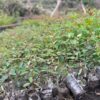
DRC: Reforesting Sites Once Used by War Displaced People
The Youth Circle for Nature Conservation and Community Development is working toward the reforestation of sites where displaced people lived near the town of Goma.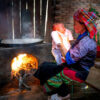
Can the Asia-Pacific Region Deliver Clean, Affordable Energy by 2030?
The future of the global energy landscape will be shaped by Asia and the Pacific. Over the past two decades, our region has been the principal driver of global energy demand and emissions. Energy has powered prosperity, lifted millions out of poverty and transformed societies.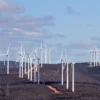
Rare Earths, a New Technological and Industrial Dream in Brazil
Brazil, which stands out for exporting basic products such as iron ore, oil, coffee, and soybeans, rather than industrialized goods with higher added value, now intends to make a shift regarding rare earths, a key component in new technologies that it has in abundance.
When Disasters Strike, Homes are Destroyed, Livestock Lost, Crops Fail or Local Economies Collapse
As climate change intensifies, disasters like hurricanes, floods, droughts and wildfires are becoming more frequent and devastating. Rising sea levels are further threatening coastal communities, putting millions at risk. Strengthening disaster preparedness and resilience is now essential to protect lives and mitigate long-term climate impacts.
Feminist Electrification: the Power Africa Needs
Chad is one of the most extreme examples of energy poverty, with just 10% of the population connected to electricity, a rural electrification rate below 2%, and a global per capita electricity consumption rate that’s just 18% of the global average. This hinders its economic development.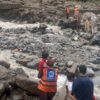
Swept Away: Flash Floods, Failed Systems Bane of Pakistan’s North
Intense rainfall over small areas in Pakistan’s mountainous regions caused massive destruction, sweeping away entire villages. On August 15, the district of Buner in Khyber Pakhtunkhwa (KP) province experienced a weather anomaly in which glacier melt and intense monsoon rains caused floods that buried villages under mud and rock.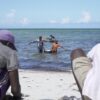
Environmentalists Confident Case Against US Funding of Mozambique LNG Project Will Succeed
Environmental campaign groups are confident that a suit filed in the United States, seeking to stop the country’s Export-Import Bank (EXIM) from the ‘unlawful’ lending of nearly USD 5 billion to the controversial Mozambique Liquefied Natural Gas (LNG) project, will succeed.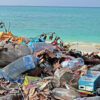
Plastics Treaty Talks End in ‘Abject Failure’ as US, Other Big Oil Allies Sabotage Progress
Negotiators in Geneva adjourned what was expected to be the final round of plastics treaty negotiations on Friday without reaching an agreement, a failure that environmentalists blamed on the Trump-led United States, Saudi Arabia, and other powerful nations that opposed any effort to curb plastic production—the primary driver of a worsening global pollution crisis.
Bending the Curve: Overhaul Global Food Systems to Avert Worsening Land Crisis
Current rates of land degradation pose a major environmental and socioeconomic threat, driving climate change, biodiversity loss, and social crises. Food production to feed more than 8 billion people is the dominant land use on Earth. Yet, this industrial-scale enterprise comes with a heavy environmental toll.
From Conflict to Climate Crusade, Refugees Lead the Charge in Kenya
For 18-year-old Lionel Ngukusenge, a refugee from Burundi, where he was forced into hiding because of a repressive regime, he has found another foe to contend with at the Kakuma refugee camp in Kenya: climate change.« Previous Page — Next Page »


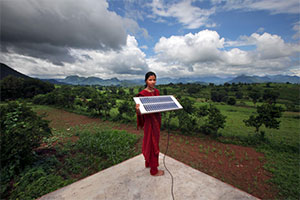 Bringing clean energy to rural India. Credit: Abbie Trayler-Smith / Panos Pictures / Department for International Development
Large reserves of oil, gas and minerals in developing countries generate opulent revenues. They could be used to stimulate economic growth and reduce poverty, but often result in environmental destruction and conflict, benefiting large companies and corrupt governments. Furthermore, competition over natural resources often manifests through geopolitical conflict. For example, before the US-Iraq war, Iraq’s domestic oil industry was nationalized. With US aggression came weakened Iraqi institutions and foreign intervention, thus eventually leading to the privatization of Iraqi oil, leaving the industry now largely dominated by Western companies. As another example, China’s rising investments within the lithium sector in South America are increasing the US-China rivalry across the Western Hemisphere. Notably, Bolivia has the largest reserves of lithium in the world, and the nation’s state-owned lithium extraction firm recently signed a contract with China’s CBC Consortium, while rejecting the entry of Western firms into the nation. In Bolivia’s case, rising Chinese investment in the nation’s lithium sector also raises concerns about environmental sustainability and the sociopolitical rights of Indigenous communities. More broadly, Sub-Saharan Africa holds nearly 30% of global reserves of critical minerals required for low-carbon technologies. Despite this, the region attracts less than 10% of global exploration investment, depicting a critical barrier to both the clean energy transitions and Sub-Saharan Africa’s economic development. Furthermore, resource wealth continues to fuel conflict like Sudan’s civil war, which has led to 9.1 million internally displaced people and is intensely connected to competition over gold, water, and agricultural land. IPS covers news about major oil, gas, and mining projects, their effects on the environment and local communities, and the ideas and actions of the interest groups involved.

The Week with IPS

NEXT STOP - SDGs
Tracking global progress towards a sustainable world
Tracking global progress towards a sustainable world
