Languages
Saturday, November 21, 2026



News and Views from the Global South
North America
ECONOMY-US: Activists Target Corporate Chiefs' Tax Subsidies
U.S. taxpayers shell out 20 billion dollars a year to pad business chiefs' earnings and to prop up the world's most lopsided corporate pay scales, say activists seeking to highlight inequality in this election year.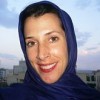
Q&A: A Holiday in Iran
When Michelle May, an avid traveler, returned to New York's John F. Kennedy airport after a seven-week trip to Iran this summer, she says she was closely questioned and her luggage searched after officials read on her customs card that she had been to the Islamic Republic.
ENVIRONMENT: Conservation as Artists' Muse
Pulled-together socialites and not-so-sloppy artists recently gathered for an atypical art exhibition in San Diego that combines art with wilderness conservation, using contemporary art to investigate vanishing worlds and the people that inhabit them.POLITICS: Georgia War Rooted in U.S. Self-Deceit on NATO
The U.S. policy of absorbing Georgia and Ukraine into NATO, which was enthusiastically embraced by Barack Obama and his running mate Joseph Biden, has undoubtedly been given a major boost by the Russian military operation in Georgia.
POLITICS-US: Biden Helps Obama Plug Key Gaps in Electorate
In picking six-term Senator Joseph Biden as his vice presidential running-mate, Sen. Barack Obama hopes to plug some key gaps in the electoral constituencies whose support he hopes will send him to the White House in the November elections just 10 weeks from now.POLITICS-US: A Really Bad Couple of Weeks for Pax Americana
Whatever hopes the George W. Bush administration may have had for using its post-9/11 "war on terror'' to impose a new Pax Americana on Eurasia, and particularly in the unruly areas between the Caucasus and the Khyber Pass, appear to have gone up in flames - in some cases, literally - over the past two weeks.
SPORTS: Angst Follows Olympic Torch from Beijing to Vancouver
The 29th summer Olympics cast renewed light on China's treatment of ethnic minorities in Tibet, and as the games wind down, a similar, if less pronounced set of controversies will follow the torch to Canada when Vancouver hosts the 2010 winter games.US/PAKISTAN: Taliban Tests Fragile Coalition Gov’t
When Pakistani president and former military dictator Gen. Pervez Musharraf stepped down on Monday, it marked the official end of the flawed Pakistan policy of the administration of U.S. President George W. Bush.POLITICS-US: McCain’s Plan to Privatise Veterans’ Health Care
If John McCain is elected the next U.S. president, wounded veterans could be in for a world of hurt.HEALTH: Global Agenda Increasingly Disease-Driven
At the end of last month, U.S. President George W. Bush signed a global health package that effectively tripled U.S. spending over the next five years to fight HIV/AIDS, malaria and tuberculosis in poor countries, to 48 billion dollars.
POLITICS-US: Anti-Obama Echo Chamber in Full Swing
Right-wing groups are stepping up their campaign against Democratic presidential candidate Barack Obama, with two new books on the best-seller lists, another on the verge of publication, and a full-length documentary that will premiere during the party conventions later this month.POLITICS: Kosovo Casts Shadow on South Ossetian Standoff
With the conflict between Georgia and Russia lowered to a simmer after the signing of a ceasefire agreement, questions still remain about the U.S. role and positions on the start of the conflict as well as where it stands moving forward towards a resolution.POLITICS: Bush Covered up Musharraf Ties with Qaeda, Khan
Pakistani President Pervez Musharraf's resignation Monday brings to an end an extraordinarily close relationship between Musharraf and the George W. Bush administration, in which Musharraf was lavished with political and economic benefits from the United States despite policies that were in sharp conflict with U.S. security interests.
Q&A: Hezbollah’s Triumph Is Blowback for Israeli Policy
Since the Israel-Lebanon 34-day war two years ago, and particularly after the Doha accord in May which restored Hezbollah to the Lebanese government and essentially gave it the veto power it demanded, Hezbollah leader Hassan Nasrallah has been the most popular figure anywhere in the Arab world.RIGHTS-US: Arar Faces Uphill Legal Battle
After suffering a series of stinging defeats of its detention policies in four years of Supreme Court decisions, the George W. Bush administration may be in for yet more bad news.
US-GEORGIA: Expats Unite Against Russia
When the Russian military launched a military invasion of its small neighbour Georgia - operating at will in Georgia’s secessionist provinces of Abkhazia and South Ossetia, as well as Georgia proper - New York’s Georgian-American community responded almost immediately by gathering outside United Nations Headquarters here to protest the invasion of their homeland.IRAQ: U.S. Officials Admit Worry over a ‘Difficult’ al-Maliki
U.S. officials privately admit being concerned that Iraqi Prime Minister Nuri al- Maliki has become "overconfident" about his government’s ability to manage without U.S. combat troops, according to an Iraq analyst who just returned from a trip to Iraq arranged by U.S. commander General David Petraeus.POLITICS-US: One-Fifth of Iraq Funding Paid to Contractors
As a new report forecasts that the 190,000 private contractors in Iraq and neighbouring countries will cost U.S. taxpayers more than 100 billion dollars by the end of 2008, an under-the-radar Florida court case suggests that U.S. President George W. Bush - a staunch contractor supporter - is preparing to throw security contractors such as Blackwater under the political bus.POLITICS: U.S. Debates Putin’s Ambitions
Just days after the outbreak of war between Russia and Georgia, the debate in Washington over how to view the crisis historically has become nearly as contentious as the debate over how to respond politically.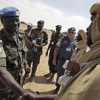
POLITICS: ‘UNAMID In Boxing Ring With Hands Bound’
Calls for an increased U.N. peacekeeping presence are growing as warring parties in Sudan’s troubled region of Darfur remain mired in a vicious cycle of violence that has taken about half a million lives in the past four years.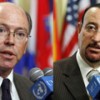
US/IRAN: Nothing Behind U.S. Allegations?
While the United States has repeatedly accused Iran of providing lethal weapons to Shiite militias, last week, U.S. officials once again failed to provide solid evidence for this charge, raising questions about the actual level of Iran’s meddling in Iraq.« Previous Page — Next Page »






The Week with IPS

NEXT STOP - SDGs
Tracking global progress towards a sustainable world
Tracking global progress towards a sustainable world
