Languages
Thursday, November 19, 2026



News and Views from the Global South
Human Rights

In Latin America “Me Too” Doesn’t Always Mean the Same Thing
From the Argentine slogan "Ni una menos" (Not one [woman] less)" to Colombia’s “Now is not the time to remain silent”, activism against gender violence has grown in Latin America since 2015, with campaigns that have social and cultural differences from the "MeToo" movement that emerged later, in 2017, in the United States.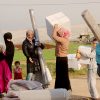
Starting Over at Home
After armed groups broke into his home in the middle of the night, 20-year-old Ahmed and his wife knew that they had to flee as soon as possible. They left their hometown in Homs Governorate and eventually reached a camp for displaced persons after a 1,000 kilometres trek. His wife was pregnant at the time.
When Environmental Crises Hit Homes, Women Suffer the Most
When Mandelena became a mother, she was only 16. During the prolonged dry season in Gwor County, South Sudan, her community saw crops failing and cattle dying. Children stopped going to school because of hunger and women and girls had to walk up to five hours every day to collect water.
DRC: A Crisis the World Can No Longer Afford to Ignore
The numbers are hard to fathom. Nearly two million people driven from their homes in 2017 alone. The worst cholera epidemic of the past 15 years, with over 55,000 cases and more than 1,000 deaths. Countless others killed, maimed or sexually assaulted.
I Am a Migrant and I Work in Rome
– Mika, age 35, arrived in Italy five years ago from Bangladesh, and actually came to Rome on a flight in search of work for a better life. He now works alongside other Romans in the outdoor food market in Piazza San Cosimato in Trastevere, selling food products, such as pasta, olive oil, spices and after dinner liquors, mostly from southern Italy. He is well versed in their ingredients, origins in Puglia and preparation process. He is there every day and feels good about the life he has created here.
The Silent Victims of Domestic Violence in Georgia
As a student in Rome, the closest event that left a mark in my life was the Women’s March in the Italian capital. The march allowed me to contribute to the empowerment of women and to demonstrate that no woman is free-- even if one’s rights are being violated. #MeToo.
Women Peace Laureates Condemn Inaction on Rohingya “Genocide”
Nobel Laureates Mairead Maguire, Shirin Ebadi and Tawakkol Karman met with more than 100 women refugees in camps in the coastal Cox’s Bazar region of Bangladesh this week, as well as travelling to the “no man’s land” where thousands of Rohingya have been stranded between Myanmar and Bangladesh.
Rise of Feminism & the Renewed Battle for Women’s Rights
In 1909, the Socialist Party of America, in support of female garment workers protesting working conditions, designated March 8 as a day to honor women. By 1917, women in Russia were protesting for ‘bread and peace’ against a backdrop of war. In recognition of that protest and women’s suffrage in Soviet Russia, The International Socialist movement designated March 8 as International Women’s Day.
Legal Guillotine
“Men make their own history, but not of their own free will; not under circumstances they themselves have chosen”. — Karl Marx
Call Myanmar to Account
The painful experiences of Rohingyas have once again been poignantly narrated to the visiting Nobel trio, and anyone who hasn't really been through the harrowing experiences cannot actually comprehend the horrendous nature of violence that these people have been through.
A Long Way Still to Achieving Gender Equality: International Women’s Day
International Women's Day is a call to celebrate the extraordinary achievements of women and a reminder that globally, we are a long way from achieving gender equality.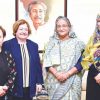
Suu Kyi sold her soul to devil: Nobel Laureate Shirin Ebadi
Claiming that Aung San Suu Kyi has chosen to turn a blind eye to the genocide taking place in her country to retain her political power, Nobel Peace Prize Laureate Iran's Shirin Ebadi today said that their fellow laureate has sold her soul to the devil.
Culture of Deep-seated Denial of Sexual Violence in Sudan
At the invitation of the Government of Sudan, I visited Sudan from 18 to 25 February 2018. The objective of the visit was to gain first-hand knowledge of the situation, assess the challenges of addressing conflict-related sexual violence in Sudan, and establish constructive dialogue with national authorities in this regard.
Monsoon Season Threatens More Misery for Rohingyas
More than half a million Rohingya refugees crammed into over 30 makeshift camps in Cox’s Bazar in southeast Bangladesh face a critical situation as the cyclone and monsoon season begins in a few weeks’ time.
Strengthening Ban on Chemical Weapons: The Case of Syria
The legal framework prohibiting chemical weapons (CW) is considered the gold standard for multilateral disarmament. It features both comprehensive provisions and intrusive verification measures. Yet, in the case of Syria, this framework (which extends to the United Nations Security Council) has proven insufficient.
Keeping Jewelry Companies Accountable: Where Do Our Gold and Diamonds Come From?
How many people know where their gold and diamond jewelry comes from? How many people consider the human cost of its production?
Wake Up And Stop Rohingya Abuses
 No one would realise better than a woman how it feels when a child is snatched away from the arms of a mother and slaughtered, a man is murdered before the eyes of his wife, or a girl is raped.

Nobel Women Laureates at Zero Point with Rohingya Refugees
Nobel Laureates, Mairead Maguire (Northern Ireland), Shirin Ebadi (Iran) and Tawakkol Karman (Yemen) speak to Rohingya refugees stranded in the no-man’s land between Myanmar and Bangladesh. They promise to seek justice for the Rohingya genocide. 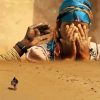
The Perils of Irregular Migration
Contemporary music is a powerful tool to counsel West African youth at risk of being lured into attempting the dangerous journey as undocumented migrants through North Africa and the Mediterranean, to Europe.
Security Council Resolutions are Meaningful Only When Implemented
As this is the first time I have the opportunity to address a UN body after the Security Council resolution of last Saturday on Syria, allow me please to say a few words in that regard.
UN Relies on DNA for Paternity Claims Against Sexually Abusive Peacekeepers
As sexual abuse and paternity claims continue to rise against UN peacekeepers overseas, the United Nations is actively collaborating with troop contributing countries (TCC) in collecting DNA samples: a protocol introduced back in 2014.« Previous Page — Next Page »


One world, one humanity, now one court to defend its rights. Another step towards universal human rights, but not remotely a step far enough. The United Nations adopted the Universal Declaration of Human Rights more than half a century ago, but that has done little to stop violations the world over, just as the Geneva Convention has not protected prisoners of war enough. Democracy itself and the freedom it presupposes has not been protective enough. This is the century to move from politicisation of human rights towards humanising political ways. IPS keeps an eye on that difficult path.

The Week with IPS

NEXT STOP - SDGs
Tracking global progress towards a sustainable world
Tracking global progress towards a sustainable world
