Languages
Wednesday, September 23, 2026



News and Views from the Global South
Human Rights
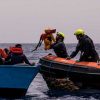
A Test of Humanity: Migrants’ Rights in a World Turning Inward
The United Nations Refugee Agency faces devastating cuts that may eliminate 5,000 to 6,000 jobs, with potentially catastrophic consequences for millions of people fleeing war, repression, hunger and climate disasters. This 75-year-old institution, established to help Europeans displaced by the Second World War, now confronts an unprecedented financial crisis, primarily due to the US foreign aid freeze – and the timing couldn’t be worse.
Seeds of Survival, Amid Conflict Sudan Is Saving Its Agricultural Future
Sudan’s diverse crops and agricultural heritage are at risk of being lost. The ongoing conflict in Sudan is claiming lives and threatening livelihoods and food security. In the chaos of conflict, scientists like Ali Babiker are fighting to protect Sudan’s future food security—not with weapons, but with seeds.
‘What’s Next?’ Women-led Movements Fear for the Future
Women rights advocates who gathered at UN Headquarters for the world’s biggest meeting (10 -21 March) on gender equality have been sharing their concerns about the growing backlash against feminism, and how major funding cuts from donor countries could threaten programmes aimed at improving the lives of women and girls.
Funding Crunch Puts Years of Progress at Risk in Fight Against Tuberculosis
Governments and donors must ensure funding is sustained to fight tuberculosis (TB), organizations working to stop the disease have said, as they warn the recent US pullback on foreign aid is already having a devastating effect on their operations. NGOs and other groups that play a critical role in national efforts to stop what is the world’s deadliest infectious disease say the US administration’s recent decisions to first freeze and then cancel huge swathes of foreign aid funding have put countless lives at risk around the world.
The Toll of Mental Health in Conflict Areas
Over the past two decades, conversations surrounding mental wellness have entered the cultural consciousness in the western world. Despite this, these topics receive far less media exposure in the Global South, particularly in areas that have been entrenched in warfare, where the onset of harmful mental health conditions are prevalent.
How Aid Cuts Will Shatter Global Water and Sanitation Progress
The principle of leaving no one behind is central to the UN Sustainable Development Goals (SDGs). The progress toward achieving SDG 6, which aims to ensure universal access to water, sanitation, and hygiene by 2030 is increasingly under threat with recent development funding cuts posing a significant barrier.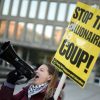
Civil Society: The Last Line of Defence in a World of Cascading Crises
In a world of overlapping crises, from brutal conflicts and democratic regression to climate breakdown and astronomic levels of economic inequality, one vital force stands as a shield and solution: civil society. This is the sobering but ultimately hopeful message of CIVICUS’s 14th annual State of Civil Society Report, which provides a wide-ranging civil society perspective on the state of the world as it stands in early 2025.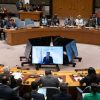
Israel Ends Ceasefire in Gaza as Strikes Resume
On March 18, the Israeli Defense Forces (IDF) launched an attack on the Gaza Strip, effectively terminating the Israel-Hamas ceasefire agreement. This comes after a pause in ceasefire operations when Israel continued its blockade on humanitarian aid in the enclave and demanded the release of additional hostages.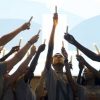
Why “Pro-Israel, Pro-Peace” Advocates Cling to Genocide Denial
Israel’s renewed assault on Gaza comes several months after both Amnesty International and Human Rights Watch issued reports concluding without equivocation that Israel was engaged in genocide. But very few members of Congress dare to acknowledge that reality, while their silence and denials scream out complicity.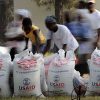
New Survey: US Funding Freeze Triggers Global Crisis in Human Rights and Democracy
A new survey carried out by the EU System for an Enabling Environment (EU SEE) network exposes the impact of the US funding freeze on civil society organisations (CSOs) in over 50 countries. With 67% of surveyed organisations directly impacted and 40% of them losing between 25-50% of their budgets, the abrupt halt in funding is disrupting critical human rights, democracy, gender equality and health programs, leaving vulnerable communities without essential support.
Musk is Wrong. Empathy is Not a Weakness
“The fundamental weakness is empathy,” Musk recently told radio podcast host Joe Rogan. “There is a bug, which is the empathy response.” As Musk has established himself as at least the second most powerful person in an administration seeking a wholesale remaking of institutions, rules and norms, what he said matters, because it encapsulates a political plan. What the Project 2025 report set out in over 900 turgid pages, Musk’s remark captures in a simple pithy mantra for the social media age.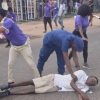
Epilepsy Patients in Africa Fight Stigma and Neglect
When Angela Asemota’s son began having seizures at six years old in 1996, people gossiped that he was possessed by evil spirits, leading her to seek healing from native healers and religious clerics. He underwent several traditional rituals and drank various concoctions, but the seizures persisted. It was not until his fourth year in secondary school in 2004 that she took him to a hospital, where he was diagnosed with epilepsy and began taking medication.
Funding Disruptions Are a Systemic Failure – Philanthropy Must Do What’s Right and Support Local Leadership
The slashing of US aid funding by Donald Trump and Elon Musk, and cuts or planned cuts in international support by several European states, threaten to cut off the oxygen supply to a civil society already in a critical condition. At CIVICUS, the global civil society alliance, activists and grassroots groups have shared with us time and again that shifting and volatile donor priorities are one of the top funding challenges they face, alongside limited resources for strategy and restricted funding.
The United States Confronts the Demographic Piper
As the United States confronts the unflinching demographic piper with the stark facts of reality, the new administration and Congress are denying, disengaging and dismantling.
Papua New Guinea: Years of Environmental Clean Up Ahead Following New Report on Abandoned Bougainville Mine
Local communities are finally witnessing progress in their mission for justice, 36 years after the Panguna copper mine in Papua New Guinea’s Autonomous Region of Bougainville became the centre of landowner grievances about environmental damage.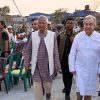
UN Chief’s Ramadan Solidarity Visit Revives Rohingya Refugees Hope
When United Nations Secretary-General António Guterres appeared before the Rohingya refugees wearing a traditional white panjabi, a costume of Muslims, to join an iftar party in Ukhiya refugee camp, thousands who had gathered waved to welcome him.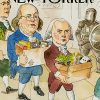
Trump, Democracy and the U.S. Constitution
In these turbulent and sad times, it is hard to keep quiet about abuses and violations of human rights taking place around the world; in eastern DR Congo, South Sudan, Ukraine, and Gaza. Among the most egregious examples of incomprehensible stances on such abuses is the behaviour displayed by the Trump Administration, not least the President’s behaviour against the lawfully elected president of Ukraine. Trump’s doubts about the validity of a nation’s desperate struggle against the forces of a dictatorial regime, which destroys their country and aims at taking over its richest territory.
Is UN in Danger of Losing its Battle for Gender Equality?
The Trump administration’s decision to abandon DEI—diversity, equity and inclusion— which was aimed at promoting fair treatment in the work place, is having its repercussions at the United Nations. The US has been exerting pressure on UN agencies to drop DEI largely protecting minority groups, and women in particular, who have been historically underrepresented or subject to discrimination.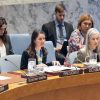
Women and Girls in Afghanistan Bear the Brunt of the Country’s Crisis
Since the Taliban’s return to power in Afghanistan nearly four years ago, human rights have begun diminishing for over 14 million women. Heightened gender inequality has exacerbated the pre-existing humanitarian crisis in Afghanistan, which has been marked by conflict, displacement, climate change, food insecurity, and economic instability. In 2025, widespread cuts in humanitarian funding look to further strain the crisis.
Trashing Jewish Values Risks Israel’s Survival as We Know It
77 torturous years of the Israeli-Palestinian conflict, punctuated by intense violence and wars, successive Netanyahu-led governments have shattered Jewish values to the core—values that have sustained and preserved Jewish lives for centuries and provided the moral foundation on which Israel was built.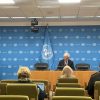
Surges in Violence in Haiti Push Basic Services to the Brink of Collapse
In 2025, the humanitarian crisis in Haiti has grown increasingly dire amid the ongoing gang wars. With rates of displacement, child recruitment, food insecurity, physical violence, and sexual violence having skyrocketed in the past year alone, the national police have found it difficult to keep gang activity under control.« Previous Page — Next Page »


One world, one humanity, now one court to defend its rights. Another step towards universal human rights, but not remotely a step far enough. The United Nations adopted the Universal Declaration of Human Rights more than half a century ago, but that has done little to stop violations the world over, just as the Geneva Convention has not protected prisoners of war enough. Democracy itself and the freedom it presupposes has not been protective enough. This is the century to move from politicisation of human rights towards humanising political ways. IPS keeps an eye on that difficult path.

The Week with IPS

NEXT STOP - SDGs
Tracking global progress towards a sustainable world
Tracking global progress towards a sustainable world
