Languages
Thursday, October 22, 2026



News and Views from the Global South
Human Rights
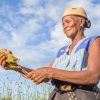
A Triple Planetary Crisis Scarring Africa’s Landscapes
Some of the creeping impacts of this triple crisis are possibly the most debilitating: Africa is the most severely impacted region by desertification and land degradation, with approximately 45% of its land area affected. In the Horn of Africa and the Sahel alone, it imposes food shortages on more than 23 million people. Just last month, more than 700,000 people were affected by floods in Central and West Africa, and tens of millions in southern Africa are facing drought.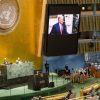
This Is Not a Drill. Fascism Is on the Ballot. But…
The conclusion that Donald Trump is a fascist has gone mainstream, gaining wide publicity and affirmation in recent weeks. Such understanding is a problem for Trump and his boosters.
Seeds of Resilience Despite Massive Destruction in Gaza
It was two weeks before October 7—when Hamas attacked Israel—that Prime Minister Benjamin Netanyahu stood behind the rostrum in the United Nations General Assembly hall clutching a crude map of what he called the "new Middle East," a visual that erased the land of Palestine.
The July Revolution in Bangladesh Is Rooted in Meta-Modernist Philosophy
The students and the common people of Bangladesh dared to do something in 36 days of July-August that was considered simply impossible by most people just days before August 5, 2024. They said ‘enough is enough’ to an old order that outraged their humanity, robbed their dignity and the rulers imagined that their citadel of power was simply impenetrable. The revolutionists refused to bow down to the murderous regime that knew no bounds to its cruelty and plundering. They were ready to sacrifice their lives for the freedom of the besieged nation.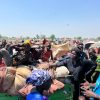
Sudanese Civil War Exacerbates Economies in Neighbouring Countries
Critical levels of nationwide hunger in Sudan has only increased to critical levels since the start of the Sudanese civil war in April 2023. Escalated hostilities between the Sudanese Armed Forces (SAF) and the Rapid Support Forces (RSF) have led to limited mobility and repeated blockages of humanitarian aid. This, coupled with the volatile floods and droughts, have decimated crop fields which has only exacerbated famine levels greatly. All of these factors have left nearly 25 million people in Sudan in need of humanitarian assistance in 2024.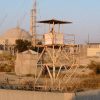
Pressure on an Atomic Level
Violence in the Middle East has escalated dramatically since the Hamas terrorist attack in October 2023 and the fallout that has since followed. There is tension, if not a state of war, between all the major opponents on the ground.
Over 150 NGOs Urge World Governments to Help End War Crimes in Gaza
As it continues to leave a mounting trail of death and destruction in Gaza, Israel has come under severe attack from the international community, including the United Nations and its humanitarian agencies, Western allies, the International Criminal Court (ICC) and scores of human rights experts.
At COP16, Biodiversity Credits Raising Hopes and Protests
At the end of the first week at the 16th Conference of Parties on Biodiversity (COP16), finance emerges as the biggest issue but also shrouded in controversies. On Saturday, as the COP moved closer to its most crucial phase of negotiations, resource mobilization—listed under Target 19 of the Kunming-Montreal Global Biodiversity Framework (KMGBF)—took centerstage, with most parties demanding faster action, greater transparency and the adoption of true solutions to halt biodiversity loss.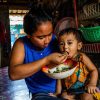
The Impact of Media Literacy for Meat Production
With the emergence of generative artificial intelligence (AI) and social media, the dissemination of public information moves at a faster speed than ever before. Social media platforms have become an integral tool for users of younger generations to access the news. Although this shift has led to public news being more accessible to younger users, it has also led to an overall decline in media literacy.
Biden’s Middle East Endgame Spells a Death Sentence for Thousands More Palestinians and the Israeli Hostages
Nobody should be fooled by President Biden's recent warning to Israel that the U.S. may level consequences if it doesn't do more to surge humanitarian aid into Gaza within the next 30 days. Biden's warning, along with Anthony Blinken's 11th trip to Israel and the region to try and revive ceasefire talks, is nothing more than cynical double talk designed to appease domestic audiences and buy time for Israel to deepen its genocidal aims against the Palestinian people and brutally punish those who support their liberation.
UNEP’s 2024 Emissions Gap Report Warns: ‘No More Hot Air, Please’
The United Nations Environment Programme’s (UNEP) Emissions Gap Report 2024 delivered a stark reminder that the world is still far from meeting its climate commitments.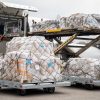
Israel Escalates Offensives on Lebanon
Attacks on Lebanon over the past two months, as instigated by the Israeli Defense Forces (IDF) have been increasingly indiscriminate. The Disaster Risk Management Unit at the Lebanese Council of Ministers confirmed that the death toll of Lebanese civilians has risen to over 2,530. Furthermore, Israel’s hostilities have led to casualties among United Nations (UN) personnel, which has been described as “violations of international law”.
Unlocking Urban Climate Finance: Key insights from Indonesia
Over half of Asia-Pacific's population now live in cities. While urbanization brings people closer to opportunities and better services, many urban dwellers are also experiencing the adverse impacts of climate change such as floods, urban heat and infectious diseases. Urban activities are among the major contributors to greenhouse gas (GHG) emissions.
Egyptian Parliament Moves to Strengthen Support for People with Disabilities and the Elderly
In a significant move to address the challenges faced by people with disabilities and the elderly, six Egyptian parliamentary committees met in Cairo on October 12 to discuss national strategies and legislative efforts.
Meet the Young Women Arrested for Fighting Corruption in Uganda
Until recently, Margaret Natabi would never have dreamed of taking her anti-corruption fight on the streets of Uganda’s capital, Kampala.
With God on Our Side: Netanyahu, Trump, and Putin
Bronisław Malinowski (1884 – 1942) did for several years conduct socio-anthropological research in the Trobriand Islands. Returning to England after World War I, he wrote several ground breaking books, among them Magic, Science, and Religion in which he assumed that people's feelings and motives are crucial for understanding the way their society functions. Malinowski considered society to be intimately interlinked with individuality – i.e. an individual’s ideas and behaviour are created and formulated within the social circles s/he lives and vice versa. Consequently, an individual’s personality might influence an entire society, depending on the leading role s/he is granted.
Syrian Displaced Children Go Hungry, Stunting Their Growth
Children in northern Syria are suffering from hunger, illness, and malnutrition as a result of poverty, poor living conditions for most families, and the collapse of purchasing power amid the soaring prices of all essential food commodities. Displacement and a lack of job opportunities make this worse.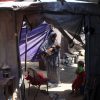
69 Years of Development in Gaza Erased by Israel-Hamas War
The second of the polio vaccination campaign in Gaza has yielded relative success, as so far more than 420,000 children have been vaccinated since the second round of immunizations began one week prior. This exception stands out as the uptick in airstrikes and sustained blockages of aid give humanitarian organizations cause for concern for the deterioration of Gaza, especially in the north.
Another Nobel for Anglocentric Neoliberal Institutional Economics
New institutional economics (NIE) has received another so-called Nobel prize, ostensibly for again claiming that good institutions and democratic governance ensure growth, development, equity and democracy.
UN Announces Embargo on Arms in Haiti
On October 19, the United Nations (UN) Security Council unanimously voted to expand an arms embargo in an effort to combat the high levels of gang violence that plagues Haiti. Armed groups have taken control of the majority of Port-Au-Prince, the nation’s capital, leading to numerous clashes with the local police. Humanitarian organizations hope that this embargo will prevent Haitian gangs from accessing illicit weapons and munitions unchecked.
Russia-Africa: Developing Media Partnership
At a recent media briefing, Maria Zakharova, the spokesperson for Russia's Foreign Ministry, criticized the United States for its support of educational programs, media and NGOs in Africa. Zakharova argued that these efforts are part of a broader attempt by the U.S. to impose Western values and governance models on sovereign African states, framing it as a form of neo-colonialism.« Previous Page — Next Page »





One world, one humanity, now one court to defend its rights. Another step towards universal human rights, but not remotely a step far enough. The United Nations adopted the Universal Declaration of Human Rights more than half a century ago, but that has done little to stop violations the world over, just as the Geneva Convention has not protected prisoners of war enough. Democracy itself and the freedom it presupposes has not been protective enough. This is the century to move from politicisation of human rights towards humanising political ways. IPS keeps an eye on that difficult path.

The Week with IPS

NEXT STOP - SDGs
Tracking global progress towards a sustainable world
Tracking global progress towards a sustainable world
