Languages
Friday, October 23, 2026



News and Views from the Global South
Human Rights
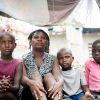
UN Announces Embargo on Arms in Haiti
On October 19, the United Nations (UN) Security Council unanimously voted to expand an arms embargo in an effort to combat the high levels of gang violence that plagues Haiti. Armed groups have taken control of the majority of Port-Au-Prince, the nation’s capital, leading to numerous clashes with the local police. Humanitarian organizations hope that this embargo will prevent Haitian gangs from accessing illicit weapons and munitions unchecked.
Russia-Africa: Developing Media Partnership
At a recent media briefing, Maria Zakharova, the spokesperson for Russia's Foreign Ministry, criticized the United States for its support of educational programs, media and NGOs in Africa. Zakharova argued that these efforts are part of a broader attempt by the U.S. to impose Western values and governance models on sovereign African states, framing it as a form of neo-colonialism.
Salt: Bangladesh Communities On the Frontline of Climate Change
Global warming has far-reaching effects, and certain countries, particularly those with low lying coastal regions, are more vulnerable than others. Bangladesh, the largest delta in the world, is at the forefront of the global warming crisis. Its coastal areas are increasingly exposed to rising sea levels, natural disasters, and salinization, all of which have devastating effects on its population.
Reviving the Spirit of the Steppe: Kazakhstan Has Hosted the 5th World Nomad Games
In a vibrant display of culture and tradition, Kazakhstan recently hosted the 5th World Nomad Games in Astana, celebrating the enduring spirit of nomadic heritage against a backdrop of modernity and globalization. This biennial event, which drew competitors and spectators from around the globe, served not only as a showcase of traditional sports but also as a poignant reminder of the resilience of a culture that faced near extinction under Soviet rule.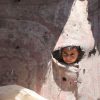
Aid Blockades Signal Trouble for Gaza Ahead of Winter
On October 15, the World Health Organization (WHO) announced the beginning of the second round of Gaza’s polio vaccination campaign. Over the last week, the Palestinian Ministry of Health, in partnership with WHO, the United Nations Children’s Fund (UNICEF), and the United Nations Relief and Works Agency for Palestine Refugees in the Near East (UNRWA), has managed to vaccinate over 181,000 children under the age of ten in Gaza.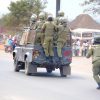
A Glimpse into Tanzania’s Political Turmoil Ahead of 2025 Election
At a rally to mark International Youth Day on August 12 in Tanzania’s southern Mbeya region, John Mnyika stood with a determined expression, addressing his supporters. The air was charged with anticipation. Mnyika, the Secretary-General of Tanzania’s opposition party, Chadema, was preparing to speak about the upcoming elections when the chaos erupted. Without warning, heavily armed police officers stormed the event, grabbed Mnyika, and dragged him away.
Overlapping Crises Hinder Global Social Development and Poverty Reduction
Social development in a global context shows the risk of trending downwards and not recovering if countries do not minimize the long-term impacts of multiple crises and work towards building up their resilience. As much as this will require national political will, it will also need global cooperation for it to be possible.
A Pact for the World’s Poorest
Last month, world leaders gathered at the time of the UN General Assembly in New York and agreed on a pioneering Pact for the Future. This global accord has implications across a broad range of issues that affect every country. It offers much hope for the poorest and most vulnerable countries on the planet, known as Least Developed Countries (LDCs).
Attacks on Aid Personnel in Lebanon Impede Relief Efforts
In the midst of Israel’s ground incursion of southern Lebanon, frequent airstrikes have demolished civilian infrastructure, which is only contributing to the increasing rates of civilian casualties and displacement. Humanitarian organizations fear that conditions in Lebanon will soon resemble those of Gaza if a ceasefire isn’t reached soon.
Honduras: Environmental Defenders Still under Siege
Juan López was gunned down on 14 September. An environmental activist, community leader and member of the Municipal Committee in Defence of the Commons and Public Goods of Tocoa, he was the latest victim of extractive greed in Honduras. Communities protecting the rivers that flow through the Bajo Aguán region have seen several of their leaders assassinated.
Transparency and Inclusion: The Keys to Successful 30×30 Conservation
Two years ago world leaders from nearly 200 countries made a landmark commitment to protect and conserve at least 30% of the planet's land, ocean, and freshwater by 2030 - an initiative known as "30x30".
What is the World’s Most “Demanding and Impossible Job”?
When Dr Gamani Corea, a former Secretary-General of the Geneva-based UN Conference on Trade and Development (UNCTAD) was holding court in the delegate's lounge, I asked him what he thought of the bitter dispute between then Secretary-General (SG) Boutros Boutros-Ghali (1992-1996) and the United States over the Egyptian's determination to win re-election for a second term.
Mortality in the Gaza-Israel War
Following the 7 October 2023 attack on Israel by Hamas-led militants, Israel’s response has led to unprecedented high mortality levels in the Gaza Strip. The Palestinian death toll over the twelve month period is believed to be among the highest such civilian casualty rates in the 21st century.
Empowering Indigenous Communities: A Path to Sustainable and Just Development
In a world where the fight for land rights often pits the powerful against the marginalized, Indigenous communities stand as resilient defenders of their ancestral lands.
Civil Society Fights Against Budget Cuts Amid Calls for “Aid” Reform
Multiple conflicts, the climate emergency and other crises are destabilising many parts of the world and intensifying the strain on the resources needed to finance the global sustainable development agenda. Amid these challenges, data from 2023, shows that Official Development Assistance (ODA) reached a record-breaking US$223.7 billion, up from US$211 billion the previous year, according to Eurodad.
‘The new law’s purpose is to increase government control over civil society’
CIVICUS discusses a recently passed law regulating civil society organisations (CSOs) in Paraguay with Marta Ferrara and Olga Caballero, executive directors of Semillas para la Democracia (Seeds for Democracy) and Alma Cívica (Civic Soul), two of the organisations leading the civil society response to the closing of civic space.

The Health of Gaza is Dependent on Humanitarian Pause
The next round of the polio vaccination campaign in Gaza, a major undertaking for health partners, began on October 14, as continuous attacks and strains whittle down the healthcare and humanitarian systems.
The Growing Gender Gap in Social Protection
Published ahead of the International Day for the Eradication of Poverty on 17 October, UN Women issued the 2024 World Survey on the Role of Women in Development Report. This is the UN Secretary-General’s Report, which is mandated by the Economic and Financial Committee (Second Committee) of the UN General Assembly, and focuses on macroeconomic policy, sustainable development, financing and poverty eradication.
A Staggering 2.0 Billion Women Live With No Access to Social Protection
The growing gender gap between men and women is reflected not only in the world’s highest political hierarchies but also in the daily social and economic lives—with most women fighting a losing battle against poverty. The latest flagship report from UN Women reveals a widening gender gap in social protection -– the raft of policies, including cash benefits, unemployment protection, pensions and healthcare – which leaves women and girls more vulnerable to poverty.
World Told Act Now or Face 136 Years of Hunger, Report Warns
High levels of hunger will continue for another 136 years in many developing countries, according to a new report assessing global hunger.
Climate Justice Needs Recognition of Common, but Differentiated Responsibilities
Climate justice recognizes differential impacts of climate crisis between rich and poor, women and men, and older and younger generations. The UN Secretary-General António Guterres emphasized, “as is always the case, the poor and vulnerable are the first to suffer and the worst hit.” However, all people should have the agency to live life with dignity. Thus, climate justice looks at the climate crisis through a human rights lens.« Previous Page — Next Page »





One world, one humanity, now one court to defend its rights. Another step towards universal human rights, but not remotely a step far enough. The United Nations adopted the Universal Declaration of Human Rights more than half a century ago, but that has done little to stop violations the world over, just as the Geneva Convention has not protected prisoners of war enough. Democracy itself and the freedom it presupposes has not been protective enough. This is the century to move from politicisation of human rights towards humanising political ways. IPS keeps an eye on that difficult path.

The Week with IPS

NEXT STOP - SDGs
Tracking global progress towards a sustainable world
Tracking global progress towards a sustainable world
