Languages
Thursday, September 3, 2026



News and Views from the Global South
Press Freedom
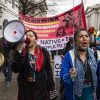
Standing Firm: Civil Society at the Forefront of the Climate Resistance
The recent US court case that ordered three Greenpeace organisations to pay damages of over US$660 million to an oil and gas company was a stunning blow against civil society’s efforts to stop runaway climate change and environmental degradation. The verdict, following a trial independent witnesses assessed to be grossly unfair, came in reaction to Indigenous-led anti-pipeline protests. It’s vital for any prospects of tackling the climate crisis that Greenpeace’s appeal succeeds, because without civil society pressure, there’s simply no hope of governments and corporations taking the action required.
Turkey’s Democratic Uprising: A Generation Takes a Stand
In the heart of Istanbul, a remarkable transformation is underway. What began as student protests following the politically motivated arrest of Mayor Ekrem İmamoğlu has evolved into Turkey’s most significant pro-democracy mobilisation in years. The streets that once pulsed with the routine of daily life now throb with the energy of millions demanding a return to democratic governance.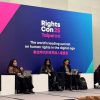
Digital Democracy at a Crossroads. Key Takeaways from RigthsCon2025
In an increasingly digital world, democratic practices are evolving to encompass new forms of participation. Digital democracy – the use of technology to enhance civic action, movement building and access to information – has become a crucial force in shaping local and global political landscapes.
‘Student Protests Have Sparked Solidarity, Empathy and a Renewed Belief in Collective Action’
CIVICUS discusses recent protests in Serbia with Alma Mustajbašić, researcher at Civic Initiatives, a Serbian civil society organisation that advocates for democracy, human rights and citizen engagement.
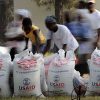
New Survey: US Funding Freeze Triggers Global Crisis in Human Rights and Democracy
A new survey carried out by the EU System for an Enabling Environment (EU SEE) network exposes the impact of the US funding freeze on civil society organisations (CSOs) in over 50 countries. With 67% of surveyed organisations directly impacted and 40% of them losing between 25-50% of their budgets, the abrupt halt in funding is disrupting critical human rights, democracy, gender equality and health programs, leaving vulnerable communities without essential support.
Social Media in the Global South Needs More Protections
In the western world, numerous studies over the past two decades have shown that the rise of social media in popularity has been linked to negative mental health symptoms, especially among young people. Platforms such as Instagram, Facebook, X (formerly known as Twitter), and TikTok have been criticized for fostering competitive and toxic environments, which contribute to higher rates of anxiety, cyber-bullying, depression, disordered eating, and low self-esteem. While the use of social media in the Global South has skyrocketed in the late 2010s, the ramifications on people in those regions has received much less coverage in mainstream media.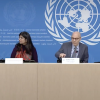
Bangladesh: UN Human Rights Denounces Former Government’s Violations Against Protestors
A new report from the UN Human Rights Office confirms that Bangladesh’s former government coordinated and committed human rights violations against its civilians to suppress the protest movement in July last year, with the high commissioner calling for justice and serious reform to end the cycle of violence and retribution.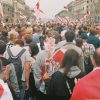
Belarus: Brutal Repression Continues Post Presidential Election, Say Human Rights Groups
In the months leading up to presidential elections at the end of January, Belarus’s authoritarian leader Alexander Lukashenko ordered the release of hundreds of political prisoners. Some observers saw this as a sign that the man who had led the former Soviet state for the last three decades could be planning a relaxation of his regime’s brutal repressions in return for a lessening of Western sanctions.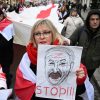
Belarus: A Sham Election That Fools No One
Alexander Lukashenko will soon begin his seventh term as president of Belarus. The official result of the 26 January election gave him 86.8 per cent of the vote, following an election held in a climate of fear. Only token opposition candidates were allowed, most of who came out in support of Lukashenko. Anyone who might have offered a credible challenge is in jail or in exile.
Safeguarding Civil Society – a New Global Initiative Could Become a Game-Changer
Across the world, civil society faces increasing pressure—from restrictive laws on civil society operations to digital surveillance, funding restrictions, and direct attacks on human rights defenders. In response, a global civil society coalition is stepping up. The newly launched European Union System for an Enabling Environment for Civil Society (EU SEE) spans 86 countries, equipping civil society actors, governments and other stakeholders with the data, tools, and resources needed to anticipate and respond in real time to shifts in the enabling environment—ensuring that civil society can thrive, freely express itself, and actively shape its context.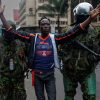
Kenya’s Shadow War on Activism
Kenya’s young protesters are paying a high price for speaking out. Last June, a protest movement led by first-time activists from Generation Z emerged in response to the government’s Finance Bill, which would have introduced sweeping tax increases. The government quickly withdrew its plans, but protests continued, articulating anger at economic strife, elite corruption and out-of-touch politicians. The government’s response has been violent. Police have used batons, teargas and water cannon against protesters. On the worst day of violence, 25 June, when some protesters attempted to storm parliament, police fired live ammunition. Over 60 people were reported killed during the protests. At least 1,200 were reportedly arrested.
‘The Closure of Meta’s US Fact-Checking Programme Is a Major Setback in the Fight Against Disinformation’
CIVICUS speaks with Olivia Sohr about the challenges of disinformation and the consequences of the closure of Meta’s fact-checking programme in the USA. Olivia is the Director of Impact and New Initiatives at Chequeado, an Argentine civil society organisation working since 2010 to improve the quality of public debate through fact-checking, combating disinformation, promoting access to information and open data.
Journalists Behind Bars: China, Israel & Myanmar the Worst Offenders in 2024
The year 2024 has been one of the most devastating for journalists covering conflicts worldwide-- with 361 behind bars, the second highest since the global record of 370 imprisoned back in 2023.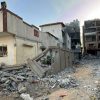
How US Media Hide Truths About the Gaza War
A few days before the end of 2024, the independent magazine +972 reported that “Israeli army forces stormed the Kamal Adwan Hospital compound in Beit Lahiya, culminating a nearly week-long siege of the last functioning hospital in northern Gaza.”
Why Russia’s Ban on Child-Free ‘Propaganda’ Impacts Human Rights
“A lot of people are very scared,” says Zalina Marshenkulova. “This is obviously another tool of repression. The state is waging war on the remnants of free-thinking people in Russia and trying to suppress all dissent and freedom,” the Russian feminist activist tells IPS. The warning from Marshenkulova, who left Russia soon after the country’s full-scale invasion of Ukraine in 2022 and now lives in Germany, comes just days after new legislation came into force in her home country banning "child-free propaganda.”
‘Digital platforms amplify the Israeli narrative while systematically silencing Palestinian voices’
CIVICUS discusses the challenges Palestinian civil society faces in resisting digital suppression and advocating for justice with Palestinian lawyer and researcher Dima Samaro.
‘The Election Is Just Another Tool to Keep Lukashenko in Power for as Long as Possible’
CIVICUS discusses the ongoing crackdown on civil society in Belarus with Natallia Satsunkevich, human rights defender and interim board member of the Viasna Human Rights Centre.
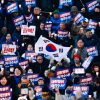
South Korea’s Democracy Defended
Democracy is alive and well in South Korea. When President Yoon Suk Yeol tried to impose martial law, the public and parliamentarians united to defend it. Now Yoon must face justice for his power grab.
New Legislation Outlaws Dissenters in Venezuela
In Venezuela you can no longer say in public that the economic sanctions applied by the United States and other countries are appropriate, or even be suspected of considering any of the authorities illegitimate, because you can be sentenced to up to 30 years in prison and lose all your assets.
‘My Father Was Arbitrarily Arrested and Convicted for Denouncing Government Corruption’
CIVICUS speaks with Ramón Zamora, son of Guatemalan journalist José Rubén Zamora, about restrictions on press freedom and the challenges of defending human rights in Guatemala.
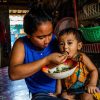
The Impact of Media Literacy for Meat Production
With the emergence of generative artificial intelligence (AI) and social media, the dissemination of public information moves at a faster speed than ever before. Social media platforms have become an integral tool for users of younger generations to access the news. Although this shift has led to public news being more accessible to younger users, it has also led to an overall decline in media literacy.« Previous Page — Next Page »


Journalism is dangerous work. Dozens of reporters and other media workers are killed in the line of duty each year. Hundreds more face threats, intimidation, and harassment as they risk their lives to let us know what is going on in war zones and as they root out corruption. In the Information Age, the Internet provides us with new ways to disseminate the news even as it poses new threats to press freedoms.


IPS Director General Farhana Haque Rahman was invited by UNESCO as a panelist at the World Press Freedom Day 2017 gathering in Jakarta, in the Plenary Session: Quality journalism: a public good for just, peaceful and inclusive societies.

The Week with IPS

NEXT STOP - SDGs
Tracking global progress towards a sustainable world
Tracking global progress towards a sustainable world
