Languages
Wednesday, October 7, 2026



News and Views from the Global South
Sustainability

ONE OCEAN SUMMIT – An Opportunity For Blue Transformation
The ocean covers more than 70 percent of our planet. There is no question it is critical for our health and well-being. It provides half the earth’s oxygen supply and every organism in existence depends on it to survive.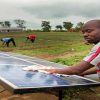
Road to COP27: Why Africa cannot be Complacent on Energy, Climate Change
A year ago, we welcomed 2021 with a sense of cautious optimism when the newly developed vaccines promised a shift in the fight against the COVID-19 pandemic. The focus turned towards building back better and doing things differently as many countries started to rethink and rebuild their shattered economies.
Climate Inaction, Injustice Worsened by Finance Fiasco
Many factors frustrate the international cooperation needed to address the looming global warming catastrophe. As most rich nations have largely abdicated responsibility, developing countries need to think and act innovatively and cooperatively to better advance the South. Climate action The world is woefully offtrack to achieving the current international consensus that it is necessary to keep the global temperature rise by the end of the 21st century to no more than 1.5°C (degrees Celsius) above pre-industrial levels two centuries ago.
Count Me in: Working Together for Disability Inclusion in Guatemala
“Persons with disabilities are capable and equal. It is time the world understands that,” says Antonio Palma, a UN Volunteer at the Resident Coordinator’s Office in Guatemala. Antonio, who has a visual impairment, expresses what many other persons with disabilities feel. Ignored, mistreated, misunderstood, underestimated, condescended to.
More Progressive Taxation Needed for Social Progress
Governments must innovatively develop progressive means to finance the large-scale social spending needed to improve lives and livelihoods, especially following the COVID-19 pandemic. More egalitarian tax reforms should enable governments to equitably mobilize desperately needed revenue to advance sustainable development for all.
A Call to Action on Living Lands
If the ocean is the lifeblood of the Commonwealth, then forests are the lungs that breathe life into its whole system. From the vast boreal woodlands of Canada to the rich primary forests of Papua New Guinea, the Commonwealth covers nearly a quarter of all forest land in the world - an estimated 900 million hectares. These biodiversity havens not only house about half of all animal species on earth, they also give us clean air, water and food, supporting the livelihoods of millions of people while tackling climate change.
As the Pandemic Devastates the Poor, the World’s 10 Richest Have Multiplied their Wealth into Trillions
The numbers are unbelievably staggering: the world’s 10 richest men more than doubled their fortunes from $700 billion to $1.5 trillion —at a rate of $15,000 per second or $1.3 billion a day, according to a new study from Oxfam International.
Quest for Asian Innovation & Solutions in a Networked World
The UN’s 76th anniversary in 2021 arrived at a time of great upheaval and change. If the world is to transition from COVID-19 and we are to deliver on our promises to future generations - to secure a world where everyone can thrive in peace, dignity, and equality on a healthy planet – then 2022 must be the year we change both gear and discourse.
Nature-Based Solutions for Enhancing Coordinated Action Around Climate Change, Land and Biodiversity
A key outcome of COP26 climate summit is the enhanced focus on “nature-based solutions” – the plans for people to work closely alongside nature to avert a planetary catastrophe.
Beyond Expo: Embedding the SDGs in the DNA of Future Technology and Innovation
A landscape of shared global challenges The COVID-19 pandemic has moved us farther away from the Sustainable Development Goals (SDGs). Data shows that the pandemic has pushed a further 124 million people into extreme poverty. Global poverty is now expected to be at 7% by 2030 – only marginally below the level in 2015. And with the global temperature increase already at 1.2 degrees, we are on the verge of the abyss. UN Secretary-General António Guterres is deeply concerned about the impact of the pandemic on the SDGs. But there is hope. He believes in the knowledge, science, technology, and resources to turn it around. He also urges further financing for development and climate action.

A New Transport Agenda to Carry Asia and the Pacific Towards Sustainable Development
Transport ministers from across Asia and the Pacific are meeting this week to consider a potentially transformational agenda for how people and goods are moved around the region and across the globe.
Climate Change: Adapt for the Future, Not the Past
Funding for developing countries to address global warming is grossly inadequate. Very little finance is for adaptation to climate change, the urgent need of countries most adversely affected. Also, adaptation needs to be forward-looking rather than only addressing accumulated problems.
Partnering with Persons with Disabilities Toward an Inclusive, Accessible and Sustainable Post-COVID-19 World
As the world observes the International Day of Persons with Disabilities today, we honour the leadership of persons with disabilities and their tireless efforts to build a more inclusive, accessible and sustainable world. At the same time, we resolve to work harder to ensure a society that is open and accommodating of all.
Fighting Loss of the Greater Mekong’s Prized Rosewood Forests
The famed Rosewood forests of the Greater Mekong region in Southeast Asia produce dark, richly grained timbers zealously sought after worldwide by manufacturers of luxury furniture, flooring and musical instruments, among other products. But their high value has also made them a major commodity in transnational organized crime.
Double Solution to Ongoing Food and Climate Crises
For the last ten years, Angeline Wanjira’s food stall at Kirigiti Market in Kiambu County has featured the same foods, cabbages, potatoes and carrots, keeping with the community’s most preferred food types.
WTO Finished Without TRIPS Waiver
Quickly enabling greater and more affordable production of and access to COVID-19 medical needs is urgently needed in the South. Such progress will also foster much needed goodwill for international cooperation, multilateralism and sustainable development.
Helena McLeod Appointed as GGGI’s Deputy Director-General and Head of Green Growth Planning & Implementation
The Global Green Growth Institute (GGGI) has announced the appointment of Ms. Helena McLeod, Cardno International Development Group’s Team Leader of UK Aid’s Cities, Infrastructure and Growth Program (Uganda) and former Director of KPMG International Development Advisory Services (IDAS) Africa, as the incoming Deputy Director-General and Head of Green Growth Planning & Implementation (GGP&I). Ms. McLeod will succeed Ms. Hyoeun Jenny Kim, who was named Ambassador and Deputy Minister for Climate Change in the Ministry of Foreign Affairs of the Republic of Korea on July 31, 2021.
Mobilising the ‘Tools’ for Renewable Energy Investment in the Seychelles
Breaking the world’s reliance on fossil fuels and accelerating the global uptake of renewable energy will play a decisive role in diminishing the threat of global warming to the survival of life on earth, according to experts. But turning the vision into reality will demand unwavering political will and, critically, massive investment, which can no longer be shouldered solely by aid and development partners.
COP26: The Many Links Between Food Systems & Climate Change: Message to Glasgow
Unless food systems transformation is put at the center of climate action, commitments governments have already made, and could make at COP26, will be jeopardized.
Is Asia and the Pacific Ready for the Global Climate Stage?
As the leaders of Asia and the Pacific prepare to head to Glasgow for the 26th United Nations Climate Change Conference of the Parties (COP26), they can be sure that our region will be in the spotlight: many of the most vulnerable countries to the impacts of climate change are located here; the seven G20 members from this region are responsible for over half of global GHG emissions; and five of the 10 top countries with the greatest historic responsibility for emissions since the beginning of the twentieth century are from Asia.
Green Gold: Billion Dollar Question for Congo Rainforest
On the brink of an unprecedented environmental emergency, EU ambassadors to the Democratic Republic of Congo (DRC) gathered earlier this month for a luxury river cruise hosted by the country’s Environment Minister, Eve Bazaiba.« Previous Page — Next Page »





The Week with IPS

NEXT STOP - SDGs
Tracking global progress towards a sustainable world
Tracking global progress towards a sustainable world
