Languages
Friday, October 9, 2026



News and Views from the Global South
Sustainability

Bleak Prospects for Least Developed Countries
“The outlook for LDCs is grim”. The latest United Nations (UN) assessment of prospects for the least developed countries (LDCs) notes recent setbacks without finding any silver lining on the horizon. Promises unkept Half a century ago, LDCs were first officially recognised by a UN General Assembly resolution. It built on research, analysis and advocacy by the UN Conference on Trade and Development (UNCTAD).
Multilateral Financial Institutions Can Catalyze Public Development Banks (PDB) to Deliver SDGs
There is broad consensus that realizing the Sustainable Development Goals (SDGs) and the Paris Agreement on climate change require a transformative agenda for agriculture and food systems. In this context, the importance of mobilizing more investments and aligning them to sustainable development and inclusive rural transformation objectives, is widely acknowledged.
Stop New Washington Putsch
As finance ministers and central bank governors gather next week for the IMF-World Bank annual meetings in the US capital, the first shots of a new putsch against multilateralism have been fired. The target: Kristalina Georgieva, Fund Managing Director (MD) since 2019.
Rwanda’s Rainforest Conservation Wins Praise from Indigenous Community
Laurent Hategekimana, a villager from Nyabihu, a district from Western Rwanda, recalls the terrible condition of the Gishwati natural forest a few years ago when it was overrun by illegal loggers and invading farmers.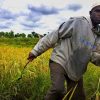
Transforming Global Food Systems Equitably & Sustainably Requires the Private Sector
In the days following the UN Food Systems Summit I have read a number or articles questioning whether there is a role for the private sector in transforming global food systems into something healthier, more sustainable and more equitable. Frankly, I don’t see how food systems transformation is possible without meaningful participation of the private sector.
Seizing the Post-Pandemic Opportunity to Transform Food Systems
The global food system needs a massive overhaul – this was clear before the Covid pandemic and it is even more true today. Feeding the world in a sustainable and healthy way is entirely possible but it is also inextricably linked to tackling the climate crisis by reaching net zero emissions, and to halting the dizzying decline in bio-diversity which is currently threatening the survival of one million plant and animal species.
Climate Finance Can Transform Food Systems
September 23, 2021 is the first-ever UN Food Systems Summit, convened to mobilize the highest-priority transformations needed to end hunger through the sustainable production and distribution of food. Transforming food systems to ensure food security for all has never been so urgent.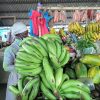
Nurturing a New Generation of Food Leaders
Food security experts have raised an alarm that with as many as 811 million people the world over or 10 percent of the global population going hungry, the world is off-track to ending hunger and malnutrition.
Food Experts’ Expectations for Global Food Systems Transformation
Dubbed ‘the People’s Summit, the United Nations Food Systems Summit (UNFSS) hopes to put the world back on a path to achieve the Sustainable Development Goals by 2030, through food systems overhauling. From the tempered to the extremely optimistic, experts in various food system sectors share their expectations of transformation.
Southeast Asian Farmers Adapt, Insure against Growing Climate Risks
As incidents of drought and extreme rainfall increase, farmers in Southeast Asia are partnering with experts to develop targeted weather forecasts to work around the threats and, when adaptation becomes too costly, buy specially designed insurance to protect their livelihoods.
CommonSensing Project Builds Climate Resilience for Small Island Nations
The UK Space Agency’s International Partnership Programme (IPP) CommonSensing is led by the United Nations Institute for Training and Research (UNITAR) through the United Nations Satellite Centre (UNOSAT), which is working with selected partners including the Commonwealth Secretariat, to improve resilience to the effects of climate change in Fiji, the Solomon Islands and Vanuatu.
In a Watershed Year for Climate Change, the Commonwealth Secretary-General calls for Urgent, Decisive and Sustained Climate Action
This November, five years after signing the Paris Agreement and pledging to limit global warming to 2 degrees Celsius above pre-industrial levels, with a further target of below 1.5 degrees Celsius, world leaders will meet in Glasgow, UK amid COVID-19 pandemic shocks, rising hunger and an Intergovernmental Panel on Climate Change report that warns of more extreme temperature, droughts, forest fires and ice sheet loss due to human activity.
IUCN Congress to Push for Stronger Regulations against ‘Imported Deforestation’
As Arti Prasad rode the Kuala Lumpur Pavilion mall escalator up to the third floor, a pair of luscious lips pouted down at her. Next to the towering and oversized lips, the vibrant red shades of lipstick on the giant screen immediately caught the 36-year-old Indian tourist’s fancy.
Social Protection at a Crossroad—and Poverty On the Rise
How can we ensure a resilient and inclusive recovery from COVID-19? How can we hold on to the target of eradicating poverty and hunger by 2030, with the pandemic still ongoing?
Allow Least Developed Countries to Develop
The pandemic is pushing back the world’s poorest countries with the least means to finance economic recovery and contagion containment efforts. Without international solidarity, economic gaps will grow again as COVID-19 threatens humanity for years to come.
Needed in the Global South: Wastewater Collection for COVID-19 Detection
Understanding the scale and intensity of the COVID-19 virus and its emerging variants, predicting the pandemic’s direction, and developing and refining associated management response options are challenges likely to confront public-health officials and national governments worldwide well into the future.
Eastern Caribbean Youth Join Calls for Resilient Global Food Systems
As the international community prepares for the landmark United Nations Food Systems Summit, a pivotal gathering as part of a global goal to tackle food insecurity, hunger, biodiversity loss, and climate change through sustainable food production, Caribbean youth say the successful transformation of food systems must include young innovators.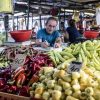
How to Feed the World Without Starving the Planet is a $15 Billion Question
A population of more than 9 billion people, hotter temperatures, decaying ecosystems and increasingly severe natural disasters. That is what our world is facing by 2050 because of climate change.
NDC Partnership: Supporting a Global Network of Youth Climate Advocates
Just over six months after launching its Youth Engagement Plan, the NDC Partnership, the coalition assisting governments with their climate action plans, has brought together youth climate advocates for its inaugural NDC Global Youth Engagement Forum.
Indigenous Peoples Need Recognition, Reciprocity & a New Social Contract
The coronavirus pandemic has invited the world to reflect on relationships – between people within and across countries and communities, and between people and nature around the planet.
What Might Help Save Our Planet? Different Approaches to Desertification
I am in the Swedish countryside, lush and beautiful in its late summer attire, having a conversation with the son of a friend of mine. Oskar Olin runs a sheep farm, Stabbehyltan Lamm AB, where he practises holistic management. His three-hundred sheep graze within an area of 30 ha where Oskar every day moves his flock from one pasture to another. It takes between 45 to 90 days before the sheep are back on the same pasture where the rotation began. The animals are thus not overgrazing the area, while they at the same time trample down a protective layer of vegetation, which fertilizes the soil. Carbon is bound in the earth, soil organic matter increases, retaining humidity and accordingly deepen the root systems of wholesome plants.« Previous Page — Next Page »





The Week with IPS

NEXT STOP - SDGs
Tracking global progress towards a sustainable world
Tracking global progress towards a sustainable world
