Languages
Friday, October 9, 2026



News and Views from the Global South
Sustainable Development Goals

The AI Revolution – A Way Forward
Artificial intelligence (AI) is rapidly changing our world. It has helped a few companies in developed countries set record-breaking profits. Last month, Nvidia, a leading US AI company, hit a market value of USD 5 trillion.
We’re All in the Same Storm, Different Boats, Says Young Activist With Disability
At the UN Climate Conference venue in Belém, young activist João Victor da Costa da Silva is trying to make his case heard by negotiators. The 16-year-old Da Silva has a specific request for the parties: the needs of young people with disabilities should be addressed through the lens of climate justice.
Poor Countries Welcome Loss and Damage Fund’s Call for Requests, Warn It Falls Short of Needs
Least Developed Countries have hailed the debut call for proposals for the Loss and Damage Fund, which was launched on 11 November at the United Nations climate summit known as COP30 in Belem, Brazil.
Public Health Besieged by Industry Interference
The 183 Parties to the global health treaty, WHO Framework Convention on Tobacco Control (FCTC) will convene in Geneva from 17 - 22 November with one objective - to strengthen their efforts to arrest the No.1 preventable cause of disease and 7 million deaths annually – tobacco use.
Without Truth, There Can Be No Climate Justice—Experts
Concerned scientists at the UN climate conference in Belém are appealing for collective action to combat climate change-related misinformation and disinformation.
The World Social Summit in Doha: Time to Act
Qatar hosted the Second World Summit for Social Development from 4–6 November. According to the United Nations, more than 40 Heads of State and Government, 230 ministers and senior officials, and nearly 14,000 attendees took part. Beyond plenaries and roundtables, more than 250 “solution sessions” identified practical ways to advance universal rights to food, housing, decent work, social protection or social security, education, health, care systems and other public services, international labor standards, and the fight against poverty and inequality.
Demonstrators Face-Off With Security as COP30 Activism Intensifies
In a departure from the past three COPs, in Egypt, Dubai and Azerbaijan, there have been increasingly intense demonstrations from activists at the COP30 venue in Belém, the capital of the northern Brazilian state of Pará.
Indigenous Knowledge Holders Want to Be Acknowledged
Generational lived experiences are key to confronting and living with a changing climate, say Indigenous knowledge holders and activists at the UN Climate Conference (COP30). As the first COP to be held in the Amazon region, in Belém, representatives of Indigenous communities reiterated the importance of generationally transferred knowledge and skills to adapt to and mitigate the threats posed by climate change.
A Tale of Two Cities – Belém, Nairobi and Why Global Tax Justice Must be at Center of Climate Crisis Response
The climate crisis is getting worse and requires fundamental changes to societies, economies, and our global financial architecture in response. While extreme economic inequality is on the rise – the world's billionaires now hold more wealth in the world than every country except the U.S. and China – the impacts of climate change are also unequally felt, with the poor in the Global South and North most at risk.
COP30: The Age of Irrationality in Climate Policy
I have been working on climate policy since the late 1990s. I was in the room when Europe’s early carbon market discussions were shaping the architecture that would eventually underpin the Kyoto Protocol.
In the Heart of the Amazon: COP 30 and the Fate of the Planet
My recent visit to Brazil coincided partly with the Conference of the Parties (COP) 30, the 30th United Nations Climate Conference in Belém. Although I did not attend COP 30, I was very fortunate to visit the Amazon.
Displaced Farmers in Southern Lebanon Still Denied Access to Land
Food security and livelihoods in southern Lebanon are under severe threat as the repercussions of Israeli bombing continue to be felt across the region, a report released today (NOV 10) has warned.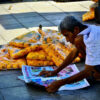
United in Diversity: the Asia-Pacific Region’s Path to Inclusive Social Development
The Second World Summit for Social Development, held in Qatar earlier this month, marked an important moment for global efforts to advance inclusive, equitable and sustainable development. Throughout the Summit, contributions from the Asia-Pacific region demonstrated that diversity is not a barrier but a strength in crafting people-centred solutions.
Turning Indigenous Territories From ‘Sacrifice’ Zones to Thriving Forest Ecosystems
A report by the Global Alliance of Territorial Communities (GATC) and Earth Insight paints a stark picture of how extractive industries, deforestation, and climate change are converging to endanger the world’s last intact tropical forests and the Indigenous Peoples who protect them.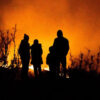
Brazil’s Biofuels Push Undermines Environmental Integrity at COP30
President Prabowo Subianto welcomed his counterpart Luiz Inacio Lula da Silva of Brazil to Jakarta recently to strengthen ties between the fast-growing economies.
US Skips High-Level Presence at COP30 Climate Summit
“Has the world given up fighting climate change?” was a rhetorical question posed recently by the New York Times, perhaps with a degree of sarcasm. It might look that way, says Christiana Figueres, a founding partner of the nongovernmental organization Global Optimism, “as US president Donald Trump blusters about fossil fuel, Bill Gates prioritizes children’s health over climate protection, and oil and gas companies plan decades of higher production.”
What’s Now Needed is Political Courage, Says UN SG Guterres at COP30
Political courage is the biggest obstacle to limiting the rise in global average temperature to no more than 1.5°C, said UN Secretary-General António Guterres.
Global Emissions Falling Too Slowly, Expert Urges Renewables Push, Fair Finance
A decade has passed since the adoption of the Paris Agreement, and a United Nations synthesis report released ahead of COP30 in Belém shows that "Parties are bending their combined emission curve further downwards, but still not quickly enough."
The World’s Forests Cannot Wait: Why COP30 Must Center Indigenous Peoples’ and Local Communities’ Leadership
As world leaders prepare to gather in Brazil for COP30 next week, they will convene in the heart of the Amazon -- a fitting location for what must become a turning point in how the world addresses the intertwined crises of climate change and biodiversity loss.
Power-Sharing —Boomers and Gen Z Face Off at the ICSW
The message is clear: today’s youth are not “wishy-washy.” They are not just the future—they are the present, full partners in shaping it, and “power-sharing” is the new mantra. The veterans of activism are being reminded not merely to listen but to hear and to leave their egos at the door.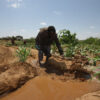
COP30: New Faces, Old Issues: What Must Change if Global Climate Talks Are to Deliver Justice for Africa
Three decades after the first Climate COP, the multilateral climate process – which was intended to serve as an instrument of justice and a guardian of the planet’s atmosphere – has fallen far short of its goals.« Previous Page — Next Page »





The Week with IPS

NEXT STOP - SDGs
Tracking global progress towards a sustainable world
Tracking global progress towards a sustainable world
