
Thursday, October 8, 2026



News and Views from the Global South
IPS UN: Inside the Glasshouse

EXCLUSIVE: Water Laureate Kaveh Madani on Arrest, Exile and Fight for Science
Professor Kaveh Madani of Iran has been named the 2026 Stockholm Water Prize laureate. The award will be formally presented by King Carl XVI Gustaf of Sweden in August during World Water Week in Stockholm.
A World Order in Crisis: War, Power, and Resistance
Article 2(4) of the United Nations Charter prohibits member states from using threats or force against the territorial integrity or political independence of any state. Violating international law, the United States and Israel attacked Iran on February 28, 2026. The ostensible reason for this unprovoked aggression was to prevent Iran from developing a nuclear weapon.
Gender Equality: A Global Priority or a Global Consensus?
The 70th session of the Commission on the Status of Women (CSW70) (March 9-19), held at the United Nations headquarters, brought together governments, decision makers, civil society, and international organizations to address a central issue: access to justice for women and girls.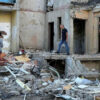
Is WWIII here?
It is becoming increasingly difficult to ignore the tension, violence and uncertainty in the world in recent years. The number of wars is growing, more and more money is being spent on weapons, and the rhetoric of major powers is becoming increasingly decisive.
Beyond Stereotypes: Reclaiming Muslim Histories during Ramadan
In public discourse today, Muslims often appear as subjects of debate rather than authors of their own histories. Discussions about Muslim societies tend to revolve around geopolitics, security or conflict, leaving little space for the cultural, artistic and intellectual traditions that have shaped Muslim communities across centuries.
A Remotely-Piloted Weapon That Targets Civilians in War Zones
As the world continues to be weighed down in political and military turmoil, drones are being increasingly used as weapons of war in a rash of ongoing conflicts—including Ukraine vs Russia, Israel vs Palestine, US vs Iran and Israel vs Lebanon, plus in civil wars in the Democratic Republic of the Congo (DRC), Sudan and Haiti.
Rapid Rise of Smart City Surveillance Tech Across Africa to Spy on Citizens
A massive expansion of AI-enabled surveillance of public spaces across Africa is violating citizens’ freedoms and the fundamental human right to privacy, warns a new report by the Institute of Development Studies.
Nigeria: Lessons from the Aba Women’s Riots for Today’s Women’s Movements
The Aba Women’s Riots of 1929 remain one of the most powerful demonstrations of Nigerian women’s collective resistance. Thousands of market women, farmers, traders, and mothers mobilized across districts in the then Eastern Nigeria to challenge colonial taxation and the extension of warrant chiefs’ authority over their lives. They organized without formal structures and without institutional support.
Why Does African Leadership Lack Coordination on Reparations?
Professor Jude Osakwe—a Nigerian scholar at the Namibian University of Science and Technology (NUST) and Continental Chairman of the Nigerians in Diaspora Organisation Africa (NIDOAF)—has reiterated the absolute truth over Reparations for Africa, noting that African governments have consistently expressed only 'emotional solidarity' over Reparations instead of tackling and addressing, with seriousness, this pertinent issue within the context of diplomacy.
Only 1 in 7 Countries is Led by a Woman– as Global Political Power Remains Dominated by Men
Across the world, women remain vastly under-represented in political leadership, with the most powerful decisions still overwhelmingly made by men. In 2026, only 28 countries are led by a woman Head of State or Government, while 101 countries have never had a woman leader, according to the latest data released by Inter-Parliamentary Union (IPU) and UN Women.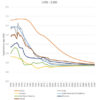
The Most Appropriate Response to Falling Birthrates? Embrace Them
As birthrates continue to decline in many industrialized countries, anxious governments are running out of schemes to keep women procreating.
The Cost of Being Seen: Exposure versus Exploitation
I have often been asked a simple but important question: How can we make it sustainable if we are not being compensated for it?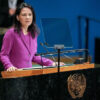
Gender Discrimination: It’s Time to Flip the Narrative
We have heard it all: • When a woman raises her voice, she’s too emotional. • When she stands her ground, she’s too difficult. • When she leads, she’s too ambitious. • If she wears dark suits they whisper ‘why does she always look like a man’ • But oh my gosh! if she shows up in a colorful dresses and high heels….
Global Arms Flow Jump Nearly 10 per cent as European Demand Soars due to Transfers to Ukraine
The ongoing military conflict between Ukraine and Russia—which began February 2022, with no visible signs of ending—has triggered major arms transfers to Europe.
International Women’s Day 2026: This Year’s International Women’s Day Calls for Electing a Woman as the next Secretary-General
As we observe International Women’s Day (IWD) this year, the global community does so in a time of continuing turbulence, conflicts and uncertainty about the future of our planet.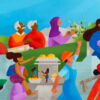
International Women’s Day 2026 The Gender Architecture of Betrayal: Stop Elite Impunity
International Women’s Day 2026 (IWD 2026), which was commemorated March 8, under the theme, "Rights. Justice. Action. For ALL Women and Girls", calls for action to dismantle all barriers to equal justice: discriminatory laws, weak legal protections, and harmful practices and social norms that erode the rights of women and girls. It demands an end to systemic violence and misogyny, including calls for justice for Epstein survivors.
Heralding an Era of Religious Wars
In recent months, the language surrounding the escalating confrontation between the United States, Israel, and Iran has taken on a tone that should trouble anyone concerned with global peace.
The Impact of Artificial Intelligence in Nuclear Decision-Making
As artificial intelligence (AI) threatens to dominate every aspect of human lives —including political, economic, social and cultural --there is also the danger of the potential militarization of AI.
International Women’s Day 2026 No Country in the World has Reached Full Legal Equality for Women and Girls
On 8 March 2026, International Women’s Day, UN Women issues a global alert: justice systems meant to uphold rights and the rule of law are failing women and girls everywhere. Women globally hold just 64 per cent of the legal rights of men, exposing them to discrimination, violence, and exclusion at every stage of their lives.
The US/Israeli Bombing of Iran: A Case Study in Contempt for International Law
Operation “Epic Fury” manifests an epic tantrum by President Donald Trump, supported by his sycophantic minions, with dire consequences for the people in the region, peace and security worldwide, the global economy, and the post-World War II international legal order.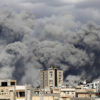
A New World Order Where Might is Right
As the build-up for a proposed “new world order” continues, a lingering question remains: will the country with the most powerful military reign supreme? The United Nations remains politically impotent. The UN charter is in tatters. The sovereignty of nation states and their territorial integrity have been reduced to political mockery. And the law of the jungle prevails—be it Palestine, Ukraine, Venezuela or Iran.« Previous Page — Next Page »





It was dubbed "The Glass House" by U.S. ambassador James Wadsworth in 1966. Half a century later, the United Nations has gradually expanded its role as agent of peace and protector of the world's vulnerable populations, while simultaneously facing internal pressures to become more inclusive, increase transparency and maintain legitimacy in the post-Cold War political and economic order. Highlighting the local impacts of global policies on economic development, environment, health and human rights, IPS's coverage goes beyond the edicts of the Security Council to illuminate the power struggles, successes and shortcomings of the 193-member institution as it grapples with crises like climate change, armed conflict, poverty and HIV/AIDS.

The Week with IPS
