
Monday, October 12, 2026



News and Views from the Global South
IPS UN: Inside the Glasshouse
A New World Order Where Might is Right
As the build-up for a proposed “new world order” continues, a lingering question remains: will the country with the most powerful military reign supreme? The United Nations remains politically impotent. The UN charter is in tatters. The sovereignty of nation states and their territorial integrity have been reduced to political mockery. And the law of the jungle prevails—be it Palestine, Ukraine, Venezuela or Iran.
How UNDP & Global Partners are Tackling Root Causes of Violent Extremism in Ghana’s Borderlands
Across the world’s fragile borderlands where insecurity, climate stress, and marginalization intersect, communities often find themselves on the frontlines of violent extremism. Yet these same communities also hold the greatest potential for peace, when given the confidence, tools, and opportunities to shape their own future.
Cuba Has its Back Against the Wall
The crisis could scarcely be more dramatic. The US is blocking practically all oil deliveries to Cuba. The island depends on imports for all diesel, petrol and kerosine. Without diesel trucks cannot move, food cannot reach Cuban towns and hospitals will not get any oxygen.
UN Leaders, Diplomats Warn of Middle East Instability Following Weekend Air-Strikes in Iran
The United States and Israel launched a joint military strike on Iran on February 28. Iran followed with military strikes on Israeli bases and on Arab Gulf states, including Bahrain, Oman, and the United Arab Emirates. The realized threat of a new war has caused alarm for the security situation in the Middle East and its impact on civilian populations.
Over 25,500 Palestinians Killed: Absence of Accountability is Nothing Short of Shameful
The situation in the Occupied Palestinian Territory is a human-made disaster. The report before you sets out events between 1 November 2024 and 31 October 2025 that show Israel’s utter disregard for human rights in Gaza and the West Bank, and the serious violations also committed by Hamas and other Palestinian armed groups.
International Women’s Day & 70th Session of the UN Commission on the Status of Women
International Women’s Day 2026 comes at a defining moment: Women and girls have never been closer to equality, and never closer to losing it. Legal protection against domestic violence has expanded in many countries. Yet, the rights of women and girls are being rolled back in plain sight, and across the world, women still do not enjoy the same legal rights as men.
Will Palestine Preside Over the Next UN General Assembly?
The 193-member General Assembly, the highest-ranking policy-making body at the United Nations, is most likely to elect Palestine as its next President in an unprecedented move voting for a “non-member observer state”—a state deprived of a country to represent.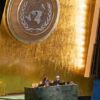
After a Brutal Winter, Millions of Ukrainians Face Deepening Displacement and Uncertainty
After surviving the harshest winter in a decade, millions of displaced Ukrainians are confronting a growing crisis marked by hardship and ongoing attacks as peace prospects remain distant.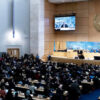
People’s Pursuit of Dignity, Equality and Justice is Unshakeable
A fierce competition for power, control and resources is playing out on the world stage at a rate and intensity unseen for the past 80 years. People are feeling unmoored, anxious and insecure. The gears of global power are shifting; the consequences are not clear. Some are signalling the end of the world order as we know it.
Russia Assessing the Benefits of WTO Membership
Despite consistent criticisms over its operations down the years, Russia still finds it difficult to leave the World Trade Organization (WTO), and instead assessing the opportunities and broad benefits of membership. WTO is not just an organization, but a multilateral bridge for strategic trade engagement and securing results-oriented partnerships. Certainly, unlocking and accelerating trade initiatives should be the key focus in the changing world.
Immigrants Are What Made America Great
Trump’s immigration policy is destroying America’s greatness Immigrants are the backbone of America’s greatness— powering its economy, enriching its culture, and advancing its global leadership. Yet under the guise of making America great again, Trump's exclusionary, racist policies are dismantling that very foundation, stifling innovation and tarnishing the nation’s moral standing.
UN Report Details Grave Abuses Against those Trafficked into Scam Centres
A report published today by the UN Human Rights Office graphically details the lived experiences of some of the hundreds of thousands of people trafficked from dozens of countries around the world into working in entrenched scam operations mostly in Southeast Asia, as well as far beyond.
Ode to U.S. Civil Rights Icon Rev. Jesse Jackson Sr: A Life That Carried the Rainbow
When the Rev. Jesse Jackson Sr. declared, “Keep hope alive,” it was not a slogan. It was a discipline. It was a moral posture. It was a promise to those America had locked out of its prosperity and pushed to the margins of its democracy. And for more than five decades, Jackson kept that promise – organizing, marching, preaching, negotiating, and standing in solidarity with oppressed peoples at home and abroad.
Why Ending Child Marriage is Key to Advancing Africa’s Economic Development
Africa is home to approximately 160 million adolescent girls aged 10 to 19 (according to 2022 data by the United Nations Population Division). They embody the energy, creativity, and potential of the continent. It is undeniable that The Africa We Want, as envisioned in the African Union’s Agenda 2063, will not be realized without the full participation of this group which represents a key component of the continent’s current and future workforce.
International Humanitarian Law is at Breaking Point – but not Beyond Repair
International humanitarian law is at a breaking point, as rampant impunity for serious violations is enabling even greater abuses against civilians and detainees.
The Veto May be the Weapon of Elimination in the Election of Next UN Chief
As the campaign for the next Secretary-General gathers momentum – at a relatively slow pace – there is widespread speculation that any candidate running for the post of UN chief will have to abide by the dictates of a politically hostile White House or face a veto in the Security Council.
We Must Reject a World Governed by Raw Power
2026 has begun on a deeply troubling note. International law, long regarded as the backbone of global peace and security, is being challenged in ever more brazen ways. Core principles of sovereignty and restraint are being flagrantly breached.
Next UN Secretary-General Should Champion Human Rights
United Nations member countries will select a new UN secretary-general this year to succeed António Guterres in January 2027. The change in leadership comes at a time when human rights and democracy, as well as the international organizations created to uphold those principles and provide lifesaving assistance, are under unprecedented attack.
After New START, Accelerated Nuclear Arms Racing?
The most recent agreement limiting U.S. and Russian strategic nuclear arsenals, New START, expired on February 5, and prospects for any kind of follow-on agreement are very uncertain.
As Landmark Treaty Expires, No Binding Limits on US-Russia Nuclear Arsenals
When the nuclear Strategic Arms Reduction Treaty (START) between the US and Russia expired last week, it ended a historic era--- but triggered widespread speculation about the future. UN Secretary-General Antonio Guterres said “February 5 was a grave moment for international peace and security”.
A Pathway to Gender Equality in ASEAN
The COVID-19 pandemic reminded everyone how important care work is to daily life. When schools closed and hospitals filled up, often it was women and girls who stepped up at home. Their contributions made a big difference, yet these responsibilities often go unseen and unrewarded.« Previous Page — Next Page »





It was dubbed "The Glass House" by U.S. ambassador James Wadsworth in 1966. Half a century later, the United Nations has gradually expanded its role as agent of peace and protector of the world's vulnerable populations, while simultaneously facing internal pressures to become more inclusive, increase transparency and maintain legitimacy in the post-Cold War political and economic order. Highlighting the local impacts of global policies on economic development, environment, health and human rights, IPS's coverage goes beyond the edicts of the Security Council to illuminate the power struggles, successes and shortcomings of the 193-member institution as it grapples with crises like climate change, armed conflict, poverty and HIV/AIDS.

The Week with IPS
