Languages
Monday, October 12, 2026



News and Views from the Global South
Arabs Rise for Rights
Arab Monitors in Syria Flashpoint Towns
Arab League observers are to visit three key protest hubs in Syria as world powers have urged Damascus to give full access to monitor if the country is implementing a plan to end a crackdown on protests.BOOKS: U.S., Iran Both Squandered Opportunities for Detente
Veteran observers of U.S.-Iran relations know better than to be optimistic about the chances for reconciliation between the two countries. It has long been the pattern - indeed the curse - that when one side was ready to engage, the other was not.SYRIA: Mass Protests in Homs as Arab Monitors Visit
Tens of thousands of Syrians have reportedly taken to the streets of Homs, as Arab League monitors finished their first day of observation in the city that has been the centre of the anti-government protest movement.OP-ED: This Spring Breeze Did Not Arise in the West
So here I am, an Arab journalist in Silicon Valley, where four out of every four people I meet believe Facebook invented the Arab Spring. Three more weeks here and I may start to hallucinate that Mark Zuckerberg was a Cairo-slums native named Hassouna El-Fatatri, who rotted in a Mubarak prison for advocating personal privacy rights.
Security Council Remains Grounded by Political Manipulation
When Russian Ambassador Vitaly Churkin briefed reporters recently, he offered some biting criticisms of the growing political manipulation of the most powerful body at the United Nations: the 15-member Security Council.
LIBYA: Old Ways Under a New Flag
"They would call you a Gaddafist if you drove one of those 4 X 4 cars," says Bashar, emerging from one of those traffic jams in Tripoli. "Today almost every rebel commander has one."
TUNISIA: Neo-Liberalism the Issue, Not Islam
On the verge of officially forming a coalition government to run the country and rewrite the nation's pre-revolution constitution, Tunisia's dominant, Islamist political party Ennahda has come under fire for its economic neo-liberalism, both from opponents and from coalition partners.SYRIA: Civilians Pay Heavy Price for Political Deadlock
These days in Syria, "people dare not step a foot outside their homes because they're being shot at. And so they pass food from home to home by ropes through windows," Navi Pillay, U.N. High Commissioner for Human Rights, told reporters Friday.Civil War Looms as Syrian Protests Grow Increasingly Complex
As the Syrian uprising enters its ninth month, it faces some of its most daunting challenges to date, despite the consolidation of near-unanimous international condemnation of the Syrian government.Arab Spring Set to Music
The ability of artists to lyrically articulate the growing rage amongst disgruntled youth in the Middle East and North Africa (MENA) has seen the emergence of politicised rap as a hidden weapon during the region's Arab Spring.
Q&A: ICC Referral Crucial to Ending Violence in Syria
"The violent crackdown against peaceful protesters and civilians in the Syrian Arab Republic has continued... since March of this year. More than 4,000 people have reportedly been killed. Tens of thousands have been arrested."EGYPT: Round One Goes to the Islamists
Islamists appear poised for a landslide victory in the first round of Egypt's parliamentary elections, putting them on track to secure a majority in the country's first parliament since the fall of president Hosni Mubarak.Most Israelis Favour a Nuclear-Free Middle East, Poll Shows
A clear majority of Israeli Jews would support a nuclear weapons-free Middle East, even if it meant that Israel too would have to give up its stockpile of nuclear weapons.U.N. Says Syria Death Toll Above 4,000
The United Nations says the death toll in Syria’s nine-month-old uprising has reached "much more" than 4000, characterising the situation as a civil war.
EGYPT: Muslim Brotherhood Looks Beyond Tahrir
Egypt's Muslim Brotherhood came under fire from various political quarters for its decision to stay out of last week's clashes in and around Cairo's Tahrir Square. But as Egyptians vote in the country's first post-Mubarak parliamentary polls, many local analysts believe the controversial decision may have ended up paying political dividends.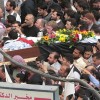
Syrian Leader Survives on Unrelenting Russian-Chinese Support
Bashar al-Assad, Syria's beleaguered president, has openly defied the Western world, succeeded in splitting the United Nations Security Council and fractured the League of Arab States - even as it imposed unprecedented economic sanctions against his embattled country.EGYPT: ‘Army On Its Way Out’
Egyptians in Cairo and Alexandria went to the polls on Monday in the first parliamentary elections since the January 25 protest movement drove former president Hosni Mubarak from a 30-year grip on power.Egyptians Cast Ballots in Post-Mubarak Polls
Egyptians have started casting their ballots in the first parliamentary elections since former president Hosni Mubarak was toppled in a popular uprising earlier this year.
Arab Women Seek a Place in the Spring
As several countries in the Middle East and North Africa (MENA) elect bodies to write new constitutions, women are looking to expand their rights through legislation.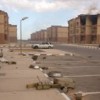
LIBYA: The Making of a Ghost Town
Embarka Omar crumbles when she sees the pictures of the Libyan city where she was born and lived until two months ago. "We will be back in Tawargha one day," the 25-year-old repeats to herself. The images say otherwise.EGYPT: Military More Repressive Than Mubarak
Egyptians hoping for greater freedoms and less police brutality after the fall of president Hosni Mubarak say the military council that has ruled in his place has carried on the ex-dictator's brutal legacy, and in some cases exceeded it.« Previous Page — Next Page »





The Arab Spring has changed the Arab seasons that have followed; it had to. The struggle continues in Syria; in Tunisia, Egypt, Libya and in countries that did not change that dramatically, such as Bahrain and Yemen, the political world, and the tone of society itself has changed. IPS has not left these countries with the headlines that accompanied cataclysmic changes. We continue to track changes closely, always keeping in our sights first the rights of peoples, and then reporting changes from fresh, newsy and human perspective.

Middle East & North Africa


