Languages
Saturday, October 17, 2026



News and Views from the Global South
Arabs Rise for Rights
U.S.-SAUDI ARABIA: Agreeing on Less and Less
Accumulating strains between the United States and Saudi Arabia are steadily weakening one of the world's longest lasting and most effective bilateral alliances, according to observers here.MOROCCO: Demands for Autonomy Spread
Morocco's offer of autonomy to Western Sahara to stave off demands for full independence is boomeranging on the kingdom with other regions now demanding similar freedom.U.S. in a Bind Over Palestine’s Bid for U.N. Recognition
The Palestinian drive for statehood status at the United Nations injects new uncertainty into an already volatile Middle East, threatening to further isolate Israel and diminish already dwindling U.S. influence in the region.No Unplugging This Revolution
Nabeel Rajab believes in the power of social media, and he wants his government to know it. Speaking at the CIVICUS World Assembly in Montreal, the Bahraini activist embraced such communication and specifically requested that all live- Tweeters "hashtag" his name, or include it in their posts.OP-ED: Did 9/11 Make Peace Passe?
Peace has never been a particularly popular word in Washington, DC. This is, after all, the home of the Pentagon and the major military contractors, not to mention all the think tanks and congressional lapdogs that lie in the king- size family bed with them.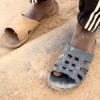
Libyan Rebels Hound Black Refugees
The Libyan revolution has been devastating for 20-year-old Alybe Nally from Nigeria, as it has been for countless others from Africa seen by the rebels as Gaddafi loyalists. "When the rebels took over Tripoli two weeks ago they took my money, my mobile, my passport...All I have is what you see now," he says, pointing to his mismatched pair of sandals.Deaths Reported in ‘Fresh Syrian Assault’
Syrian forces have killed at least 21 people in a massive tank-backed raid on the central city of Homs, rights activists say, after the government postponed a visit to the country by the Arab League chief.LIBYA: Jihadists Take Over, As Warned
The official euphoria with which the U.S. and European governments celebrated the fall of the regime of Muammar Gaddafi in Libya has given way to growing concern that many among the new Libyan leadership are radical Muslims with links to al-Qaeda. Revelations are surfacing also of a close collaboration of Western governments with the deposed dictator.
LIBYA: New Chapter Opens After Gaddafi
Libyan children will go back to school without Muammar Gaddafi’s ubiquitous presence, despite a lack of new books.ISRAEL: Netanyahu Besieged, From Within and Without
More and more Israelis seem to realise that the only policy that causes bad luck is bad policy. In a fortnight, Prime Minister Benjamin Netanyahu found himself politically besieged from within and from without.EGYPT: Mubarak Faces Court Without the Circus
With the trial of Hosni Mubarak set to resume Monday, attorneys representing the families of protesters killed during Egypt’s uprising are trying to cut out the deadwood in their midst.OP-ED: Manipulating Social Networks
If there's one thing that net-savvy activists from Tunisia to Bahrain are aware of, it’s that the Internet isn’t always safe. From the constant threat of surveillance to the knowledge that posting the wrong picture on Facebook can get you arrested - or worse - activists have for a long time taken measures to mitigate risks, censoring themselves, using special tools like Tor, or staying off certain networks altogether.U.S.-LIBYA: Debate Stoked Over “Leading From Behind”
As rebels moved to consolidate control over a post-Gaddafi Libya, foreign policy analysts here are debating whether Washington's role in the nearly six-month civil war in the oil-rich North African nation marks a new model for military intervention and "regime change" in objectionable countries.
LIBYA: Eid Comes With Political Celebration
"Gaddafi renamed this one as the ‘Green Square’ but we have brought back its ancient name, ‘Martyrs square’," Asma Mohamed, Tripoli resident tells IPS. Eid celebrations are being followed by the anniversary Thursday of Muammar Gaddafi coming to power 42 years ago. Celebrations of one kind have mixed with celebrations of another.EGYPT: Military Trials on the Rise After Mubarak
Amr El-Beheiry’s trial in a military court lasted just five minutes. The 33-year- old Egyptian was arrested on Feb. 26 and sentenced without a lawyer present to five years in prison for breaking curfew and assaulting a public official during a demonstration in Cairo.
LIBYA: When Caught in the Crossfire
Thousands have been caught in the Libyan fighting – people neither with Col. Muammar Gaddafi’s forces, or with the rebels. Ayman Agamy Abdelgawad, an Egyptian released from Tripoli’s Abdu Selim prison, shares his experiences with IPS. He narrates his experience below:LIBYA: Evidence of ‘Mass Execution’ in Tripoli
Al Jazeera has found evidence of a possible mass execution of political activists in Libya.Concern Grows Over Prospects for Middle East Disarmament Meeting
Four months before 2012 - the year a conference is slated to be held on freeing the Middle East region of weapons of mass destruction (WMDs) - no date, facilitator, or host country has been named.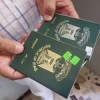
Refugees Tossed Between Iraq and Syria
At the height of Iraq’s sectarian war in 2006, 30-year-old Samer escaped his Baghdad neighbourhood to join a flood of refugees arriving in Syria. A young man of military age, he was at high risk of being targeted by armed forces that roamed the capital’s streets.EGYPT: People-Funded TV Challenges Big Business
Egypt’s most organised political group, the Muslim Brotherhood, is tapping crowds as a new financing method for its nascent TV station and media outlets to be able to compete with well-oiled challengers in corporate and government- run media.U.S.: Libya Intervention Unlikely to Be Repeated
As NATO-backed rebels continue efforts to secure Tripoli from forces loyal to Muammar Gaddafi, analysts here are already debating whether the apparently successful uprising in Libya offers a precedent for future action elsewhere.« Previous Page — Next Page »





The Arab Spring has changed the Arab seasons that have followed; it had to. The struggle continues in Syria; in Tunisia, Egypt, Libya and in countries that did not change that dramatically, such as Bahrain and Yemen, the political world, and the tone of society itself has changed. IPS has not left these countries with the headlines that accompanied cataclysmic changes. We continue to track changes closely, always keeping in our sights first the rights of peoples, and then reporting changes from fresh, newsy and human perspective.

Middle East & North Africa


