Languages
Tuesday, October 20, 2026



News and Views from the Global South
Nuclear Energy - Nuclear Weapons

Women Take up Care of Tohoku Elders
Yumiko Yonekura, who survived last year’s massive earthquake and tsunami that devastated Tohoku in northeast Japan, has just launched ‘Hot Care Kesenuma’, a welfare company that provides special care for feeble elders in the affected region.IAEA Report Shows Iran Reduced Its Breakout Capacity
The International Atomic Energy Agency (IAEA) report made public Thursday reveals that Iran has actually reduced the amount of 20-percent enriched uranium available for any possible “breakout” to weapons grade enrichment over the last three months rather than increasing it.In Israel, Opposition to Attacking Iran Gains Upper Hand
The ambitions of a unilateral Israeli strike on Iran, as harboured by Israeli Prime Minister Benjamin Netanyahu and Defence Minister Ehud Barak, have been defeated by internal opposition, a growing number of observers have come to believe in the wake of dramatic opposing statements by prominent Israeli leaders, including President Shimon Peres.
Rebuffing Israel, U.N. Chief Heads to Iran for Summit Meeting
Brushing aside a warning by the Israeli government and rebuffing a campaign by pro-Israeli lobbying groups in the United States, Secretary-General Ban Ki-moon has decided to visit Iran next week to participate in the summit meeting of the 120-member Non-Aligned Movement (NAM), described as the world's largest single political coalition.Israel’s Iran War Talk Aims at Deal for Tougher U.S. Policy
Two recent interviews apparently given by Israeli Defence Minister Ehud Barak provide evidence that the new wave of reports in the Israeli press about a possible Israeli attack on Iran is a means by which Prime Minister Benjamin Netanyahu and Barak hope to leverage a U.S. shift toward Israel’s red lines on Iran’s nuclear programme.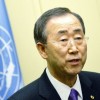
U.N. Chief in the Hot Seat over Non-Aligned Summit in Iran
When Cuba chaired the Non-Aligned Movement (NAM) back in 1979, Western nations dismissed the world's largest single political coalition as lacking legitimacy since Havana was considered a close ally of the then-Soviet Union.Families of ‘Little Boy’ and ‘Fat Man’ Victims Still Struggling
Sachiko Masumura (79) was standing just two kilometres away from the hypocentre of Little Boy, the atomic bomb that was dropped on Hiroshima, Japan over six and a half decades ago.U.S. Denies Consensus with Israel on Iran Nuclear Threat
Tensions rose Thursday between the Barack Obama administration and the Israeli government when a leading Israeli official claimed to have knowledge of U.S. intelligence that portrays Iran as a more immediate threat than Washington has been saying.
Waste Issue Halts U.S. Nuclear Reactor Licensing
The U.S. Nuclear Regulatory Commission, which oversees commercial nuclear power enterprises, has halted the issuance of all new nuclear reactor licensing decisions after a court ruling citing the failure of industry and government to identify an acceptable solution for the long-term storage of nuclear waste.Humanity Should Not Live Under Nuclear Threat
Now that the war in Iraq is considered ‘over’, another major goal of Israel has come into view: attacking Iran on the pretext that it may possibly be working on a nuclear weapon - though Pakistan, China, and India definitely already have them.
OP-ED: Weapons into Ploughshares, and Crises into Opportunity
The crisis that started a few years ago with the collapse of major financial institutions in the United States is now centred in Europe and threatens other parts of the world. Many emerging countries in Asia and Latin America that had thus far avoided contamination because of their sound economic and fiscal policies and their timely adoption of domestic consumption stimulus packages are now beginning to experience secondary effects.Mainstream Rhetoric on Nuclear Power Far From Reality
The catastrophe following the meltdown of the Fukushima Daiichi nuclear power reactor in March 2011 has turned the old debate on nuclear power into a war of words between international agencies and independent experts with diametrically opposed views.Iran Diplomacy Runs into Sanctions-Happy U.S. Congress
Congress’s rush to pass new sanctions against Iran ahead of the August recess comes amidst an intensified drive to pin the Iranian government to deadly acts of international terrorism and amplified moves by U.S. politicians to demonstrate their support for Mideast ally Israel ahead of the November presidential election.
Govts Boost Nukes While Cutting Aid, Social Services
As U.N.-led talks on disarmament resume in Geneva Monday, calls are growing for nuclear-armed nations to cut spending on their stockpiles and instead divert resources to development.Netanyahu – Unlike Olmert – Refuses Explicit Iran Attack Threat
The perception that Israeli Prime Minister Benjamin Netanyahu is threatening to attack Iran’s nuclear facilities unless sanctions and diplomacy succeed in shutting them down has been the driving force in the Iran crisis.Will Austerity Prompt Nuclear Disarmament?
The changing international political order and a dramatic budgetary situation at home are forcing France to consider giving up the extremely expensive nuclear arsenal the country has maintained since the late 1950s.Obama Piles New Sanctions Against Iran
In the latest ratcheting up of pressure on Iran, the administration of U.S. President Barack Obama Thursday imposed new financial sanctions against Iranian and other companies whose operations allegedly support the country's nuclear and ballistic-missile programmes.Analysts Say Nuclear Talks Should Continue Despite Sabre-Rattling
The one agreement that talks between Iran and the P5+1 - the five permanent members of the U.N. Security Council plus Germany - produced after a "technical meeting" in Istanbul was a decision to schedule more talks.New Israeli Deputy PM Undercuts Strategy of Pressure on Obama
By staking out a policy line on Iran reflecting the views of the Israeli national security leadership, Deputy Prime Minister Shaul Mofaz has undercut the Benjamin Netanyahu government's carefully planned strategy to get U.S. President Barack Obama to threaten war against Iran if it doesn't give up its nuclear programme.
U.S. Agency Gave Nuclear Industry a Sweet Deal, Documents Reveal
The Southern Alliance for Clean Energy (SACE) recently won a two-year legal battle to secure documents from the U.S. Department of Energy under the Freedom of Information Act related to nuclear power loan guarantees offered to utility companies under the Barack Obama administration.U.S. Hawks Aflutter as Clinton Clears China on Iran Oil Sales
The administration of President Barack Obama is waiving tough financial sanctions that would have taken effect Thursday against both China and Singapore because it said the two countries had made "significant reductions" in their crude oil purchases from Iran.« Previous Page — Next Page »





At first it was the United States. Then came Russia, China, Britain and France. Everyone wanted their own atomic bombs and atomic energy. While Israel quietly nurtured its nuclear programme, in Asia, rivals India and Pakistan, and most recently North Korea, joined the global nuclear club. Are nuclear weapons stockpiles adequately safeguarded? Is nuclear energy worth the risk? Read IPS.

The Week with IPS

NEXT STOP - SDGs
Tracking global progress towards a sustainable world
Tracking global progress towards a sustainable world
