Languages
Tuesday, October 20, 2026



News and Views from the Global South
Nuclear Energy - Nuclear Weapons
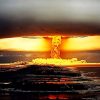
The Time to End Nuclear Tests is Now
Today, the General Assembly convenes – for the fifteenth consecutive occasion – to observe the International Day Against Nuclear Tests, which is commemorated annually on 29 August.
Enough is Enough: End Nuclear Testing Once and For All
In 2009 the United Nations General Assembly proclaimed 29 August the International Day Against Nuclear Tests. This date recalled the official closing of the Semipalatinsk nuclear weapons testing site in today’s Kazakhstan on 29 August 1991; that one site alone having seen 456 nuclear test explosions between 1949 and 1989.
Kazakhstan Takes Lead in Global Push for Nuclear Disarmament Amid Heightened Tensions
In a world increasingly shadowed by the threat of nuclear conflict, Kazakhstan is stepping up its efforts in the global disarmament movement. On August 27-28, 2024, in collaboration with the United Nations Office for Disarmament Affairs (UNODA), Kazakhstan will host a critical workshop in Astana. This gathering, the first of its kind in five years, is set to reinvigorate the five existing Nuclear-Weapon-Free Zones (NWFZs) and enhance cooperation and consultation among them.
79 Years After Hiroshima & Nagasaki: A Grim Reminder of Nuclear Annihilation
The upcoming 79th anniversary of the atomic bombings of Hiroshima and Nagasaki, which took place on August 6 and 9, 1945, remains a grim reminder of the destructive consequences of nuclear weapons. The US bombings killed an estimated 90,000 to 210,000, with roughly half of the deaths occurring on the first day in Hiroshima.
Will the New Triumvirate—Russia, China & North Korea—Force the South To Go Nuclear?
When Russian President Vladimir Putin and North Korean leader Kim Jong Un signed a pact last month to revive a Cold War-era mutual defense pledge between two of the world’s nuclear powers, it also had the implicit support a third nuclear power standing in the shadows: China.
The US Election & the Dangers of Nuclear Weapons
Today, we are facing a growing and unprecedented array of nuclear weapons dangers. At the same time, this year’s presidential election is also unprecedented, unpredictable, and extremely consequential.
New Military Alliances Forming in the Pacific
On the heels of a new alliance announced this summer by Russia and North Korea for a pact pledging mutual defense, with the support of China, it is now shockingly being suggested in South Korea that it review its security policy with the US and end its reliance on the US guarantee, to employ on South Koreas’ behalf, US nuclear weapons as part of its “nuclear umbrella”.
Nuclear Coercion: Dangerous and Illegal
Our three organizations-- Western States Legal Foundation, Peace Depot, and Basel Peace Office-- all dedicated to the elimination of nuclear weapons, have consistently expressed our concern about the risk of nuclear war escalating during armed conflicts and times of high tension, when nuclear-armed states often make veiled or even explicit threats to use nuclear weapons and prepare for such use.
Inheriting the Vow to Abolish Nuclear Weapons: Inspiring Action in the Next Generation
The crisis that began with the invasion of Ukraine in February 2022 shows no signs of ending, and the threat of nuclear war is no longer in the realm of the unimaginable. With conflicts intensifying in the Middle East, Africa and elsewhere producing appalling humanitarian crises, humanity stands on a dangerous precipice. There has been no time since the end of the Cold War when the risk of nuclear weapons use has been as high and prolonged as it is now. Even as there is renewed focus on the catastrophic consequences of any use of nuclear weapons, the discourse remains divided—whether to further escalate military confrontation or to return to multilateral negotiation and dialogue. Humanity confronts stark choices. JAPANESE
A Nuclear-Armed European Union? A Proposal Under Fire
The continued veiled threats from Russia, warning of nuclear attacks on Ukraine, have prompted some politicians in Europe to visualize a nuclear-armed European Union (EU).
European Nuclear Deterrent a Harebrained Illegal Proposal
It is quite astonishing and clearly insane, that Manfred Weber, the German leader of the European Union’s center-right European People’s Party, now expected to come in first in the European Parliament election scheduled on June 6-9th, is calling for the EU’s own nuclear “deterrent”—arguing that the US-stationed nuclear weapons in five NATO states, Germany, Italy, Belgium, the Netherland, and Turkey, may be inadequate protection for Europe’s security should Trump, that great friend of Russia, be elected!
Lessons From Youth-Focused ‘Future Action Festival’ Ahead of UN Summit of the Future
The world has crossed the halfway point to the end of the Sustainable Development Goals (SDGs) era amid multiple, unprecedented, and significantly destructive global shocks. Two of the most pressing global challenges are the climate crisis and the threat of nuclear armament. Of serious concern is a severe lack of youth engagement on issues of critical global importance. Speaking to IPS during the 2024 UN Civil Society Conference, the outcome of which will inform high-level discussions when the UN hosts hundreds of world leaders, policymakers, experts, and advocates in September at the Summit of the Future in New York, Tadashi Nagai stressed the importance of coalition and movement building and youth engagement to escalate progress towards attainment of the SDGs.
The US a Direct Partner in the Israeli War
A major mistake we often commit in our analysis of the US political discourse on the Gaza war is that we assume that the US and Israel behave as if they are two political entities with separate agendas and sets of priorities.
US Senators Threaten Criminal Court & Advise Israel to Nuke Gaza
As the ancient Greek saying goes: those whom the Gods wish to destroy, they first drive them mad. Perhaps destruction is too far-fetched here, but madness is closer home—in Washington DC With the 7-month-old Israeli-Gaza conflict showing no positive signs of a permanent solution, there is a lingering sense of growing political craziness in Capitol Hill, the seat of the US government, once described as Israeli-occupied territory.
Choose Hope: Standing at the Crossroads of the Future
We are at the tipping point in human history, facing major existential crises. The conflict between Russia and Ukraine has heightened the risk of a nuclear weapon being used since the Cold War. Furthermore, the climate crisis is accelerating. In these crises, the most affected are those in vulnerable situations.
A Russian Veto Threatens to Trigger a Nuclear Arms Race in Outer Space
When the 15-member UN Security Council failed last month to adopt its first-ever resolution on outer space—co-sponsored by the US and Japan—the Russian veto led to speculation whether this was a precursor for a future nuclear arms race in the skies above. The vetoed resolution was expected to “affirm the obligation of all States parties to fully comply with the 1967 Outer Space Treaty, including not to place in orbit around the Earth any objects carrying nuclear weapons or any other kinds of weapons of mass destruction, install such weapons on celestial bodies or station such weapons in outer space in any other manner.”
The Summit of the Future Is a Rare Chance to Fix a Broken System: Civil Society Must Be Included
Today, the spectre of a major regional conflict, and even a possible nuclear conflagration, looms large in the Middle East. Despite stark warnings issued by the UN Secretary-General, António Guterres, the multilateral system is struggling to resolve the very challenges it was supposed to address: conflict, impoverishment and oppression. In a deeply divided world, this September’s Summit of the Future offers a rare chance to fix international cooperation and make good on gaps in global governance.
UN Security Council Holds Rare Nuclear Disarmament Debate
Japan chaired a rare, high-level UN Security Council meeting on nuclear disarmament and nonproliferation on March 18. Although the meeting underscored the urgency of addressing the growing threats posed by nuclear weapons, it also highlighted the chronic divisions among key states on disarmament and nonproliferation issues.
Ahead of UN Summit of the Future, Mobilizing Youth for Change
In a significant precursor to the United Nations Summit of the Future slated for September, the "Future Action Festival" convened at Tokyo's National Stadium on March 24, drawing a crowd of approximately 66,000 attendees and reaching over half a million viewers via live streaming. The event, a collaborative effort by youth and citizen groups, aimed to foster a deeper understanding and proactive stance among young people on nuclear disarmament and climate change solutions.
Nuclear Disarmament: A Natural Buddhist-Catholic Alliance, says Japanese Leader
At the United Nations headquarters in New York City, on the third floor, a solemn statue of St. Agnes, holding her namesake lamb, stands as a disturbing reminder of nuclear destruction.
The Intergenerational Impact of Nuclear Testing in Polynesian States
The language used in the Treaty of the Prohibition of Nuclear Weapons (TPNW) is unambiguous on its focus of the grave humanitarian impact of nuclear weapons. The TPNW also recognizes the influence of the public conscience “in the furthering of the principles of humanity as evidenced by the call for total elimination of nuclear weapons”.« Previous Page — Next Page »





At first it was the United States. Then came Russia, China, Britain and France. Everyone wanted their own atomic bombs and atomic energy. While Israel quietly nurtured its nuclear programme, in Asia, rivals India and Pakistan, and most recently North Korea, joined the global nuclear club. Are nuclear weapons stockpiles adequately safeguarded? Is nuclear energy worth the risk? Read IPS.

The Week with IPS

NEXT STOP - SDGs
Tracking global progress towards a sustainable world
Tracking global progress towards a sustainable world
