Languages
Wednesday, September 2, 2026



News and Views from the Global South
Nuclear Energy - Nuclear Weapons
INDIA: Opposition to ‘Nuclearism’ Builds Up
As India follows up on the historic civilian nuclear agreement it signed last year with the United States by drawing up hard commercial deals, opposition to ‘nuclearism’ is building up among activist groups.POLITICS-US: Obama "Appalled" by Iran Repression
Facing a growing chorus of Republican criticism to speak out more forcefully on Iran's disputed election results, the U.S. president made his harshest statement yet Tuesday, condemning Iran's leadership for its violent crackdown on protesters.U.S.: Neo-Cons, Republicans Paint Obama as Weak on “Rogues”
In what appears increasingly to be an orchestrated campaign, right-wing Republicans and Israel-centred neo-conservatives are pulling out all the stops in depicting President Barack Obama as "weak" on national security and promoting democracy abroad.SOUTH AMERICA: Anti-Nuclear Activists to Form Common Front
Environmental organisations in Chile plan to revive the anti-nuclear movement in the Southern Cone of South America, in response to vigorous lobbying by corporations and politicians in favour of nuclear energy in the region.US-IRAN: Electoral Chaos Energises Neoconservative Hawks
As U.S. President Barack Obama attempts to navigate the treacherous currents of the ongoing political crisis in Iran, he faces a heated attack on his right flank from neo-conservatives and other right-wing hawks, who are urging him both to offer unequivocal support to the protesters supporting moderate presidential candidate Mir Hossein Moussavi and to scuttle his planned diplomatic engagement with Tehran.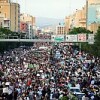
POLITICS: Will “Changed” Iran Complicate U.S. Engagement?
As uncertainty persists about the results of the Iranian election last Friday, the administration of U.S. President Barack Obama remains quiet on just exactly what the next tack will be on engaging the Islamic Republic, which experts say is entering a new and unknown period in its history.NORTH KOREA: Peace Process Again a Distant Dream
Ever since being elected as President in 2008, conservative Lee-Myung-bak has pursued a hard-line policy towards North Korea, with the country’s left also blaming him for recent tensions in the peninsula.POLITICS: India Takes Security Concerns to Shanghai Summit
Indian Prime Minister Manmohan Singh’s participation in the Shanghai Cooperation Organisation (SCO) summit at Yekaterinburg Tuesday appears to have been motivated chiefly by the security environment in the region shaping up around Washington’s ‘AfPak’ policy.KOREAS: Obama Affirms Alliance with South Amid Rising Tensions
Amid rising tensions with North Korea, U.S. President Barack Obama Tuesday assured visiting South Korean President Lee Myung-Bak that Washington was firmly committed to their nearly 60-year alliance and their mutual determination not to yield to Pyongyang's demands that it be recognised as a nuclear power.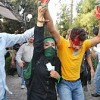
IRAN: Washington Maintains Cautious Response to Election Crisis
As protests over Friday's disputed election continue to rage in Iran, the U.S. has thus far reacted cautiously, reflecting the high degree of uncertainty in Washington both about how much support to give the demonstrators and about the implications of the escalating crisis for President Barack Obama's hopes of engaging Tehran in serious negotiations.POLITICS: North Korea Penalised Over Nuke Testing
Despite North Korean charges of political hypocrisy by the United Nations, the Security Council unanimously adopted a resolution Friday tightening sanctions against the Pyongyang regime for its nuclear and missile development programmes.POLITICS: Iranian Elections Could Shape U.S. Engagement
Washington is waiting anxiously on the outcome of Friday’s Iranian presidential elections, as incumbent President Mahmoud Ahmadinejad attempts to fend off challenger Mir Hossein Mousavi in a contest with significant implications for the diplomatic atmosphere between Iran and the U.S.NORTH KOREA: U.S. Urges Release of Jailed Journalists
The harsh prison sentence given to two U.S. journalists found guilty of grave crimes against the North Korean state is eliciting concern from human rights groups and analysts.NORTH KOREA: China Dismissive of Prospects for War
Dismissive of warnings that the Korean peninsula stands on the brink of war, China contends North Korea’s recent provocative actions are yet another illustration of brinkmanship aimed at attracting the U.S. attention. Beijing decried the North’s nuclear tests in late May, but remains uncommitted to tougher sanctions against the impoverished Stalinist nation.POLITICS: Iranians Keen on Improved Ties with U.S.
More than three out of every four Iranian citizens favour improved relations with the United States, according to a major survey conducted less than one month before this Friday's presidential elections in Iran by a U.S. non-governmental organisation, Terror Free Tomorrow (TFT).DISARMAMENT: U.N. Big Powers World’s Top Military Spenders
The world's biggest military spenders last year were countries which were either permanent members of the Security Council or aspiring to hold that privileged rank, according to the latest figures released Monday by the Stockholm International Peace Research Institute (SIPRI).EUROPE: Big Plans, But Little Money to go Nuclear
Eastern Europe is promoting nuclear energy as the only way to tackle climate change and reduce dependence on Russian gas, in spite of costs of going nuclear that it cannot meet.POLITICS-US: Report Ties Dubious Iran Nuclear Docs to Israel
A report on Iran’s nuclear programme issued by the Senate Foreign Relations Committee last month generated news stories publicising an incendiary charge that U.S. intelligence is underestimating Iran’s progress in designing a "nuclear warhead" before the halt in nuclear weapons-related research in 2003.POLITICS: Where Iran Fits in the Mideast Peace Puzzle
What is the relationship between the United States' policy towards Iran and its performance on Arab-Israeli peacemaking, including the crucial quest for peace between Israel and the Palestinians?INDIA-US: Thorny Times Ahead Despite Nuclear Deal
Although Manmohan Singh, the man who steered through the landmark Indo-U.S. civilian nuclear deal, has been voted back to power, there is little sign that his second term as prime minister will see the same geniality between the world’s two major democracies.DISARMAMENT: North Korea Test a Setback to Nuke-Free World
When the 2010 review conference on the nuclear Non-Proliferation Treaty (NPT) takes place next April, there will be nine declared and non-declared nuclear powers in the world - and probably more waiting in the wings.« Previous Page — Next Page »


At first it was the United States. Then came Russia, China, Britain and France. Everyone wanted their own atomic bombs and atomic energy. While Israel quietly nurtured its nuclear programme, in Asia, rivals India and Pakistan, and most recently North Korea, joined the global nuclear club. Are nuclear weapons stockpiles adequately safeguarded? Is nuclear energy worth the risk? Read IPS.

The Week with IPS

NEXT STOP - SDGs
Tracking global progress towards a sustainable world
Tracking global progress towards a sustainable world
