Languages
Monday, September 21, 2026



News and Views from the Global South


Climate Change Is Affecting Traditional Knowledge
Colombia has no system for monitoring biodiversity to determine how it could be affected by global warming, Brigitte Baptiste of the Humboldt Institute, a Colombian government institution devoted to biodiversity, reports in this exclusive interview.Ecobreves – BRAZIL: Despite Forest Management, Logging Leads to Financial Losses
Even when sustainable management regulations and logging cycles established by the law are strictly followed, logging causes irreversible losses in the productive value of Amazon forests, according to a study by the Luiz de Queiroz Higher School of Agriculture at the University of São Paulo.Ecobreves – VENEZUELA: Used Batteries Collected on Margarita Island
An environmental group from Margarita Island, located in the Caribbean Sea off the northeast coast of Venezuela, has launched a campaign to collect used batteries from the island’s 400,000 inhabitants and the hundreds of thousands of tourists who visit every year.Ecobreves – HONDURAS: Firefighters Plant Trees in the Capital
A contingent of 25 members of the Tegucigalpa Fire Department has joined the government initiative to plant 200,000 trees in the Honduran capital and three neighboring municipalities over the next six months.Ecobreves – CUBA: Zeolites Increase Agricultural Yields
The use of natural zeolites in agriculture increases crop yields while minimizing environmental impacts, new Cuban research has found.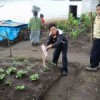
School Gardens Promote Learning While Fighting Hunger
"Yesterday I planted 20 broccoli plants at home. God willing, they will grow and we will be able to eat them," said 12-year-old Juan Francisco Ordóñez, a student at a school in San Cristóbal Totonicapán where a school garden has been established in an attempt to alleviate hunger.
CUBA: Petrochemical Complex Poses Major Environmental Challenge
As it gears up for the creation of a major petrochemical complex of regional scope, this Cuban city faces the challenge of ensuring the sustainability of development that could compromise the health of the Bay of Cienfuegos, its main natural resource.
After Peak Oil, Peak Globalization
The reality of a globalized economy seems to be that poverty is its only sustainable phenomenon, says entrepreneur Gunter Pauli in this column.Ecobreves – ARGENTINA: Relocation of Electric Power Substation Demanded
Environmental and social organizations in the Argentine city of Berazategui are calling for the relocation of an electric power substation to a less populated area and legislation on the placement of these facilities.Ecobreves – MEXICO: Anti-Transgenic Food Campaign
Greenpeace Mexico has a launched a computer application called "Clean Out Your Cupboards" to help consumers avoid industrially processed and genetically modified foods.Ecobreves – BRAZIL: Logging Threatens 7,000 Square Kilometers in the Amazon
The Amazon could lose another 7,000 square kilometers of forests by July 2012, according to a report on the risk of deforestation released by the Amazon Institute of People and the Environment (Imazon).Ecobreves – HONDURAS: Geologists Warn of Landslide Risks in Capital
Four marginalized neighborhoods in Tegucigalpa are at "high risk" of facing major landslides during the rainy season, a team of geologists from Costa Rica concluded after a three-week study in Honduras.
Petrochemical Complex Poses Major Environmental Challenge
Cuba is preparing a series of environmental measures to protect the Bay of Cienfuegos from the upcoming expansion of its oil refinery.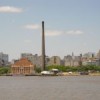
BRAZIL: Efforts to Improve Water Quality Falling Short
Despite increased spending on sanitation works, the water quality in rivers near large urban centers in Brazil ranges from poor to very poor. Some say the reason is the development model chosen by the South American nation.Ecobreves – VENEZUELA: Trade Unionists Denounce Smelter Pollution
Workers at the state-owned Venalum aluminum smelter in the northeastern Venezuelan city of Guayana report that because of a lack of repairs to the plant’s treatment facilities, toxic gases like toluene and benzene are being directly released into the atmosphere.Ecobreves – BRAZIL: Organic Produce Consumption on the Rise
The consumption of organic produce is growing by between 20 and 30 percent a year in Brazil, according to the Ministry of Agrarian Development (MDA).Ecobreves – HONDURAS: Timber Industry Calls for Government Transparency
The Timber Association of Honduras has demanded more transparency from the government in its measures to protect the forests and the activities and expenditures carried out by the Armed Forces through the so-called green battalions.
Investments Are Not Improving Water Quality in Brazil
Rivers near Brazil’s most populated cities have poor or very poor water quality, according to a government report, although 71 percent of the country’s water resources are in good condition.
New Push to Get Whales Off the Table
A campaign directed at tourists visiting Iceland aims to show them that, contrary to what they are led to believe by some restaurants, whale meat is not a traditional dish enjoyed by most Icelanders.
BRAZIL: Small-Scale Land Speculators Contribute to Amazon Deforestation
Many migrants from southern Brazil who clear forests in Brazil’s state of Amazonas are making their living as small-scale land speculators and not as farmers or as cattle ranchers, new research has found.
Computers Help Create a Clean Energy Future
The use of information technology in energy planning can contribute not only to developing renewable energy sources but also to moving towards a green economy.« Previous Page — Next Page »


Tierramérica is the main communications platform on sustainable development and the environment in Latin America and the Caribbean. It is produced by IPS Noticias, the agency’s Spanish-language service, which created it jointly with the United Nations Development Programme (UNDP) and the United Nations Environment Programme (UNEP), with later support from the World Bank. The weekly editions of Tierramérica are published in Spanish, Portuguese and English and are picked up and printed by dozens of media outlets in the region. Follow us on Facebook and Twitter.

From the Frontline of Environment
Supported by

Tierramérica en Español

Terramérica em Portuguese

